
AcuRite’s Forced App Migration Signals a Deeper Threat to Device Ownership
- IoT
Arjun Vedanta
- 0
- 5 minutes read
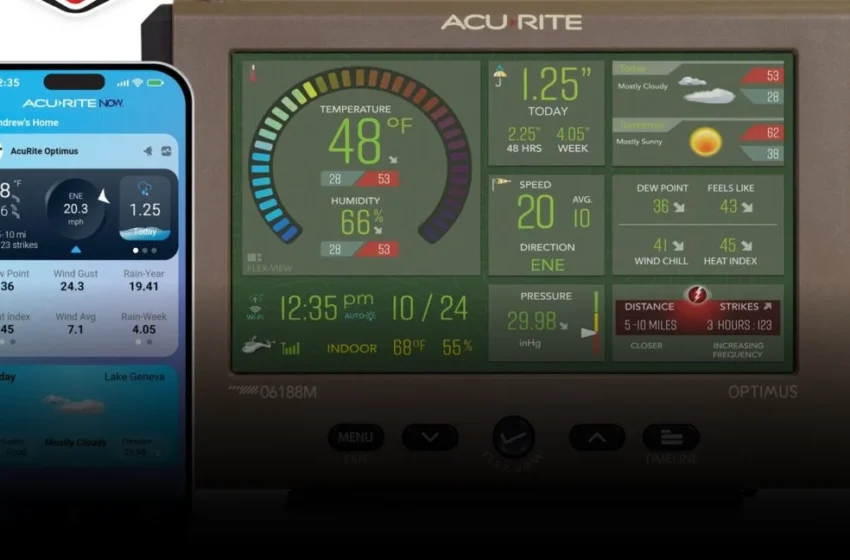
The Quiet Erosion of Digital Ownership
Come May 30, a small but significant shift will occur for thousands of AcuRite customers: their familiar weather monitoring devices will effectively cease to function as they once did. The company has mandated a switch from its long-standing
My AcuRite app
, launched in 2016, to the newer AcuRite Now platform. This is not merely an optional update; it’s a forced migration, turning a voluntary enhancement into an ultimatum for hardware owners.
AcuRite’s email campaign, initiated last month, has left many customers frustrated. They purchased hardware—weather stations, indoor thermometers, rain gauges—under an implied contract of long-term utility, only to find that contract unilaterally rewritten by a software mandate. What seems like a technical upgrade on the surface is, in fact, a stark illustration of the quiet erosion of digital ownership.
This isn’t about Silicon Valley’s latest gadget hype. It is about a fundamental redefinition of product ownership itself, morphing a tangible asset into a service dependent on corporate software. The original reporting noted the customer dissatisfaction; it missed the deeper structural implication this holds for the entire connected device ecosystem.
The Incentive to Recalibrate Value
One must ask: what is the compelling incentive for AcuRite to force such a disruptive change on its loyal customer base? The answer, unequivocally, is control and future monetization. Consolidating users onto a single, modern platform like AcuRite Now streamlines development efforts, reduces technical debt from maintaining legacy code, and simplifies customer support across a diverse product line.
More critically, it positions the company to dictate future hardware compatibility and to introduce new features, potentially bundled as premium services or subscriptions. This strategic pivot ensures a cleaner path for newer hardware, such as the AcuRite Optimus weather station, and allows for more aggressive sunsetting of older models. The benefits accrue to AcuRite’s balance sheet and product roadmap, not necessarily to the existing consumer experience.
This corporate recalibration effectively allows AcuRite to enforce an arbitrary expiration date on its hardware, determined by software support rather than physical wear. It transforms a one-time purchase into an ongoing dependency. The company’s ability to unilaterally deprecate essential software for devices consumers already own sets a precarious precedent, leaving owners of perfectly functional hardware with little recourse.
When Software Dictates Hardware Lifespan
This situation is far from unique. Across the
Internet of Things
landscape, from smart home hubs to security cameras and even vehicles, manufacturers are increasingly treating hardware as a mere vessel for their proprietary software and services. The lifecycle of a physical product is now often dictated by the vendor’s software roadmap, not by its inherent durability.
Recall Sonos, the smart speaker giant, which faced a public uproar when it initially announced it would cease software updates for older speakers, effectively rendering them incompatible with newer system configurations. While Sonos eventually adjusted its policy, the initial move laid bare the industry’s quiet assumption: that software support can be withdrawn, even if the hardware remains sound. AcuRite’s mandate is a milder variant, a forced migration rather than outright obsolescence, but the underlying principle is identical.
The fundamental issue lies in the deep enmeshment of physical products with cloud-based services and
mobile applications
. A device that requires a constant software handshake is no longer truly autonomous; its utility is tethered to corporate decisions, server uptime, and product lifecycle management. This dependency is the sharpest contradiction in the promise of ‘smart’ devices – they offer more features, but demand more surrender of control.
The Broader Implications for IoT and Consumer Trust
In the innovation hubs of Silicon Valley, these forced migrations are often rationalized as technical necessities—streamlining code, enhancing security, enabling advanced features. Yet, from a broader, global perspective, particularly in markets that prioritize product longevity and repairability, such actions are perceived as inherently anti-consumer. They erode the implicit trust that underpins durable goods purchases.
Consumers expect devices like weather stations to operate reliably for many years, often a decade or more. AcuRite’s decision, while perhaps offering internal efficiencies, fundamentally alters this expectation by introducing an expiration date tied to an app, not the device itself. This is a subtle yet potent form of planned obsolescence, far more insidious than a failing battery or a worn-out component.
What happens when the next generation of AcuRite devices and platforms emerge? Will customers again face ultimatums to migrate, or risk their existing investments becoming digital relics? This isn’t just about a weather app; it’s a critical test case for how much control consumers are willing to cede to manufacturers in exchange for connectivity. Without clear industry standards or regulatory frameworks for
interoperability
and long-term software support, consumers remain vulnerable.
As more aspects of our homes, vehicles, and personal health become reliant on these software gatekeepers, the implications of such unilateral decisions only grow more significant. The path forward for the connected device industry must involve building trust through transparent, long-term support commitments, rather than eroding it with abrupt and non-negotiable mandates.
