
Affordable Robot Dogs: A Global Tech Wave Colliding with Unprepared Public Spaces
- Robotics
Arjun Vedanta
- 0
- 5 minutes read
The Global Supply Chain’s Quiet Revolution
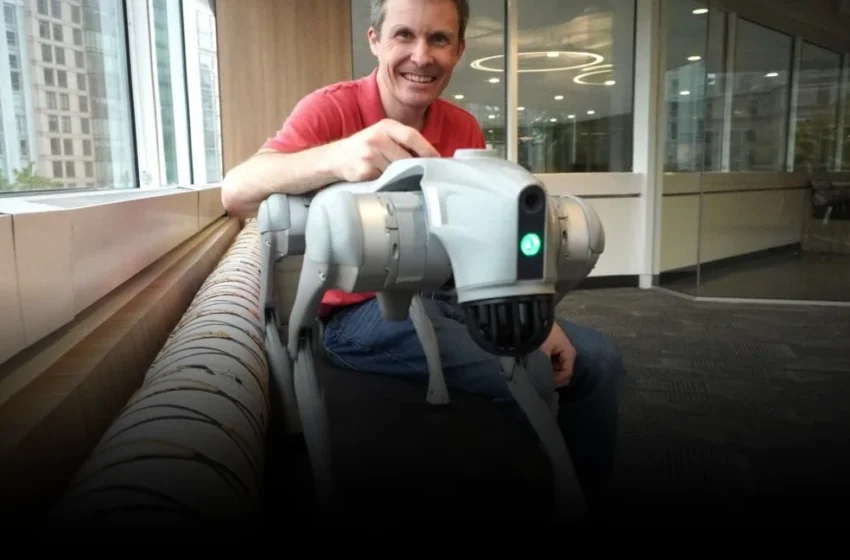
Four thousand dollars. That is the price tag for a quadruped robot from China, capable enough to garner stares, photographs, and cautious barks on a morning stroll to work in June. This isn’t about a limited tech demo from Boston Dynamics, nor a Kickstarter novelty that will quietly fade. It is a stark signal that advanced consumer robotics, largely manufactured outside Silicon Valley’s immediate gaze, are not only here but are becoming rapidly accessible, ushering in a wave of social integration challenges that cities and citizens alike are entirely unprepared to navigate.
While Western media often fixates on breakthroughs from established players like Boston Dynamics, whose Spot robot begins at an enterprise-level $75,000, the real disruption is happening downstream, driven by relentless supply chain optimization in Asia. Companies such as Unitree Robotics and Xiaomi’s CyberDog program have spent years refining designs and production processes, bringing the bill of materials down dramatically. The economic incentive is clear: establish early market dominance in a burgeoning consumer robotics sector, bypassing the traditional enterprise-first model that defines much of the US industry. This rapid influx of affordable, functional hardware from manufacturers aiming for mass-market adoption completely reconfigures the competitive landscape and compresses adoption timelines.
This isn’t merely about cheaper parts; it’s about a distinct strategic approach. Chinese manufacturers are prioritizing accessibility and scale, pushing these devices into the hands of early adopters who, in turn, become unwitting field testers for societal acceptance. The result is a global robotics market less about bespoke, high-cost industrial solutions and more about democratized, increasingly sophisticated consumer-grade machines. The implicit promise is a future where these mechanical companions are as ubiquitous as smartphones, but the path to that future is proving far less smooth than optimists might suggest.
Unscripted Public Encounters and Emerging Social Friction
The immediate public reaction to a robot dog strolling down a street—snapping pictures, asking questions—is entirely predictable. What’s less explored is the *kind* of questions asked: “Was it mine?” “Did I build it?” “Was it being used for surveillance?” These aren’t just curiosities; they betray an underlying public anxiety about ownership, origin, and intent, directly challenging the industry’s often simplistic narratives of playful companionship or utilitarian aid.
Equally telling are the reactions from biological dogs, who instinctively keep their distance, growl, or bark. These are unvarnished responses from creatures unburdened by human social conditioning or technological novelty. They highlight a fundamental challenge in human-robot interaction: these machines are designed to mimic life, yet they consistently fall into the uncanny valley for both humans and animals. The industry, particularly its Western cheerleaders, remains largely myopic to the visceral, often irrational, human and animal reactions that these machines provoke in uncontrolled public spaces, too often conflating technical capability with seamless social integration.
These unscripted encounters are a vital litmus test for social robotics. They reveal that simply building an autonomous platform isn’t enough; the psychological and sociological integration is arguably the harder problem. Ignoring this public feedback loop, or dismissing it as mere novelty, would be a critical oversight, delaying the necessary public discourse on how such devices will genuinely fit into, or disrupt, our shared environments.
The Regulatory Void and Mounting Liabilities
The most significant structural implication of these accessible quadruped robots is the vast regulatory vacuum they expose. If a $4,000 robot dog, whose manufacturer is thousands of miles away, trips a pedestrian, or causes property damage, who bears the liability? Is it the owner, who merely purchased and activated it? The importer? The foreign manufacturer? Existing legal frameworks, designed for traditional products or even automobiles, are ill-equipped for the complexities of autonomous, semi-intelligent devices operating in public spaces.
This dilemma extends to data privacy. Many of these robots, even in their consumer iterations, are equipped with cameras and sensors for navigation and object recognition. What happens to the data they collect? Who owns it? Could it inadvertently capture sensitive information about bystanders or private property? The question “Was it being used for surveillance?” isn’t paranoid; it’s a legitimate concern that, unlike most consumer electronics, these devices are designed to operate actively in public and semi-public environments, often without clear indicators of their data collection capabilities.
We have seen similar ad hoc regulatory scrambles with phenomena like e-scooters and consumer drones, where rapid adoption outpaced any thoughtful public safety or data governance policy. With quadruped robots, the stakes feel higher due to their humanoid-animal forms, which trigger deeper, more instinctual reactions. The incentive for manufacturers is clear: push the boundaries of technology and market adoption. But the societal cost of leaving these regulatory questions unaddressed, allowing a free-for-all in public spaces, will inevitably lead to public backlash, legal entanglements, and a fundamental erosion of trust. The time to define the rules of engagement for our mechanical companions is now, before the four-legged future walks straight into a legal minefield.
