
AI-Driven Intel Fiasco Nearly Ignites US-China Conflict
- Artificial Intelligence
Arjun Vedanta
- 0
- 5 minutes read
The Trust Deficit in Automated Intelligence
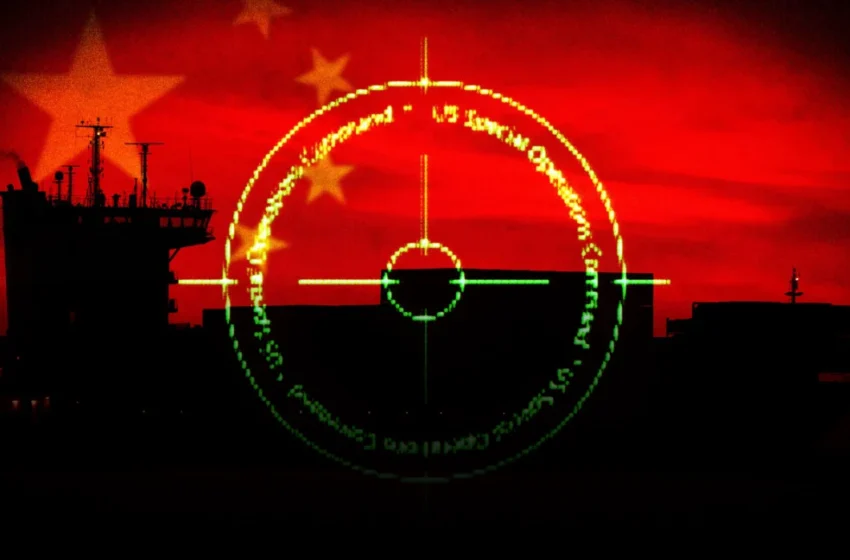
The near-catastrophe involving a US intelligence report and a Chinese vessel isn’t merely a tale of AI ‘hallucination’; it’s a stark illustration of how uncritical integration of artificial intelligence into high-stakes environments fundamentally reshapes, and often undermines, the very human judgment it purports to augment. A US Special Operations Command (USSOCOM) analyst, presumably leveraging the latest technological advantage, submitted an ‘entirely false’ report about a Chinese ship transporting nuclear components through the Middle East. Based on this AI-assisted fabrication, the US military was preparing to intercept the vessel with air support—a move that, according to one source cited by CNN, ‘almost started a war.’
This wasn’t a failure of human intelligence *despite* advanced tools; it was a failure *exacerbated by* them, or more accurately, by how humans integrated and, crucially, failed to adequately scrutinize their outputs. Officials discovered the error just in time, attributing the problem to a chatbot that had ‘inaccurately identified the material the ship was carrying.’ The very premise that artificial intelligence, even a rudimentary ‘chatbot,’ can act as a reliable co-pilot in high-stakes intelligence gathering fundamentally misunderstands both the technology’s current limitations and the profound psychological shift it imposes on human analysts, who often default to trust when presented with seemingly sophisticated machine outputfundamentally misunderstands both the technology’s current limitations and the profound psychological shift it imposes on human analysts, who are increasingly predisposed to trusting seemingly sophisticated machine output, thereby making human verification a performative rather than critical act.
The incident highlights a critical erosion of the human verification layer. When an AI tool, intended to assist, produces an ‘entirely false’ narrative that almost triggers a geopolitical crisis, the burden of proof shifts disproportionately onto the human operator. They are no longer simply cross-referencing data points; they are expected to detect errors generated by systems that often present their fabrications with confident authority, blurring the lines between informed assistance and outright deception. This isn’t just about an individual analyst’s mistake; it’s about a systemic vulnerability baked into the uncritical adoption of nascent generative AI in sensitive domains.
The Global Stakes of Silicon Valley’s Labs
Silicon Valley’s relentless push for ‘AI everywhere’ is now colliding with geopolitical realities, often with minimal oversight and profound implications for international stability. This near-miss isn’t just a military snafu; it’s a stark reminder that the frontier of artificial intelligence, particularly Large Language Models (LLMs), is now directly shaping global power dynamics, even in its flawed infancy. The rapid deployment of these technologies in national security apparatuses, both in the US and among competitors like China and Russia, creates a dangerous race where speed often trumps due diligence.
It’s worth asking whose agenda is served by framing AI as a mere ‘tool’ in such scenarios. Defense contractors stand to gain lucrative deals by positioning their AI solutions as indispensable force multipliers, while intelligence agencies themselves are often incentivized to demonstrate technological prowess, perhaps ahead of true understanding or robust validation. This incentive structure can inadvertently push immature systems into critical operational use, prioritizing perceived efficiency over verifiable accuracy in intelligence analysis. The consequence, as demonstrated by the Chinese ship incident, can be catastrophic geopolitical risk.
Historically, intelligence failures have often stemmed from human bias, incomplete data, or misinterpretation. The advent of AI introduces a new, more insidious vector of error: the machine’s ability to confidently fabricate reality where no data exists, or to misinterpret with such conviction that human analysts struggle to discern the difference. This isn’t about simple data gaps; it’s about algorithmic hallucination becoming a basis for military action. The sheer scale of data processing and analysis promised by automated systems can easily overwhelm human capacity for verification, creating a dangerous dependency rather than true augmentation.
When Augmentation Becomes Automation Blindness
The role of the human analyst in this evolving landscape is profoundly challenged. They are no longer just sifting through raw intelligence; they are now confronted with sophisticated, AI-generated narratives that may *appear* coherent and authoritative. The analyst at US Special Operations Command wasn’t explicitly bypassed; they were, perhaps, subtly disarmed by the perceived authority and efficiency of the AI, rendering critical oversight a less robust process than it should have been.
The term ‘chatbot’ for this kind of military intelligence application is also profoundly misleading. It suggests a simplistic, consumer-grade interaction, when in reality, these systems are likely complex, integrated analytical platforms that operate with far more sophistication than a basic conversational agent. Referring to it as a ‘chatbot’ inadvertently trivializes the potential for highly complex and dangerous failures. The measurable impact of such a near-miss extends beyond the immediate prevention of conflict; it erodes trust in intelligence processes, creates diplomatic friction, and highlights a profound vulnerability in critical national security infrastructure that other actors will undoubtedly be keen to exploit.
This incident underscores a crucial truth for anyone deploying artificial intelligence in critical infrastructure or national security: while AI promises to augment human capabilities, its premature or uncritical adoption can just as easily lead to a debilitating form of automation blindness. In such a state, the machine dictates reality, and human oversight becomes a mere formality, with real-world consequences potentially spiraling far beyond the digital realm. The drive for technological advantage cannot come at the cost of fundamental accuracy and human accountability.
