
AI’s Opaque Foundation: Brockovich Exposes Data Center Secrecy as Global Compute Race Escalates
- AI Infrastructure
Arjun Vedanta
- 0
- 4 minutes read
The Invisible Footprint of Global AI Ambition
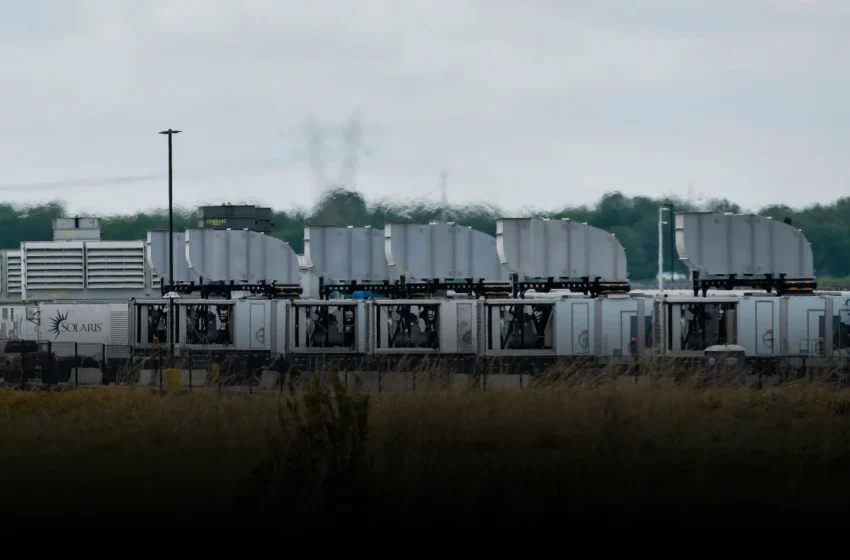
The quiet hum of servers, multiplying across the globe, represents the physical manifestation of the artificial intelligence revolution. While Silicon Valley pontificates on the transformative power of generative AI, an inconvenient truth is taking root in towns and rural areas far from venture capital offices: the infrastructure powering this ambition is being built largely in the dark, with minimal public oversight. Environmental activist Erin Brockovich, a name synonymous with corporate accountability, is now turning her attention to this hidden sprawl, launching a website to map and expose the opaque practices surrounding data center construction across the United States.
Brockovich’s initiative, stemming from nearly 4,000 community submissions in a single month, highlights a disturbing pattern: not simply a lack of public engagement, but active obfuscation. As she notes, “The single most common concern — more than noise, more than water usage, more than rising utility bills — is the one word that keeps appearing in submission after submission: transparency.” This isn’t just about local grievances; it’s a direct challenge to the global tech industry’s rapid, often unchecked expansion, an expansion increasingly driven by an insatiable demand for AI compute power.
When Geopolitical Imperatives Silence Local Voices
The fundamental disconnect Brockovich illuminates is between the strategic imperatives of nation-states and tech giants, and the lived realities of communities suddenly hosting massive industrial facilities. Governments worldwide are locked in a fierce competition for AI supremacy, and data centers are the digital battlefields. Massive investments, like SoftBank’s announced €75 billion for French data centers, underscore the geopolitical framing of these projects. When national security or economic dominance is at stake, local environmental assessments or community input can easily be deemed secondary concerns, delaying critical infrastructure and hindering competitive advantage.
This is where the industry’s incentives become dangerously clear. Developers are under immense pressure from private equity and venture capital to deploy infrastructure rapidly, meet demanding build-out schedules, and capture market share in a fiercely competitive environment. Securing permits quickly, often before public knowledge, and relying on non-disclosure agreements with local officials, streamlines this process. It bypasses potential public opposition, avoids costly delays, and ultimately reduces the financial risk to stakeholders. The opacity isn’t an accident; it’s a feature, designed to accelerate the rollout of what is increasingly seen as strategic national infrastructure.
The Broader Stakes of Data Center Secrecy
The consequences of this institutionalized secrecy extend far beyond the immediate concerns of noise or water consumption, critical as those are. Data centers are enormous consumers of electricity, often drawing power directly from grids already straining under increasing demand. The sheer scale of energy required to train large AI models, and then to operate them, means that every new data center has a substantial, long-term impact on local energy prices, carbon emissions, and grid stability. Communities are left footing the bill—both financially and environmentally—for a global technological arms race they had no say in joining.
This isn’t a problem unique to the United States. While precise regulatory frameworks vary, the global scramble for AI compute capacity often outpaces environmental and social governance. From European countries grappling with energy demands to Southeast Asian nations seeing a surge in facility proposals, the pattern of rapid deployment with inadequate local engagement persists. Brockovich’s work is not merely a regional exposé; it’s a potent signal that the true cost of our collective AI ambition, a cost disproportionately borne by specific locales, can no longer remain hidden behind corporate silence and fast-tracked permits. Until global tech truly grapples with its local responsibilities, the promise of AI will continue to cast a very long, very opaque shadow.
