
Amazon’s Drone Ambition: Who Pays for the Sky’s New Supply Chain?
- Robotics
Arjun Vedanta
- 0
- 5 minutes read
Amazon’s Drone Ambition: Who Pays for the Sky’s New Supply Chain?
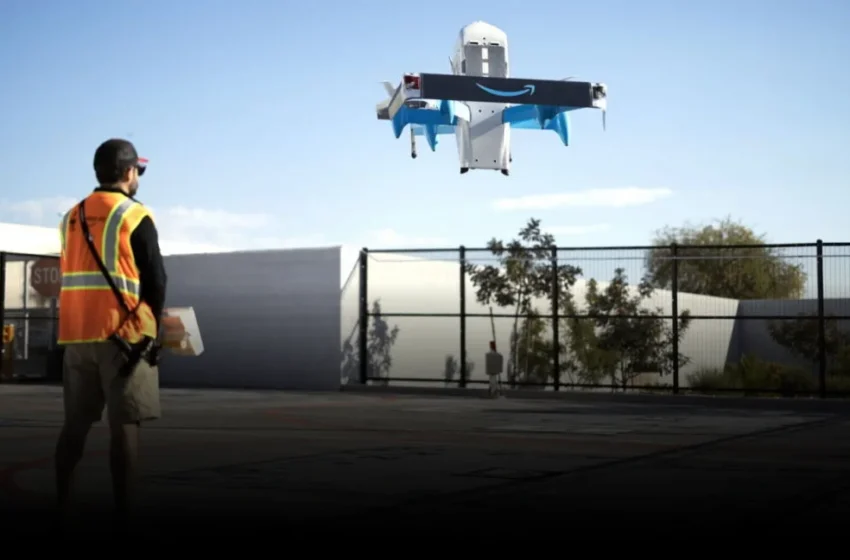
Five hundred US neighborhoods by the end of 2026. Amazon’s audacious target for its Prime Air drone delivery service isn’t merely about faster parcels. This sixfold expansion marks a radical, unexamined shift in who pays the true price for our instant gratification. It’s a systemic re-engineering of last-mile logistics, pushing the environmental and social costs of this new infrastructure onto local communities and public airspace, rather than internalizing them within the corporate model.
On August 19, the company announced Prime Air launches in metropolitan areas like Chicago, Cleveland, and Atlanta, building on existing operations in 10 cities across seven states, including Phoenix and Houston. Each Prime Air site promises delivery within a 175 square mile radius, often in less than an hour. The narrative spun around this aggressive timeline is one of unparalleled consumer convenience, an almost utopian vision of silent aerial automated assistants dropping packages at doorsteps. But a closer look reveals a familiar corporate playbook: privatize the gain, socialize the cost. The promise of tens of millions more people getting drone deliveries ignores the reality that these same millions will also contend with daily drone flights overhead, a new layer of urban noise pollution and visual clutter that hasn’t been adequately factored into the business model.
The Unseen Burdens of Sky-High Convenience
For all the talk of efficiency, Amazon’s dramatic expansion into drone delivery represents a significant externalization of costs. Traditional ground-based logistics, for all its traffic and emissions, is largely confined to established road networks, with its societal impact well-understood and, to some extent, regulated. Drone delivery, however, fundamentally reshapes our relationship with public airspace. The proposed service areas, each a significant 175 square miles, imply thousands of daily flights over suburban and even semi-urban environments. The noise profile, even from quieter electric drones, accumulates. What is an occasional hum today will become a persistent drone in hundreds of communities by 2026, adding another layer to existing urban noise pollution challenges that cities like London and Singapore have long grappled with from air traffic.
This isn’t merely an aesthetic concern; it’s a public health issue. Chronic exposure to even low-level noise contributes to stress, sleep disruption, and decreased quality of life. Municipalities are already struggling with the impact of increased truck traffic from e-commerce. Now, they face an entirely new front: airspace management. There’s a crucial lack of robust federal regulatory frameworks that anticipate this scale of operation, leaving local governments scrambling to understand their jurisdiction over airspace that’s effectively being privatized by corporate flight paths. The unspoken agreement underlying this expansion is that the sky, once common property, is now implicitly zoned for corporate convenience.
When Public Space Becomes Private Airway
Amazon’s aggressive push now isn’t merely about market share; it’s a strategic land grab for regulatory precedent and public acceptance, making it harder for municipalities to push back once drones become an inescapable buzz overhead. By launching in diverse locations from Boise to Baton Rouge, Amazon collects data and establishes operational norms ahead of comprehensive public policy. This strategy circumvents the kind of proactive urban planning and community engagement that should precede such a fundamental alteration of the public realm. The immediate beneficiaries are Amazon and its customers, but the long-term price is paid by everyone else in terms of peace, quiet, and increasingly congested skies.
Consider the cumulative impact on local economies and infrastructure. While drone delivery aims for speed, it also disintermediates local businesses further, moving more transactions away from brick-and-mortar stores. The need for drone landing zones, charging stations, and local fulfillment hubs also places new demands on land use, potentially at the expense of other community needs. This isn’t just an adjacent technology; it’s a redefinition of local commercial dynamics. The idea that Silicon Valley can simply lift logistics into the air to solve ground-level problems often ignores the complex terrestrial interdependencies that make cities function.
The expansion of Prime Air, while technically impressive, ultimately forces a crucial public conversation that the industry would rather gloss over. Who truly owns the skies above our homes? Who bears the cost—environmental, social, and psychological—when corporations turn public airspace into private delivery corridors? These are not questions for tech reporters focused solely on innovation metrics, but for urban planners, policymakers, and citizens worldwide who recognize that infrastructure decisions, whether on the ground or in the air, shape the very fabric of our lives.
