
Amazon’s Kuiper Satellites Stack Up as Global Launch Market Stumbles
- AI Infrastructure
Arjun Vedanta
- 0
- 5 minutes read
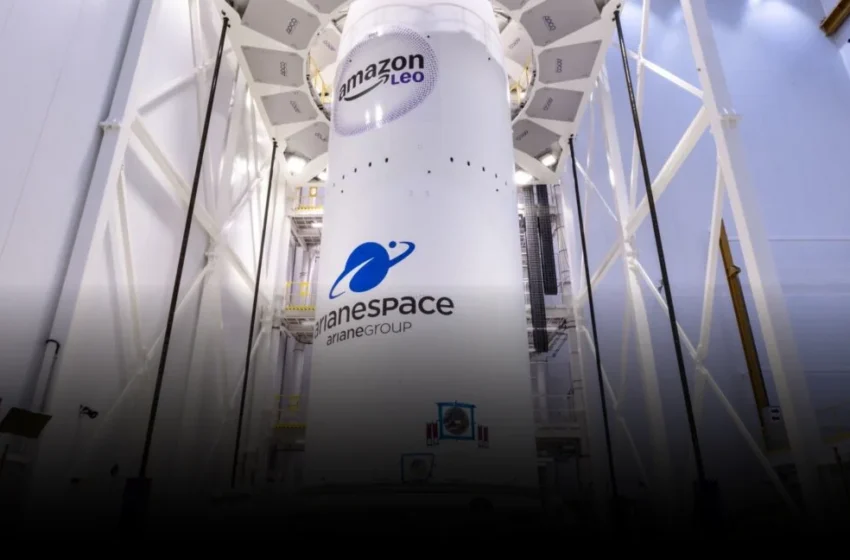
Amazon’s Manufacturing Prowess Meets Launch Pad Reality
Hundreds of Amazon’s Project Kuiper satellites are now built, packaged, and gathering dust in a Florida facility, waiting for a ride to orbit. This isn’t a supply chain triumph; it’s an uncomfortable exposure of a strategic miscalculation. Steve Metayer, Amazon’s vice president of Leo Production Operations, confirmed this week that satellites are being manufactured at a clip of several units a day, yet the critical path remains pinned on the global launch market – a market that simply hasn’t kept pace with Amazon’s ambitions, or its manufacturing capacity.
While the launch of 36 Kuiper satellites on an Ariane 64 rocket from French Guiana provides a much-needed, albeit modest, step forward, it underscores the larger problem. Amazon touted a diversified launch strategy, signing contracts with multiple providers, including ULA’s Vulcan Centaur and Blue Origin’s New Glenn. The theory was sound: spread the risk, ensure access. The reality? Vulcan Centaur suffered multiple delays, only recently completing its inaugural flight, and New Glenn remains a distant promise. This leaves Europe’s Ariane 6, itself delayed for years, as the primary workhorse delivering on Amazon’s commitments.
This rapidly accelerating satellite production, while impressive on paper, inadvertently exposes a critical and understated vulnerability: Amazon’s Project Kuiper constellation is effectively being held hostage by the nascent, slow-to-materialize heavy-lift rocket ecosystem it publicly championed. Silicon Valley reports often frame this as an external problem; from Geneva, it looks like a consequence of betting big on unproven capacity.
The Multi-Billion-Dollar Bottleneck That Nobody Saw Coming
Amazon has poured billions into Kuiper, mirroring the substantial investments made by competitors like SpaceX’s Starlink. Yet, Starlink benefits from the consistent, rapid-fire launches of its parent company’s Falcon 9 and Starship rockets. Amazon, by design, opted out of owning its primary launch capability, choosing instead to be a very large customer. That decision is now costing them time and, implicitly, money. The explicit goal of a global broadband constellation by a certain timeline demands a predictable, high-cadence launch schedule. With hundreds of satellites ready for deployment and more rolling off the production line daily, every day without a launch represents lost opportunity and capital sitting idle.
The current situation creates a fascinating incentive paradox. Amazon is manufacturing at industrial scale, pushing down unit costs for individual satellites. However, these savings are offset by the colossal fixed costs of the program and the opportunity cost of delayed revenue streams. The announcement of ongoing manufacturing and the upcoming Ariane 6 launch, while factual, also serves as a strategic communication tactic: to project progress and reassure investors that momentum exists, even if the largest hurdle remains external and largely outside Amazon’s direct control.
It’s a peculiar sight: a company renowned for its logistical prowess finding its multi-billion-dollar space venture hamstrung not by manufacturing, but by the fundamental physics of getting things into orbit. One might argue that relying on new, still-in-development rockets from ULA and Blue Origin was a necessary gambit to foster competition and secure future capacity. But the immediate impact is a glaring chasm between ground-segment readiness and orbital deployment, a chasm only partially bridged by Arianespace.
The Global Stakes: Competition and Connectivity
The delay in Project Kuiper’s full deployment has tangible consequences in the increasingly competitive low-Earth orbit (LEO) broadband market. SpaceX, with its Starlink constellation, already serves millions of subscribers globally, demonstrating consistent service and expanding coverage. OneWeb, while experiencing its own financial and geopolitical challenges, has also established a significant LEO presence. Amazon’s initial advantage, its sheer financial firepower, is being blunted by the inability to translate manufactured hardware into an operational network.
Consider the regulatory and spectrum implications. Orbital slots and spectrum allocations often come with deployment deadlines. While Amazon has demonstrated progress with initial launches, prolonged delays could invite scrutiny and create additional pressures down the line. The current situation highlights how even the most well-funded tech giants are not immune to the intricate, often frustrating, realities of the space industry’s infrastructure. The promise of global internet connectivity from LEO is immense, but the path to delivering it is paved with more than just advanced satellite manufacturing; it demands a robust, reliable, and available launch ecosystem.
This isn’t just about Amazon; it’s a bellwether for the entire commercial space sector. The demand for launch services, particularly for LEO constellations, is exploding, yet the supply side is struggling to scale beyond a handful of established players. Until new heavy-lift rockets become truly operational and reliable at high cadence, even companies with Amazon’s resources will find their grand orbital ambitions grounded.
