
America’s Chemical Safety Retreat: A Global Blueprint for Industrial Hazard
- Automation
Arjun Vedanta
- 0
- 5 minutes read
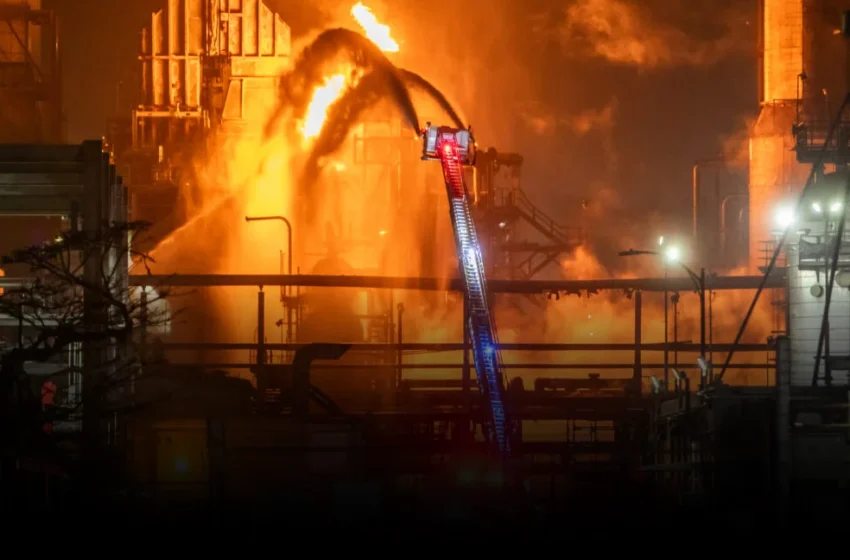
The Chemical Threat Beyond Borders
The highly corrosive nature of hydrofluoric acid (HF) — a chemical integral to everything from refrigerants to Teflon — renders it a global flashpoint for industrial safety. Physicist Ronald Koopman’s foundational 1980s experiments, warning of deadly accident potential, are now gaining a stark new relevance, not just in Southern California but across every industrial zone on Earth. The Trump administration’s proposals to weaken crucial safety rules designed to prevent catastrophic chemical releases in the United States, amidst a documented rise in industrial accidents, isn’t merely a domestic policy shift; it’s a dangerously visible signal to global industry regarding the value of human and environmental safety.
For too long, the narrative around industrial policy has remained siloed within national borders, or focused narrowly on economic competition. What’s consistently overlooked is how one major economic power’s regulatory stance reverberates through a globally interconnected system of manufacturing, supply chains, and, crucially, safety standards. This isn’t about innovation in the traditional sense, but about the bedrock technology of risk management itself – a field often ignored by venture capitalists, yet vital to every connected device and synthetic material we consume.
The Incentive Trap: Efficiency Over Resilience
The impetus behind loosening regulatory constraints is almost universally framed around ‘efficiency’ and ‘reducing the burden on industry.’ In practice, this often translates to a direct incentive: cutting costs by deferring investments in critical safety infrastructure, reducing compliance overheads, and slowing the adoption of modern process control technologies. While the Trump administration argues its reforms foster economic growth, the tangible benefit for many companies is simpler: cheaper operation, particularly for older plants that might otherwise face costly upgrades. This short-term gain comes at an unstated long-term cost.
These proposed changes, directly impacting the governance of hazardous materials like HF, represent a conscious political choice about the acceptable level of risk. This isn’t a new technological breakthrough necessitating a re-evaluation of old rules; it’s a rollback of established protections designed for known, high-consequence dangers. The loudest voices for ‘innovation’ in industrial tech rarely advocate for commensurate investment in the sensor networks, automated shutdown systems, and predictive maintenance software that actually prevent these disasters. Their silence is telling.
Even a casual observer notes the predictable cycle: an industrial accident triggers public outcry, leading to stricter regulations, followed by industry lobbying for deregulation in quieter times. The current situation in the US appears to be a proactive move in this cycle, betting that the cost of potential future accidents will be less than the present cost of compliance. This calculus might make sense on a quarterly earnings report, but it’s a morally bankrupt equation for communities living downwind.
A Global Race to the Bottom in Safety Tech
From my vantage point in Geneva and Singapore, where regulatory frameworks often strive for stricter adherence, the US posture is particularly troubling. American industrial standards, whether formal or de facto, hold immense weight globally. When the world’s largest economy signals a retreat from stringent chemical safety, it emboldens other nations and multinational corporations operating in less regulated environments to follow suit. This creates a dangerous ‘race to the bottom,’ where the lowest common denominator for safety becomes the default, rather than the aspirational high bar.
Consider the practical implications: less rigorous oversight in the US can lead to the proliferation of older, less secure industrial technologies and processes. Manufacturers that would otherwise invest in advanced safety automation, state-of-the-art containment, or real-time environmental monitoring systems might now defer those upgrades. This isn’t just about ‘rules’; it’s about the market signals sent to the developers of industrial IoT, advanced materials, and process safety software. Why develop robust solutions if the market for them is shrinking due to relaxed requirements?
The current analysis points to rising accident rates – a stark and measurable impact. This isn’t a theoretical concern; it’s a present reality. These incidents underscore a profound failure to value industrial resilience and preventative measures. The true ‘technology’ here is the integrated system of engineering, automation, and regulatory oversight that prevents catastrophes. When any leg of that stool is weakened, the entire structure becomes precarious, exposing workers, communities, and fragile ecosystems to unacceptable risk. The promise of industrial advancement has always been tempered by the responsibility to manage its inherent dangers; actively undermining that responsibility casts a long shadow over the very notion of progress.
