
Anthropic’s Risky White House Dinner: AI Safety Meets Political Power Play
- Government & Policy
Arjun Vedanta
- 0
- 5 minutes read
When Guardrails Meet ‘Super Intelligence’: The Deepening AI Chasm
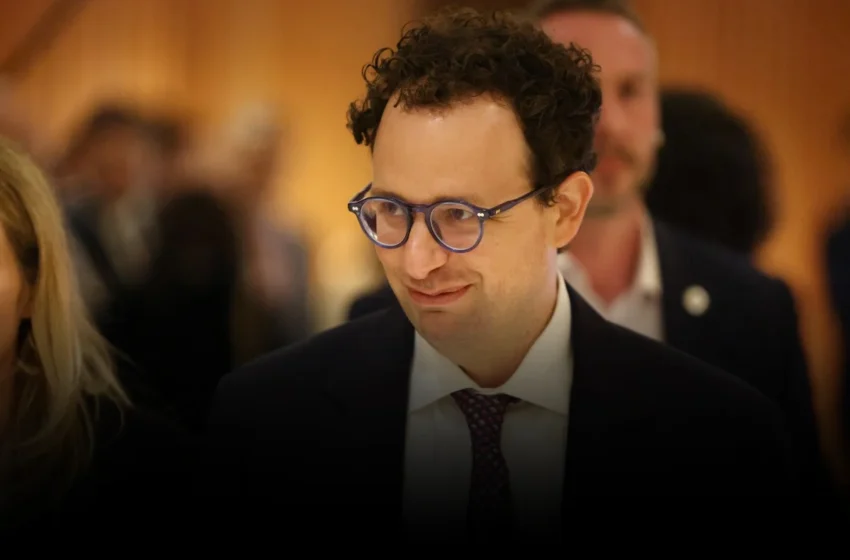
Dario Amodei, the CEO of Anthropic, is having dinner with President Donald Trump at the White House this weekend. For many, this sounds like a routine exchange between a tech titan and a head of state. But for those watching the nascent, fractured landscape of AI governance beyond Silicon Valley’s bubble, this meeting is anything but. It represents a startling, public collision of diametrically opposed philosophies on artificial intelligence, and it highlights how quickly the debate has moved from technical whitepapers to partisan political battlegrounds.
Amodei’s company, Anthropic, has positioned itself as a champion of AI safety and responsible development, advocating for guardrails and a cautious approach to what he himself described as potentially transformative — and dangerous — technology. Only recently, he released a plan that called for slowing down development, or at least proceeding with greater caution. Meanwhile, President Trump has vocally dismissed concerns about AI’s potential risks as a ‘Democratic hoax’ and champions an unbridled acceleration, rebranding the technology as ‘super intelligence.’ This isn’t merely a philosophical disagreement; it’s an ideological chasm, now manifesting over a White House dinner table.
The backdrop to this meeting isn’t just a difference of opinion; it’s a history of friction. Earlier this year, the Pentagon designated Anthropic a ‘supply-chain risk,’ a direct response to the company’s attempts to implement precisely those guardrails around its technology. Anthropic has been fighting this designation in court, suggesting an administration with fragmented views on the company, or perhaps a calculated strategy of pressure. This dinner, then, is less about consensus-building and more about a high-stakes power play, where national security interests are openly clashing with corporate governance principles.
The Geopolitics of AI: Who Benefits from This Embrace?
This engagement transcends the typical Silicon Valley lobbying efforts. It’s an explicit attempt by political leadership to directly influence the trajectory of a technology deemed critical to national power, but on terms that are fundamentally at odds with one of its leading developers. Why this meeting now? The timing is crucial. With the 2026 election cycle in full swing and global rivals like China pouring resources into AI, the messaging around American technological leadership is paramount. For President Trump, engaging directly with a prominent AI CEO, especially one previously at odds with his administration’s hardline stance, could serve multiple purposes.
It offers an opportunity to project an image of command over a critical industry, demonstrating that the administration is actively shaping the future of AI. It also allows for a potential softening of dissent, perhaps drawing Anthropic — or at least its CEO — into the fold of the administration’s ‘super intelligence’ narrative. One could cynically observe that an evening meal is a remarkably inexpensive way to try and co-opt a narrative, particularly when an election looms. For Amodei, the incentive to attend is clear: direct access to the highest office, a chance to articulate his concerns face-to-face, and perhaps an attempt to mitigate the ongoing ‘supply-chain risk’ designation.
Yet, the core contradiction remains: how does one reconcile an agenda of unfettered ‘super intelligence’ development with a company founded on the principle of extreme caution and safety? This isn’t merely a policy debate; it’s a fundamental conflict over the very definition of progress in AI. This strategic engagement, therefore, benefits the administration by providing a photo opportunity and a narrative of engagement, regardless of whether any substantive policy alignment emerges. For Anthropic, it’s a gamble – a test of whether principle can withstand the intense gravitational pull of political expediency.
Fragmented Futures: The World Watches America’s AI Discord
The global community watches these developments closely. While the European Union advances its comprehensive AI Act, and China implements its own set of sophisticated, albeit state-centric, regulatory frameworks, the United States presents a picture of internal discord. The conversation here isn’t just about regulatory bodies and legal texts; it’s about the ideological underpinnings of AI itself being pulled apart by partisan forces.
The idea that AI safety concerns are a ‘hoax’ isn’t just a rhetorical flourish; it actively undermines efforts at establishing responsible AI governance and fuels a dangerous race to the bottom, where ethical considerations are sacrificed for perceived strategic advantage. This politicization makes any cohesive national AI strategy incredibly difficult to forge, leaving foundational models to develop in a less regulated, more volatile environment. The potential for a fragmented US approach to AI — one where leading companies might align themselves based on political convenience rather than scientific consensus or ethical imperatives — sends a deeply unsettling signal to partners and rivals alike.
This dinner, ostensibly about technology, is profoundly about power. It underscores a central structural implication the original article only hinted at: the increasing difficulty of insulating critical technological development from hyper-partisan politics, especially when national security and economic dominance are perceived to be at stake. The idea that Silicon Valley can maintain an apolitical stance, or that technical safety issues can be debated purely on their merits, has become a quaint notion. We are witnessing the fusion of technological ambition with raw political will, and the outcomes for global AI governance are far from certain, but likely more chaotic.
