
Apple TV’s Neuromancer: The Irony of Corporate Cyberpunk
- Artificial Intelligence
Arjun Vedanta
- 0
- 5 minutes read
Apple’s Cyber-Washing of a Classic Dystopia
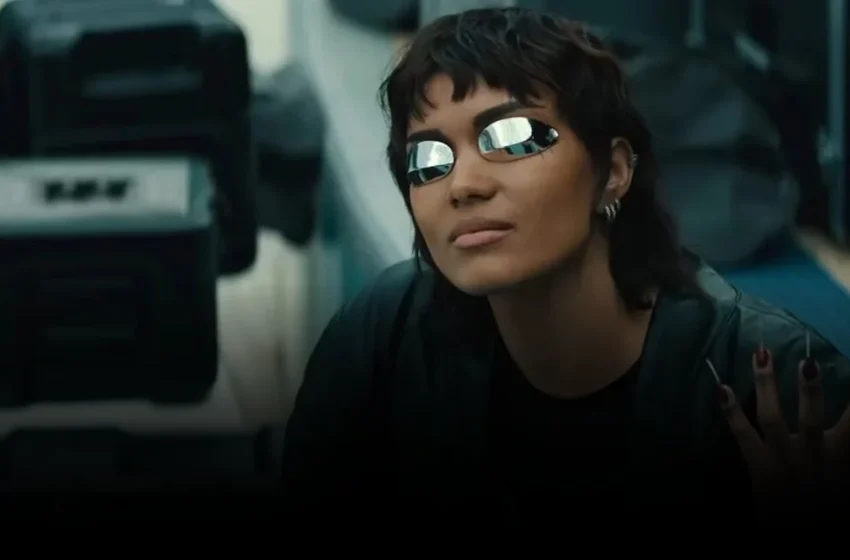
The first glimpse of Apple TV’s Neuromancer, debuted at San Diego Comic-Con, paints a predictably slick picture. Visually arresting and undeniably high-budget, the minute-long teaser promises a faithful aesthetic rendition of William Gibson’s seminal 1984 novel. Yet, the real story isn’t about how good the chrome looks, or if Callum Taylor can embody Case’s cynicism. It’s the profound, almost cynical, irony of a multi-trillion dollar corporation like Apple producing an adaptation of a text whose very foundation is a scathing critique of unchecked corporate power and surveillance. This isn’t just about translating a book to screen; it’s about a platform known for its polished, aspirational brand attempting to digest and repackage a story that thrives on grit, subversion, and existential dread against corporate overlords.
The original Neuromancer wasn’t merely a blueprint for the cyberpunk genre; it was a prophetic warning. Gibson envisioned a world where corporations wielded more power than governments, where technology blurred the lines between human and machine, and where identity was a commodity. His hackers, like Case and Molly, weren’t superheroes; they were desperate, broken figures operating in the shadows of vast, impersonal zaibatsus. To see Apple, an entity whose global reach and vertical integration embody some of the very trends Gibson foreshadowed, take on this narrative demands a closer look at the incentives at play.
The Incentive: Consuming Counterculture as Content
Apple’s move into high-concept science fiction isn’t new. Its roster already boasts critically acclaimed series like Severance and Foundation, signaling a clear strategy to dominate the “prestige TV” space. This pursuit of genre IP, particularly established literary works, serves a dual purpose: it attracts discerning audiences already familiar with the source material, and it provides a veneer of intellectual depth that differentiates it in the crowded streaming wars. For Apple, Neuromancer represents a prestigious cultural artifact, ripe for adaptation into more exclusive content. The problem, however, lies in how fundamentally antithetical Gibson’s vision is to Apple’s polished, user-friendly ecosystem.
The novel’s themes — corporate espionage, data ownership, artificial intelligence run amok, and the desperate struggle of individuals against overwhelming systemic forces — are uncomfortable reflections of our present. Apple, like other tech giants, often presents its innovations as empowering, frictionless, and aesthetically perfect. How will it reconcile this brand identity with a narrative that portrays technology as both liberator and enslaver, often in the service of opaque, all-powerful entities? It is a skeptical observation to suggest that the visual fidelity of the teaser might inadvertently distract from an inevitable narrative dilution, sanding down the sharp edges of Gibson’s anti-establishmentarianism for broader appeal. The decision to adapt Neuromancer now, more than four decades after its publication, is less about historical preservation and more about capitalising on a renewed cultural fascination with cyberpunk aesthetics, decoupled from its radical roots.
Diluting Dystopia for a Global Audience
Silicon Valley’s default mode is often one of optimism, even when depicting dystopia. Contemporary adaptations frequently soften the political and economic critiques embedded in their source material, opting instead for character-driven drama or spectacle. This isn’t a US-centric phenomenon; it’s a global trend in media production, especially as platforms compete for billions of eyeballs across diverse markets. The risk with Apple’s Neuromancer is that its raw, grimy portrayal of a world defined by corporate overreach and human disposability will be streamlined into a more palatable hero’s journey, losing its biting satire and uncomfortable truths about power dynamics. Will the villainous mega-corporations retain their horrifying indifference, or will they be reframed as understandable antagonists within a more conventional good-vs-evil framework?
From my vantage point covering global tech, this isn’t merely an artistic debate; it’s a symptom of a larger trend where foundational texts of resistance are absorbed and neutralized by the very systems they critique. When a corporation founded on pervasive digital services and sleek consumer hardware takes on a story about the dangers of those very things, the result is rarely uncompromised. The global audience, fluent in the visual language of streaming, might get a fantastic show, but they risk missing the visceral, uncomfortable core of what made Neuromancer so impactful in 1984. It is not just an adaptation; it is a corporate reinterpretation, designed to entertain rather than provoke genuine introspection about the digital age’s architects.
