
Apple’s AI ‘Trust Architecture’ Reconfigures the Global Data War
- Artificial Intelligence
Arjun Vedanta
- 0
- 5 minutes read
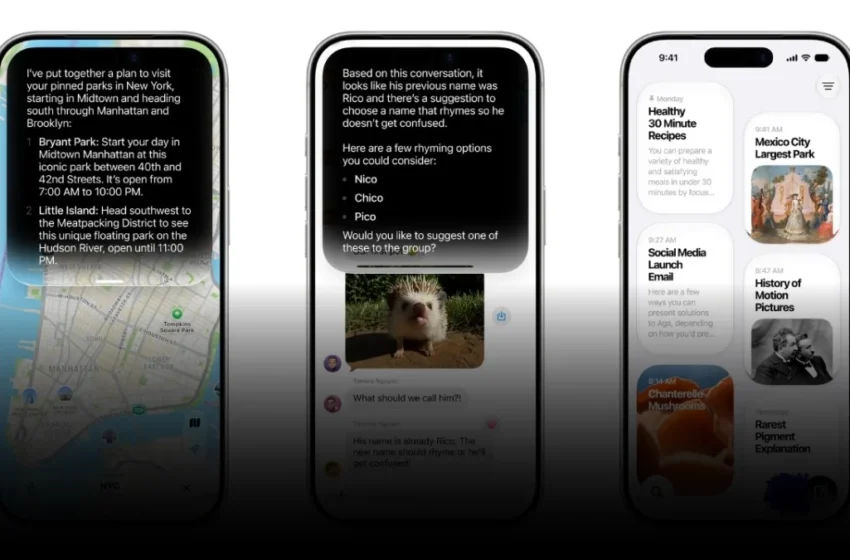
Apple’s Hybrid AI: A Strategic Retreat or a Masterstroke?
The conventional wisdom states that Apple is late to the generative AI party, playing catch-up to the likes of OpenAI and Google. This misses the point entirely. With the release of the iOS 27 public beta, Apple isn’t just rolling out an updated Siri; it’s deploying a fundamentally different trust architecture for artificial intelligence, one engineered to carve a unique path through the increasingly contentious global landscape of data privacy and sovereignty.
Apple’s new Siri AI, powered by what it calls Apple Intelligence and its bespoke Foundation Models, offers an on-device/private cloud hybrid. This isn’t a mere technical detail; it’s a strategic pivot. While its US counterparts are locked in a high-stakes race to vacuum up vast quantities of public data for their sprawling cloud-based models, Apple is betting on localized processing and an opaque, proprietary ‘Private Cloud Compute’ system. This approach—building its models specifically for Apple Silicon and distilling others like Google’s Gemini for efficiency—signals a clear intent to differentiate itself not on sheer computational scale, but on a tightly controlled user experience and a carefully curated privacy narrative.
The announcement, carefully timed with a public beta for some 2.5 billion active devices, serves not only to test new features but also to strategically position Apple as the responsible custodian of personal AI, thereby strengthening its appeal to privacy-conscious consumers and pre-empting future regulatory pressures that could hamstring its cloud-first competitors.
The Global Privacy Gambit: Beyond US Shores
For years, Silicon Valley has operated on the assumption that data would flow freely across borders, centralized in massive server farms. Europe’s GDPR, China’s evolving data security laws, and a patchwork of national regulations have shattered that illusion. Countries are increasingly demanding data localization, scrutinizing cross-border data transfers, and questioning the very basis of large-scale data collection by foreign entities.
Apple’s Private Cloud Compute, which promises that user data isn’t stored or accessible to Apple, is not just a feature for domestic consumption; it’s a global regulatory arbitrage play. By processing sensitive personal data on-device or within cryptographically protected private clouds, Apple presents a compelling, albeit opaque, alternative. This could allow it to sidestep the intense scrutiny faced by OpenAI’s ChatGPT, Google’s Gemini, or Microsoft’s Copilot, whose reliance on centralized public cloud infrastructure makes them vulnerable to data sovereignty demands and potential legal challenges in markets like the EU or India, where privacy norms are stricter and trust in US tech giants is waning.
While Apple boasts of its ‘Private Cloud Compute’ as an unassailable bastion of user privacy, the reality for regulators outside the US might be a proprietary black box whose true data flows and processing safeguards remain opaque, even if encrypted. Regulators are increasingly wary of ‘trust me’ propositions from tech behemoths, regardless of their origin. The challenge for Apple will be to make this opaque architecture auditable enough to satisfy skeptical governments without compromising its proprietary advantage or the perceived security of its system.
Siri’s ‘New’ Brain: Distilled Power or Clever Marketing?
The technical underpinning of this new Siri AI is Apple Intelligence, built on Foundation Models developed in collaboration with Google. The company explicitly states these are not merely rebranded Gemini models but ‘distilled’ versions optimized for Apple Silicon and proprietary data. This explanation, while technically plausible for achieving edge AI efficiency, raises questions about the true extent of Apple’s generative AI innovation versus its capacity for sophisticated integration and branding.
Early tests of the developer beta indicate improved performance for tasks like summarizing group texts, finding photos, and scheduling appointments from messages. The seamless integration across iOS 27, iPadOS, macOS, watchOS, and even Vision Pro suggests a formidable user experience that transcends standalone chatbot applications. Siri can now act directly on device data and respond to on-screen context, a significant leap from its previous, often frustratingly limited capabilities.
However, the transition from a frequently confused voice assistant, prone to searching contacts for ‘Iran news’ as reported in early tests, to a truly intelligent personal AI assistant is a monumental undertaking. The public beta, for all its promise, will be the ultimate proving ground. The success of this hybrid model hinges not just on its privacy guarantees, but on its ability to deliver genuinely helpful and consistently reliable intelligence without the constant churn of error messages or semantic misunderstandings.
This isn’t merely an update; it’s Apple’s audacious attempt to redefine the terms of engagement in the generative AI race. By prioritizing a privacy-centric, on-device/private cloud model, Apple is seeking to inoculate itself against the global regulatory headwinds that threaten to ground its competitors. Whether this calculated gamble pays off, allowing Apple to assert a new form of digital sovereignty for its users, will shape the future of consumer AI far beyond the walled garden.
