
Apple’s Memory Excuse: A Strategic Premium Play
- Tech
Arjun Vedanta
- 0
- 5 minutes read
Beyond the Bill of Materials: Apple’s True Costs
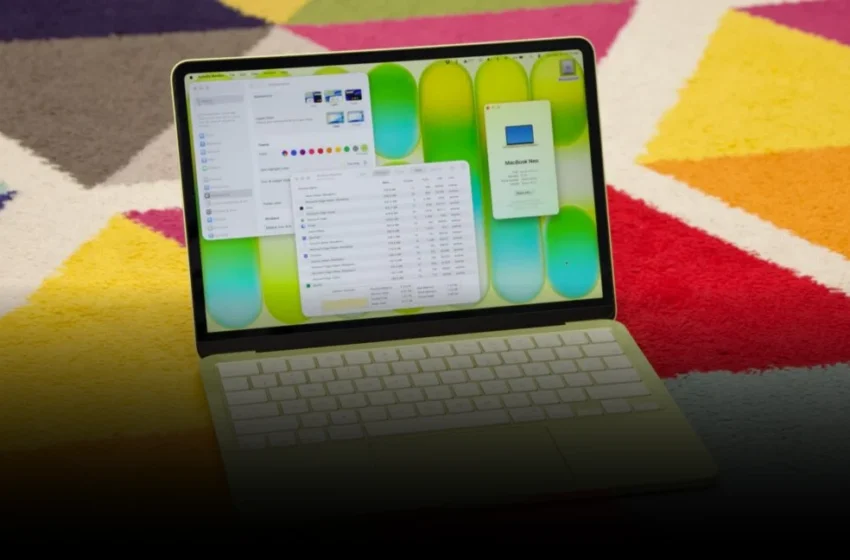
A $1,300 price jump on an M3 Ultra Mac Studio. A new base MacBook Neo now costs a crisp $100 more, reaching $699. These are not minor adjustments, and certainly not the subtle nudges often seen from Cupertino. Apple has significantly ratcheted up prices across much of its product portfolio, with CEO Tim Cook swiftly pointing the finger at the “soaring price of memory,” describing the situation to The Wall Street Journal as “unsustainable” for continued absorption.
This narrative—Apple as a passive recipient of external market forces—is a curious one for a company that has long prided itself on unparalleled supply chain mastery and premium pricing power. It’s a convenient explanation, to be sure, allowing Apple to solidify its high-end market position while neatly sidestepping a more nuanced discussion about its variable product margins and strategic resilience in the face of component fluctuations.
For a company that commands some of the highest profit margins in consumer electronics, typically boasting gross margins above 40%, the idea that rising memory costs are suddenly an insurmountable obstacle requiring such widespread, hefty price increases warrants deeper scrutiny. This isn’t just about a few cents on a NAND chip; it’s about Apple’s willingness—or rather, its strategic choice—to pass these costs directly to the consumer, particularly on its higher-spec machines where memory configuration scales dramatically.
The Variable Impact: Why Some Products & Not Others?
The price increases are not uniform. While the Mac and iPad lines see substantial bumps—from $100 to a staggering $1,300 on the Mac Studio with 96GB of memory—the iPhone, Apple’s undisputed cash cow and volume leader, remains untouched for now. Smaller price increases were noted for the Apple TV and HomePod. This selective application of “unavoidable” cost increases is telling.
It suggests that memory costs are either disproportionately impacting certain product lines, or that Apple is making calculated decisions about where it can push prices without significant market backlash. The iPhone, operating in a hyper-competitive global smartphone market, likely has less elasticity for price hikes without risking market share, especially in crucial emerging markets. Conversely, professional-grade Macs and high-end iPads, often purchased by users who are more entrenched in the Apple ecosystem and rely on specific hardware capabilities, offer greater pricing flexibility.
The argument that memory costs are driving this is certainly plausible on a technical level. Dynamic Random Access Memory (DRAM) and NAND flash memory are fundamental components across all these devices. However, the intensity of the hikes on professional gear, where memory is often configurable up to hundreds of gigabytes, suggests a leverage point. When a single component’s cost is cited as the primary reason for a $1,300 increase on a machine, it highlights how much margin Apple traditionally holds on those higher-spec configurations—and how much more it intends to extract.
Reframing Value in a Premium Market
The global technology sector is seeing a shift. Major semiconductor manufacturers are consolidating, chip fabrication costs are climbing due to advanced node development, and geopolitical tensions continue to complicate global supply chains. Within this context, Apple’s move can be seen not just as a reaction to memory prices, but as a deliberate step to normalise higher price points for premium technology.
This announcement, framed by Tim Cook as a regrettable necessity, serves a dual purpose: it justifies immediate revenue boosts and subtly recalibrates consumer expectations for future high-end product pricing. By explicitly blaming memory, Apple anchors the discussion to a tangible, external factor. This provides an incentive for customers to accept the new baseline, implicitly suggesting that these are the true costs of innovation and quality in today’s environment. This is a brilliant strategic maneuver, designed to fortify the perception of Apple’s offerings as premium-tier products, indispensable even at escalating prices, rather than raising questions about its internal cost efficiencies or profit ambitions.
Ultimately, this isn’t just a simple pass-through of increased component costs. It’s a calculated play by a company that understands its immense brand equity and the stickiness of its ecosystem. While other tech giants like Samsung or HP might struggle with similar component pressures, Apple consistently manages to translate cost increases into higher average selling prices, further distancing itself from competitors and solidifying its position at the very top of the consumer tech market. The sharpest sentence here is that Apple isn’t a victim of market forces; it’s a master at turning them into an advantage, and this latest round of price hikes is another testament to that enduring power.
