
Apple’s Ternus Era: Why Nvidia’s AI Stack Bet Challenges Cupertino’s Core Strategy
- Artificial Intelligence
Arjun Vedanta
- 0
- 5 minutes read
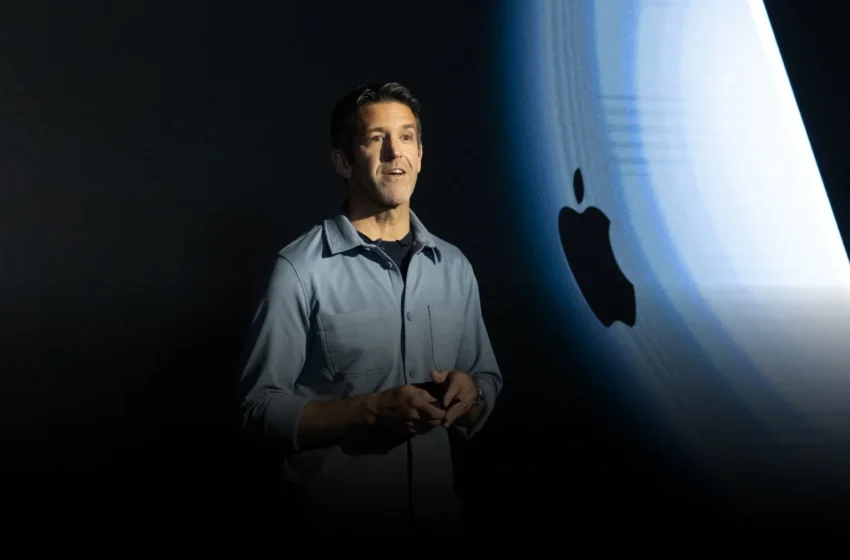
Apple’s New Steward, Old Playbook
John Ternus steps into the Apple CEO role with a “huge launch next week” — an immediate, tangible challenge that speaks volumes about the company’s entrenched product cycles. Tim Cook, moving to Executive Chairman, is not truly stepping away, but rather shifting his focus to policy and external relationships, a role that becomes increasingly crucial as geopolitical tensions reshape global supply chains and data regulations. This transition appears designed to project stability and continuity, yet it underpins a fundamental tension: Apple’s legendary vertical integration, once its unassailable strength, faces unprecedented pressure in a world increasingly defined by foundational AI infrastructure.
For a company built on controlling every aspect of its user experience, from the proprietary silicon inside devices to the polished software running on them, the new leadership’s immediate priority is clear: deliver more of the same. An iPhone launch under Ternus means reinforcing Apple’s traditional hardware-centric model, a strategy that has served it spectacularly well for decades. But the global tech chessboard has shifted, and the most valuable pieces are no longer solely in consumer devices. They are in the distributed intelligence layer that powers everything else.
Nvidia’s Full Stack Ambition
Across the industry, Nvidia is sketching out a vastly different future. While Apple prepares for another iteration of its flagship device, Nvidia is systematically consolidating control over the entire artificial intelligence stack. Its acquisitions, such as the strategic purchase of Hugging Face, aren’t merely about expanding market share; they are about embedding Nvidia’s GPU architecture into the very fabric of open-source AI development and research. This move extends its reach from the raw compute power of its H200 chips to the developer tools and communities shaping the next generation of models.
The investment in MediaTek and deepening compute deals further illuminate this ambition. Nvidia isn’t just selling powerful GPUs; it’s building a pervasive ecosystem. From data center cloud AI to edge computing, the company is ensuring that its hardware and software platforms become the indispensable backbone for any significant machine learning endeavor. This calculated expansion is driven by a clear incentive: by owning more of the AI infrastructure, Nvidia can dictate future standards, accelerate adoption of its technologies, and make itself an indispensable partner — or gatekeeper — across every layer of the AI value chain. The implicit message is that if you want to play in the deep AI game, you will play it on Nvidia’s terms.
The Unseen AI Chasm
This aggressive, full-stack approach from Nvidia highlights a quiet structural implication for companies like Apple. Apple’s control over its own proprietary silicon, like the A-series chips for mobile devices or the M-series for Macs, is unparalleled for client-side performance and efficiency. Yet, the current frontier of AI innovation—large language models, complex neural networks, and sophisticated foundation models—is predominantly developed and trained on massive GPU clusters in the cloud, an arena where Nvidia utterly dominates.
While Apple will undoubtedly integrate more on-device AI capabilities into future iPhones and Macs, the heavy lifting of cutting-edge AI research and development often happens off-device. This creates a chasm: Apple excels at optimizing the consumption of AI on its devices, but it increasingly relies on external ecosystems for the production and training of the most advanced AI. This isn’t merely a partnership; it’s a dependence. A skeptical observation here is that Apple’s famed vertical integration, once the envy of the industry, might inadvertently become a bottleneck, limiting its agility in the foundational AI race if it cannot replicate or acquire similar full-stack capabilities at scale. This reliance could quietly erode some of the strategic independence Apple has so zealously protected for decades, forcing Ternus’s Apple to navigate an increasingly complex web of AI suppliers and standards set by others.
The tech industry’s gravitational center is shifting. It’s no longer just about the next smartphone or tablet. It’s about who controls the intelligence that underpins all computation. Ternus has inherited a formidable, profitable empire, but its long-term future may hinge less on incremental hardware improvements and more on how swiftly and effectively Apple can bridge this growing chasm in foundational AI. The real test won’t be the success of the next iPhone, but whether Apple can truly own its AI destiny, or if it will become just another powerful client in Nvidia’s ever-expanding computational matrix.
