
Autonomous Promises vs. Urban Reality: Why Robotaxis Won’t Solve Traffic
- Artificial Intelligence
Arjun Vedanta
- 0
- 6 minutes read
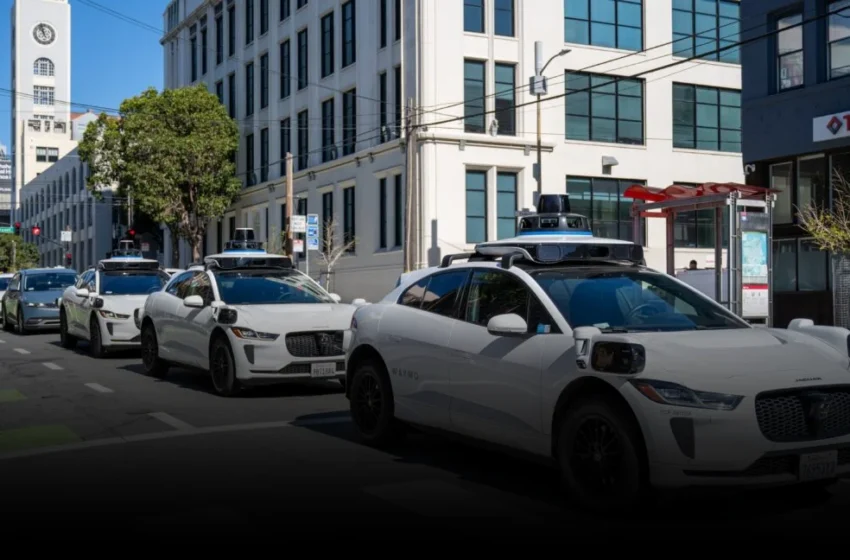
The core promise of autonomous vehicles has always been twofold: safety and efficiency. After over a decade of intense development and a staggering $100 billion in investment, Waymo’s commercial robotaxi operations in cities like San Francisco and Phoenix offer a real-world crucible for these claims. While safety data from last year suggests Waymo vehicles are involved in fewer crashes than human-driven cars, a critical analysis of their impact on urban arteries reveals a profound, unaddressed contradiction: they are doing little, if anything, to alleviate traffic congestion.
This isn’t an incidental detail; it strikes at the heart of the societal benefit pitched by Silicon Valley’s loudest evangelists. Replacing human drivers with sophisticated AI doesn’t magically create more road space or fundamentally alter travel demand. Instead, the data reported by Waymo to the California Public Utilities Commission indicates its autonomous vehicles contribute to traffic patterns in a manner remarkably similar to existing ride-hailing services such as Lyft and Uber. This isn’t just a missed opportunity; it’s a structural failure to rethink urban mobility, instead replicating the very problems we hoped technology would transcend.
The Myth of the Congestion Cure
For years, the narrative around autonomous vehicles, particularly shared robotaxis, was that they would revolutionize urban transit, making cities more livable by reducing the number of cars on the road and optimizing traffic flow. The argument hinged on higher utilization rates and smart routing, theoretically leading to fewer empty seats and less cruising. Yet, as Waymo’s operational footprint expands, the empirical evidence points to a different reality, one stubbornly consistent with established principles of urban planning: induced demand remains a relentless force.
The notion that merely swapping a human for a robot at the wheel would somehow dissolve traffic jams was always a fantasy, largely divorced from the complexities of urban dynamics. Congestion is not solely a function of driving proficiency; it’s a direct consequence of physical space constraints and the aggregate volume of individual vehicle trips. Whether that trip is taken by a human in a personal car, a human in an Uber, or a robotaxi carrying a single passenger, it still occupies the same patch of asphalt. The introduction of more convenient, albeit autonomous, point-to-point transport options risks encouraging more individual trips that might otherwise be combined, deferred, or replaced by public transit or micromobility solutions.
The Perils of ‘Last Mile’ Convenience
Proponents often frame robotaxis as a solution to the “last mile” problem, bridging the gap between public transport hubs and final destinations. While this use case has merit, the reality is often more expansive. When a user can summon a private, autonomous vehicle directly to their door for the entire journey, the incentive to utilize existing bus or rail networks diminishes. This isn’t innovation; it’s a high-tech iteration of the same car-centric urban planning that has plagued cities globally for the last 70 years, often prioritizing individual convenience over collective efficiency.
Incentives and the Private Car Fetish
The current business model of autonomous ride-hailing is predicated on per-trip revenue. This fundamental economic driver naturally incentivizes more individual rides, not fewer. The companies investing billions into this technology – Waymo, Cruise, Mobileye – are not primarily public service entities; they are capitalist ventures seeking to maximize usage and profit. This creates a direct conflict with the stated goal of reducing urban traffic.
This underlying incentive structure explains why the industry narrative often emphasizes safety and convenience above all else, while the promise of traffic reduction quietly recedes into the background. It allows these companies to present an attractive, high-tech solution that appears to solve modern problems, even as it perpetuates and potentially exacerbates underlying structural issues like congestion. The framing benefits investors by focusing on market expansion and revenue generation, rather than a holistic re-imagining of urban transit that might prioritize mass transit infrastructure or sustainable shared mobility options.
Consider cities in Europe or Asia, such as Singapore or Amsterdam, where robust public transit networks and dedicated cycling infrastructure are not merely afterthoughts but central pillars of urban planning. These cities consistently outperform their North American counterparts in managing congestion, not by introducing more individual vehicles, but by promoting collective and active transport modes. Autonomous vehicles, in their current ride-hailing incarnation, largely sidestep this critical distinction, offering an incremental improvement to an existing, problematic model rather than a transformative leap.
A Global Perspective on Urban Futures
From Geneva to Singapore, many global urban centers have long understood that simply adding more cars, regardless of who or what drives them, is a losing battle against congestion. Their focus has consistently been on reducing vehicle miles traveled (VMT) overall, enhancing public transport, and fostering mixed-use developments that diminish the need for long commutes. This contrasts sharply with the prevailing Silicon Valley approach, which often champions technological solutions that fit within existing car-centric frameworks, rather than challenging them.
The environmental footprint of these services also cannot be ignored. While electric autonomous vehicles offer emissions reductions compared to internal combustion engines, the sheer volume of additional vehicle miles generated still contributes to tire and brake particle pollution, noise, and increased energy consumption. The conversation needs to shift from merely how we drive to how much we drive and why. Until autonomous mobility providers genuinely grapple with the paradox of convenience driving increased individual car usage, their grand promises of urban transformation will remain just that: promises, perpetually stuck in traffic.
