
Beyond Accuracy: What Apple’s New Health Sensor Really Means for You
- Tech
Arjun Vedanta
- 0
- 6 minutes read
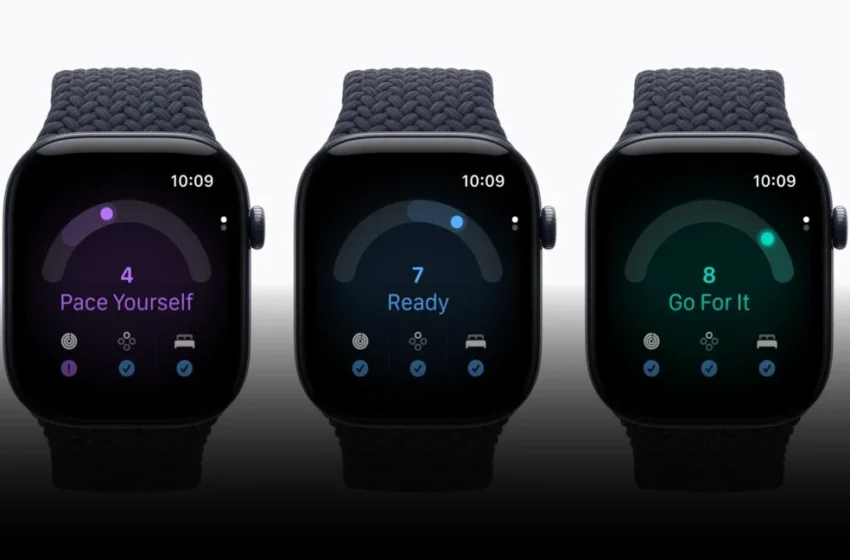
Apple’s declaration of “most accurate heart rate sensing in a wearable” for its new Watch Series 12 and Ultra 4 isn’t merely a marketing flourish; it’s a meticulously crafted distraction. The company’s new S11 chip and “Health Sensing System” promise higher-frequency heart rate and heart rate variability (HRV) measurements, ostensibly pushing the boundaries of personal biometric monitoring. Yet, this relentless pursuit of fractional improvements in data accuracy often sidesteps the more fundamental questions that truly matter for human health: utility, integration, and regulatory oversight.
For a company that has long positioned its wearables at the nexus of fashion and fitness, the move to increasingly medicalized claims warrants deeper scrutiny. The original announcement for the Watch Series 12 and Ultra 4 highlighted these enhanced capabilities without a single concrete, independently verifiable metric to contextualize what “most accurate” actually means in a clinical setting, or crucially, why the average person needs a more precise HRV reading than what older generations of the device already provide.
The Accuracy Trap: More Data, Less Clarity?
The push for hyper-accuracy in consumer wearables often feels like a technological arms race without a clear finish line. Apple’s claim for the Watch Series 12 and Ultra 4, while impressive on paper, lacks the vital context of actionable insights for the vast majority of users. Is a marginally more precise beat-to-beat interval truly going to alter a user’s immediate health decisions or significantly improve their long-term outcomes, especially when compared to existing, widely adopted medical devices?
The truth is, for most people, the utility of such granular data remains ambiguous. What’s often overlooked is that the value of health data isn’t just in its precision, but in its interpretation and integration into a larger diagnostic or preventative framework. Simply having “higher-frequency” data points doesn’t automatically translate to better health management, particularly if those points exist within a proprietary data silo, accessible only through a specific ecosystem.
This endless quest for the “most accurate” metric can even be counterproductive, fostering a sense of hypochondria or data fatigue. Users become overwhelmed by streams of numbers and graphs that lack professional medical context. We are being sold precision as a proxy for insight, and the two are not interchangeable. This is the critical blind spot in Silicon Valley’s approach to digital health: the assumption that more data inherently leads to better health, rather than acknowledging the immense challenge of translating raw physiological signals into meaningful clinical guidance.
Beyond the Walled Garden: Interoperability and Trust
Apple’s ambition in the health space is undeniable, but it’s an ambition largely confined within its own well-manicured walls. The Watch Series 12 and Ultra 4, running watchOS 27, will undoubtedly produce a wealth of individual health data. The challenge, however, lies in how this data interfaces with the broader healthcare ecosystem – a landscape dominated by entrenched electronic health record systems and a deeply ingrained skepticism towards consumer-grade devices.
Integrating Apple’s proprietary “Health Sensing System” data into a patient’s medical chart often requires clunky manual entry or bespoke, limited integrations. This creates a fragmented view of health, where valuable insights captured by a wearable tech leader like Apple remain siloed from the very doctors who could interpret and act upon them. The grand vision of digital health relies on seamless interoperability, not on creating ever-more sophisticated data streams that only benefit the vendor.
Furthermore, the regulatory position of such devices remains precariously balanced. While Apple has pursued FDA clearances for specific features like ECG, the “Health Sensing System” itself operates in a more ambiguous zone. Is it a wellness device, or does its claim of “most accurate” implicitly nudge it closer to a medical device, demanding a higher standard of validation and oversight? This ambiguity benefits Apple, allowing it to market cutting-edge features without the full regulatory burden that traditional medical device manufacturers face.
The Real Health Economy: Who Pays, Who Profits?
Every major tech announcement in the health sector requires an examination of incentives. Why is Apple pushing this particular narrative of unparalleled accuracy right now? The answer, as always, is multifaceted but ultimately converges on market dominance and the reinforcement of its ecosystem. The Watch Series 12 and Ultra 4 aren’t just selling a device; they’re selling an ever-deeper lock-in to Apple’s health platform, priming users for future services, subscriptions, and even potentially more direct engagements with health providers that leverage this data.
Apple benefits by continuously elevating its wearables as indispensable tools, justifying premium price points and fostering loyalty. It positions itself as a trusted custodian of personal health data, a narrative that becomes increasingly valuable in an era where trust is a commodity. For the user, the immediate benefit is often incremental; for Apple, the strategic long-term gain is substantial, cementing its position in the burgeoning health tech market against competitors from Garmin to Google’s Fitbit. This framing allows Apple to extract value not just from hardware sales, but from the perceived, unquantified value of being the most “accurate” source of personal health metrics.
The global tech landscape has seen countless iterations of companies claiming superiority in data collection. Yet, the real innovation in health will not come from fractional improvements in sensor accuracy alone. It will come from solving the thorny problems of data privacy, clinical integration, and equitable access to meaningful health insights. Until then, the Watch Series 12 and Ultra 4, with their new S11 chip and “Health Sensing System,” represent another powerful stride in consumer technology’s expansion into our biological selves, leaving us to wonder if we are truly healthier, or simply better-tracked.
