
Beyond the Grand Prix: IBM’s Ferrari AI Partnership as an Enterprise Playbook
- Artificial Intelligence
Arjun Vedanta
- 0
- 6 minutes read
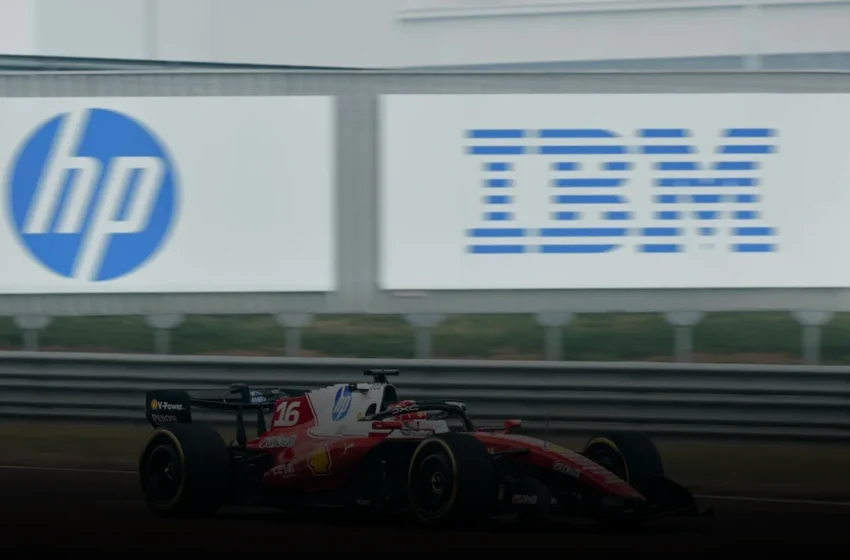
The Fan App as a Trojan Horse for Enterprise AI
Ferrari’s decision to partner with IBM for its fan engagement strategy is not merely about bringing the Tifosi closer to Charles Leclerc or Carlos Sainz. It is, more acutely, a high-stakes, real-world demonstration of IBM’s enterprise artificial intelligence capabilities, thinly veiled behind the universal appeal of Formula One. The millions of data points processed per second during an F1 race represent an almost perfect microcosm for the data deluge faced by modern businesses, from finance to logistics, making this partnership a commercial showcase far beyond the pit lane.
While the official narrative centers on creating “superfans” and enhancing the “storytelling” around Scuderia Ferrari HP, the underlying infrastructure being built is fundamentally an enterprise AI solution. Kameryn Stanhouse, IBM’s Vice President of Sports and Entertainment Partnerships, notes how sports data helps people “get comfortable with AI.” This statement, however benign, reveals the strategic long game: acclimatizing a vast global audience to the seamless, personalized data processing that IBM aims to sell to every major industry.
Consider the core problem Stefano Pallard, Ferrari’s Head of Fan Development, articulated: not just reaching fans, but “making each of them feel like we know them.” This isn’t a unique challenge for a racing team; it is the holy grail for every consumer-facing enterprise in the age of hyper-personalization. IBM’s role is to demonstrate how its AI can ingest raw, complex data — from race telemetry to fan sentiment — and output tailored, engaging content at scale. This is the ultimate proof point for any chief marketing officer or data officer watching.
The True Incentives Behind Fan Engagement Metrics
The reported 62% increase in app engagement over race weekends is certainly impressive, but it masks the deeper incentive at play. Ferrari gains a sophisticated AI backbone, courtesy of an industry giant, without having to develop it internally. IBM, in turn, acquires an unparalleled, high-profile test bed for its AI platforms, leveraging the global spectacle of F1 to refine and market its solutions for data analytics, personalized content generation, and scalable user interaction.
This isn’t merely about sponsorship visibility, as seen with AWS or Oracle’s more performance-focused F1 partnerships. IBM’s play is about demonstrating a comprehensive platform for customer relationship management powered by AI, applicable across any industry grappling with massive user bases and diverse data streams. The promise to “make every fan feel like the experience was built for them, whether they have been with us for 30 years or 30 days,” is a direct translation of modern CRM’s highest aspirations.
It’s revealing that a global brand like Ferrari previously offered an app not even available in Italian, its home language. This detail highlights not a lack of commitment, but a gap in sophisticated digital infrastructure. IBM fills this gap, transforming a rudimentary platform into a dynamic, AI-driven engine for user retention and data collection. The introduction of an AI companion for questions and AI-written race summaries exemplifies this deep integration, turning raw data into consumable, personalized narratives.
The Global Tech Narrative Skips the Subtext
The Silicon Valley tech press, often hyper-focused on consumer apps and direct-to-consumer services, tends to frame such partnerships purely within the context of the sport. What they often miss is the profound enterprise subtext. This isn’t just about Formula One; it’s about a global conglomerate validating its core technology in a spectacularly visible arena, aiming to capture new business in sectors far removed from motor racing.
The demographic shift in F1 fandom, with 75% of new fans being women and many from Gen Z, presents a perfect stress test for adaptable AI. These new audiences demand “more data, more insight, more features,” according to Stefano Pallard. This isn’t just a fan request; it’s a critical data point for IBM, demonstrating the necessity for AI systems that can cater to evolving, diverse, and demanding user expectations across different market segments. It’s a direct market signal for the utility of robust, scalable personalization engines.
One might be skeptical whether this sophisticated machinery truly fosters deeper loyalty, or merely creates a more efficient feedback loop for algorithmic optimization. Is the goal truly to create “superfans,” or to create super-efficient data pipelines that can extract maximum value from user engagement, disguised as personalized connection? The distinction matters, particularly for intelligent consumers who understand the transactional nature of most digital “relationships.” This IBM-Ferrari alliance is less a romantic ode to the Tifosi and more a shrewd corporate strategy: proof of concept for the next generation of AI-driven business solutions, with the roar of an F1 engine providing the perfect, high-octane soundtrack for IBM’s sales pitch.
IBM’s Strategic Play in the Data Economy
IBM is not just dabbling in sports partnerships; it is strategically positioning its Watsonx platform and broader AI offerings in a market hungry for data insights. The partnership serves as a highly visible case study, showcasing how complex data streams can be transformed into actionable, engaging content, fulfilling the needs of diverse customer segments globally. This direct application of advanced analytics and generative AI for customer experience is a powerful message to potential enterprise clients across retail, media, and finance.
The focus on year-round engagement, rather than just race weekends, further underscores the long-term vision for IBM’s AI in enterprise. Maintaining user interest and delivering continuous value requires adaptive, learning systems—exactly what businesses need to compete in the subscription economy. This extends beyond simple content delivery; it encompasses predictive analytics for fan preferences, real-time content generation, and dynamic personalization at scale.
Ultimately, the Ferrari partnership is a strategic move by IBM to demonstrate its competency in harnessing immense, disparate data for hyper-personalization, a critical capability for any modern enterprise. It’s a showcase for how AI can translate raw telemetry and fan interactions into a coherent, engaging narrative. This isn’t just about motorsport; it’s about the future of customer engagement and data monetization for every company striving to understand and retain its audience.
