
Blade Runner 2099: When IP Recursion Becomes the Art Itself
- Tech
Arjun Vedanta
- 0
- 6 minutes read
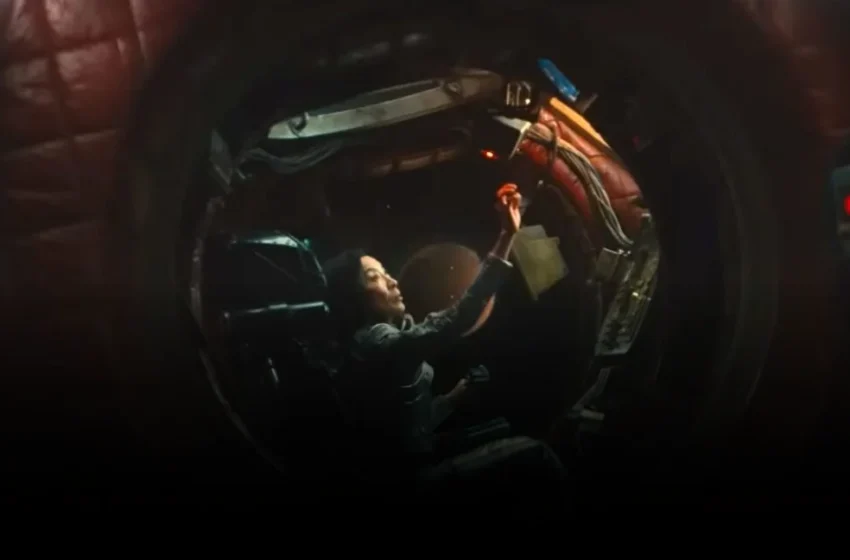
The Replicant Future: Content Factories Over Creation
The tease for Blade Runner 2099 isn’t just a glimpse into a new dystopian future; it’s a stark reminder of the streaming industry’s desperate present. For nearly five years, Ridley Scott’s vision of expanding his seminal sci-fi franchise has simmered, finally manifesting as a ten-episode series for Prime Video. While fans might cheer the continuation of a beloved universe, the real story here is the relentless, almost pathological, drive by platforms like Prime Video to mine established intellectual property, not for artistic exploration, but as a bulwark against subscriber churn. This isn’t world-building; it’s an algorithmic imperative, and it risks rendering the very narratives we cherish into a perpetual-motion content machine.
Silka Luisa, the showrunner for Blade Runner 2099, noted that the series aims to uphold the original’s “noir principles” and explore “what does it mean to be human in a world where humanity is no longer relevant.” These are weighty themes, foundational to the original 1982 film and its 2017 sequel, Blade Runner 2049. Yet, the very context of this expansion undermines their potential impact. We are witnessing an industrial replication of narrative, where the value isn’t necessarily in groundbreaking storytelling but in the recognizable brand equity. The announcement at San Diego Comic-Con, alongside teasers for Rings of Power and HBO’s Lanterns, illustrates a broader trend: the major streamers are locked in an arms race of franchise extensions. This is not about nurturing new talent or original ideas; it is about leveraging a known quantity to keep eyeballs glued. The original Blade Runner was an artistic statement; Blade Runner 2099 feels more like a strategic play on a balance sheet.
Consider the source material: Ridley Scott’s original was a grim, philosophical meditation, a slow burn that didn’t become a cultural touchstone through immediate box office success, but through its enduring influence. Blade Runner 2049 was a visually stunning, critically acclaimed continuation that deepened the lore while also standing as a strong film in its own right. The expansion to a ten-episode series, however, introduces a different pressure. Episodic television, especially on a major platform, demands consistent engagement across weeks, potentially diluting the tightly woven mystery and atmospheric dread that defined the films. The danger is that the profound questions about artificial intelligence and humanity’s place in the future become background noise to weekly plot beats, rather than the driving force of the narrative.
Chasing Subscribers in the IP Wars
The incentive for Prime Video to greenlight Blade Runner 2099 is brutally clear: subscriber retention. In a saturated market where customers routinely jump between Netflix, Max, Disney+, and others, established IP offers a degree of stickiness that original concepts cannot. It’s a calculated bet that the existing fanbase will sign up, or at least not cancel, their subscriptions to follow a known story. This economic reality means that creative decisions are increasingly filtered through an analytical lens focused on engagement metrics and audience demographics, rather than pure artistic merit. The quote from Luisa about humans being “hunted second-class citizens” in an uprising where they lost, while intriguing, also hints at a simplified conflict more suited to a long-running series arc than the nuanced existentialism of its predecessors. This is not to say that episodic television cannot explore complex themes, but rather that the commercial pressures on big-budget streaming series often push towards broader appeal and more explicit conflict, rather than subtle philosophical inquiry.
We’ve seen this play out across the industry. The sheer volume of content, much of it derived from existing comic books, fantasy novels, or cult films, indicates a creative industry increasingly risk-averse. New franchises are rare; resurrections are routine. The underlying assumption is that an audience for a known property already exists, making the marketing lift easier and the financial returns more predictable. This approach, while commercially sound in the short term, fosters an ecosystem of creative inertia. It prioritizes recognition over innovation, and in doing so, inadvertently teaches audiences to expect more of the same, stifling the demand for truly original science fiction narratives that could challenge and provoke in new ways. How many more spin-offs of beloved classics can the market bear before the well of originality runs dry entirely?
Where Does “Humanity” End?
The philosophical core of Blade Runner—what defines humanity, the line between creation and creator—is potent. But a series set in 2099, building on 1982 and 2049, faces a challenge: how do you keep asking the same questions without repeating yourself or becoming trite? Luisa’s claim that the show imagines “what comes after us, and what does it mean to be human in a world where humanity is no longer relevant” feels less like a new frontier and more like an echo, albeit a loud one. The most skeptical observation here is that the continuation of the Blade Runner universe is less about finding new answers to these questions and more about selling a familiar aesthetic. The intricate visual language, the neon-drenched dystopia, the rain-slicked streets – these are potent hooks, but without a truly fresh perspective, they risk becoming merely an expensive backdrop for a story that has already been told, arguably better, multiple times.
This endless recursion of successful intellectual property, from the Star Wars galaxy to the Marvel Cinematic Universe, now extending into the dark, contemplative corners of Blade Runner, reveals a crucial flaw in the streaming business model. Platforms are so focused on subscriber acquisition and retention that they are creating a monoculture of content, where everything feels interconnected, pre-sold, and ultimately, safe. The real challenge for the future of entertainment isn’t just about what humanity means in 2099, but what creativity means when the algorithms demand an endless stream of the familiar. And perhaps, like the replicants themselves, these franchises, designed for specific functions, might eventually find their own, unintended form of sentience – a meta-narrative about their own struggle for meaning in an industry that increasingly treats them as disposable assets.
