
Contagious Cancer in Catfish Exposes Ecosystem Surveillance Blind Spots
- Tech
Arjun Vedanta
- 0
- 5 minutes read
An Unsettling Biological Anomaly
The discovery of contagious cancer in North American catfish isn’t just a biological curiosity; it’s a stark, unsettling signal that our sophisticated tools for tracking ecological health are fundamentally misaligned with the complex, emergent threats unfolding in the real world. While the tech press fixates on the latest AI model or social media algorithm, a deeper, more profound disruption is manifesting in the foundational biological systems upon which we all depend.
The news from Lake Memphremagog—a body of water straddling the Vermont-Quebec border, providing drinking water to over 175,000 people—is not merely about fish. It’s about a new form of vulnerability, one that the typical Silicon Valley obsession with incremental software updates and app launches completely misses.
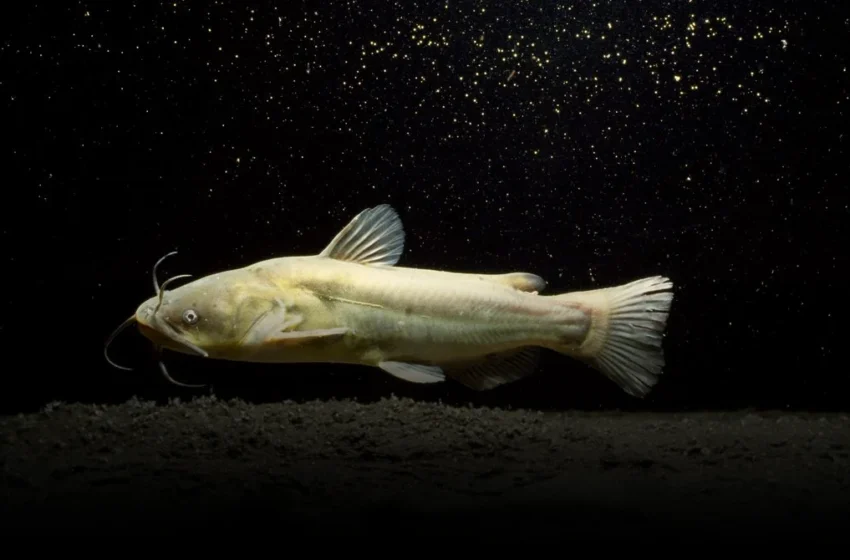
Scientists have identified the first known transmissible cancer in freshwater fish: a melanoma spreading through brown catfish, Ameiurus nebulosus. This isn’t a virus or a bacterium causing cancer; it’s the cancer cells themselves migrating from one individual to another. The sheer biological audacity of this phenomenon, previously documented only in a handful of species like dogs, Tasmanian devils, and some mollusks, should give us pause. When researchers Julie Dragon and Mark Henderson at the University of Vermont first encountered incidence rates of 23 to 37 percent among affected catfish populations in 2012, they were stumped. Conventional wisdom links melanoma to sunlight exposure, yet these are bottom-dwelling fish.
The initial hunt for traditional culprits—pollutants washed in by events like Tropical Storm Irene in 2011, or unknown pathogens—yielded nothing conclusive. Instead, advanced genetic sequencing revealed a chilling truth: the tumors in different fish shared a near-identical genetic signature, distinct from their hosts. This pattern, marked by hundreds of thousands of shared genetic variants, screams clonal transmission, not independent origination. It’s a cancer that has learned to reproduce itself across bodies, a biological rogue agent defying established epidemiological norms.
The Blind Spot of Environmental Surveillance
What this discovery truly illuminates is our collective systemic failure to detect subtle, yet potentially devastating, environmental health crises before they spiral into critical mass. Our current frameworks for public health and ecological surveillance are largely designed for known pathogens or quantifiable chemical toxins. We look for lead in pipes, E. coli in water, or mercury in fish. We don’t, as a rule, look for self-replicating tumor cells circulating in lake ecosystems.
The incentive behind the announcement of these findings, while undoubtedly driven by genuine scientific curiosity and the desire to share groundbreaking research, also serves to highlight a critical gap in global environmental monitoring budgets. It’s a subtle plea for resources, demonstrating that significant scientific insights—and by extension, the protection of shared resources like drinking water—emerge from precisely the kind of long-term, fundamental research that is often undervalued. The researchers, by bringing this anomaly to light, demonstrate the tangible impact of their work, subtly advocating for continued funding in environmental epidemiology and aquatic toxicology. Yet, for the average citizen, it reveals a profound vulnerability: we were effectively flying blind until a biologist noticed some unusually spotty fish. Our reliance on post-facto genomic detective work, however brilliant, underscores the reactive nature of our current ecological sentinel systems.
The very uniqueness of this discovery suggests a deeper, more troubling reality: that we only notice systemic biological breakdowns when they manifest in ways so bizarre they rewrite textbooks, rather than through proactive, integrated monitoring of ecosystem health.
When Complex Threats Evade Simple Checks
The catfish cancer offers a disquieting lesson in complexity. While researchers found elevated arsenic levels in the tumor cells, and a geographical correlation with high natural arsenic concentrations in the lake, they wisely stopped short of claiming causation. The mechanism of transmission also remains speculative, ranging from physical contact during spawning—a hypothesis supported by observations that it primarily affects larger, older, spawning-age fish—to tumor cells temporarily surviving in water or sediment. This ambiguity is precisely the problem: we are dealing with emergent threats that don’t fit neat cause-and-effect models. It’s not just “pollution causes cancer”; it’s “something caused cancer, which then learned to spread in an entirely new way, potentially facilitated by environmental stressors.”
This dynamic challenges our conventional risk assessment models, which typically require clear, isolatable agents and pathways. What if environmental degradation isn’t just about direct toxicity, but about creating conditions under which biological anomalies—like transmissible cancers—become viable and propagate? The world’s scientific community, often focused on direct pharmacological interventions or clear-cut public health campaigns, needs to grapple with this ecological fluidity. If cancer cells can become an infectious agent within an aquatic ecosystem that directly supplies human communities, what other biologically novel threats are incubating unnoticed?
The implications extend beyond just catfish. While Dr. Henderson’s advice—”Personally, I wouldn’t eat the ones with tumors”—is a pragmatic individual response, it does not address the systemic fragility. We are operating with a dangerously incomplete picture of the health of our planet’s critical water systems, and by extension, our own. This transmissible cancer in Lake Memphremagog is not an isolated biological quirk; it is a siren call for a radically reimagined approach to environmental public health, one that moves beyond simplistic metrics to embrace the intricate, sometimes terrifying, realities of emergent ecological disruption.
