
Cyclospora Outbreak Exposes Tech’s Missed Opportunity in Global Food Safety
- Software
Arjun Vedanta
- 0
- 5 minutes read
The Analogue Underbelly of Digital Commerce
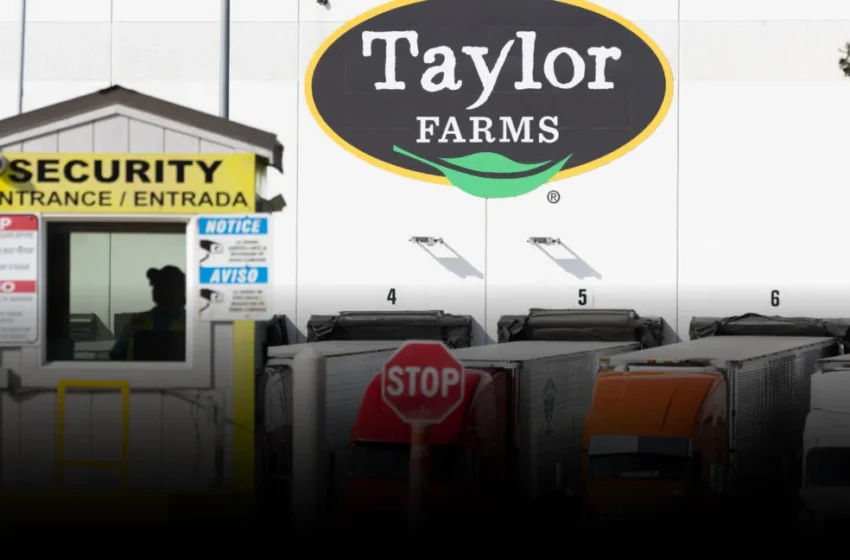
A diarrheal parasite has sickened over 24,000 people and claimed two lives this summer, and the subsequent outrage has, predictably, fixated on political malfeasance. While Senator Elizabeth Warren rightly interrogates the Trump administration’s “calamitous response” and probes the alleged influence of Taylor Farms, the colossal produce distributor, those of us who observe global systems from outside the Silicon Valley echo chamber see a far more profound, and technological, failure. How can an economy boasting real-time logistics and granular data analytics still fumble so catastrophically when tracing a pathogen through its most vital supply chains?
The underlying truth revealed by this Cyclospora outbreak is stark: despite a decade of fervent promises about digital traceability, blockchain-enabled transparency, and IoT-driven logistics, multi-billion-dollar food supply chains remain stubbornly analogue and opaque. We live in an era where consumers can track a package from Shenzhen to their doorstep with minute-by-minute updates, yet a deadly contaminant in Mexican-grown iceberg lettuce from a major distributor like Taylor Farms can elude detection and precise origin tracing for weeks, if not months. This isn’t merely a regulatory lapse; it’s a glaring indictment of the tech industry’s inability – or unwillingness – to penetrate and transform the most fundamental, yet least glamorous, sectors of global commerce.
Silicon Valley’s fixation on consumer apps and social media often blinds it to the critical infrastructure silently underpinning our daily lives. While venture capitalists pour billions into optimizing click-through rates and virtual reality, the physical arteries of our food supply still rely on a patchwork of outdated systems, paper trails, and fragmented databases. The notion that technology could have prevented or drastically mitigated this outbreak isn’t theoretical; the tools, from advanced data analytics to distributed ledger technologies, exist. The political will, or the market pressure to implement them rigorously across international borders, clearly does not.
Regulation’s Blind Spot: Data Versus Dollars
Senator Warren’s investigation highlights the undeniable shadow of political contributions and “direct White House lobbying” from Taylor Farms. This nexus of money and power undeniably warps regulatory oversight, creating an environment where profit often trumps public safety. Yet, even if every politician were incorruptible, the systemic problem of inadequate technological infrastructure within government agencies themselves would persist.
Federal food safety oversight, much like many legacy government functions, struggles to integrate modern software solutions that could provide proactive monitoring and predictive analytics. Imagine a robust system that cross-references weather patterns, harvest locations, transportation routes, and health incident reports in near real-time, flagging potential contamination risks before they escalate. Such a system, drawing on AI and sophisticated data aggregation, would not merely react to outbreaks but anticipate them. The incentive for Senator Warren’s probe, while undeniably politically charged, serves to force an uncomfortable reckoning with these systemic frailties, offering a potent incentive for future administrations to *at least appear* more competent in safeguarding public health, irrespective of the underlying technological inertia. This lack of investment in RegTech – regulatory technology – creates significant blind spots, allowing a company’s influence to not just sidestep rules, but also to operate within an informational vacuum that tech could easily fill.
The argument that such technologies are too expensive for a low-margin industry like produce is a convenient fallacy. The economic cost of an outbreak — product recalls, legal fees, devastating brand damage, and the immeasurable burden on public health systems — far outweighs the investment in preventative digital infrastructure. The very concept of “transparent supply chains” increasingly feels like a marketing slogan cooked up in a Silicon Valley boardroom, not a lived reality for the multi-billion-dollar empires moving our food.
Architecting Resilient Food Systems
This episode is a stark reminder that the digital transformation touted by every CEO and tech pundit has unevenly permeated the global economy. For all the talk of Industry 4.0 and smart logistics, critical sectors like food production often remain mired in methodologies a generation behind. What’s needed isn’t just punitive action against specific bad actors, but a fundamental re-architecture of how food is tracked from farm to fork.
This means mandatory adoption of interoperable digital tracing systems, potentially leveraging standards like GS1 Digital Link, across international supply chains. It means investing heavily in government data analytics capabilities to move beyond reactive inspections to proactive risk modeling. It means a push for greater automation and sensor integration on farms and processing plants, not just for efficiency, but for continuous environmental monitoring that feeds into a centralized, auditable ledger. Until the technology deployed to monitor and manage global food supplies catches up with the technology used to deliver our entertainment, these “unforeseen” outbreaks will remain a predictable consequence of a system prioritized for speed and cost, not safety or transparency.
