
Data Drought: Public Land Grazing and the Cost of Analog Policy in the American West
- Artificial Intelligence
Arjun Vedanta
- 0
- 4 minutes read
The Folly of Antiquated Oversight
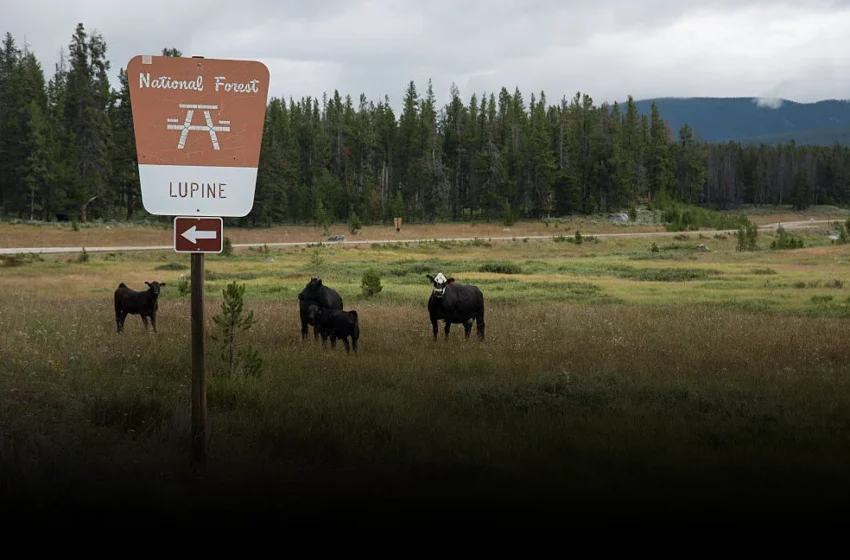
The US Department of the Interior’s Bureau of Land Management (BLM) is not merely rewriting grazing rules; it’s doubling down on a pre-digital, data-averse system that actively resists modern ecological intelligence. After nearly three decades, the first major overhaul of public lands grazing regulations since 1995 will expand livestock numbers across 155 million acres of the American West. This move, which effectively greenlights more cattle, sheep, and other livestock, stands in stark opposition to the consensus among rangeland management experts who warn of degradation from overgrazing.
From Geneva to Singapore, conversations about land management increasingly revolve around geospatial monitoring, remote sensing, and predictive modeling for sustainable resource allocation. Yet, within the BLM’s new framework, there is an alarming silence on integrating robust environmental intelligence. This isn’t just a missed opportunity for efficiency; it’s a deliberate perpetuation of a system critics — including ProPublica and High Country News — have long exposed as heavily subsidizing wealthy ranching interests at public expense.
My experience watching disparate global industries, from logistics in Rotterdam to forestry in Borneo, grapple with digital transformation reveals a common pattern: the most resistant sectors are often those where traditional power structures are deeply entrenched. The BLM’s proposed changes illustrate a policy choice that prioritizes historical entitlements over contemporary data. This is a crucial distinction that often escapes those focused solely on the domestic political machinations.
Data, Transparency, and Deliberate Ignorance
What the original reporting understated is the profound implication of this policy decision for the very concept of data-driven governance. In an era where every major corporation strives for operational transparency and optimizing resource use through analytics, the BLM is regressing. The agency’s move to expand grazing without integrating advanced tools for real-time ecological assessment — such as satellite imagery analysis, IoT sensors for soil health, or AI-powered wildlife tracking — indicates a deeper institutional inertia, if not outright resistance.
This isn’t about the absence of technology; the tools exist. The issue is the deliberate sidelining of these capabilities in favor of maintaining a status quo that benefits a specific, powerful constituency. Why is this announcement happening now, framed as a regulatory ‘overhaul’ when it appears to be a systemic reinforcement? Because it serves to formalize and expand an existing economic subsidy for established players, preempting any future calls for more stringent, evidence-based environmental accountability that digital tools would inevitably demand.
The true innovation here isn’t in better land use, but in the enduring political dexterity required to maintain a century-old gravy train against overwhelming ecological evidence. This skepticism isn’t borne of cynicism but observation: when a government body overseeing an area twice the size of New Mexico consciously ignores available data methodologies, it speaks volumes about where incentives truly lie.
A Global Consequence of Local Myopia
This situation in the American West is not an isolated incident; it mirrors a broader global trend where powerful, entrenched industries actively resist transparent, data-driven ecological management. Whether it’s fisheries ignoring catch data or logging companies resisting remote sensing, the pattern holds: when economic interests conflict with environmental facts, the facts often lose, especially if the regulatory body lacks a mandate for digital oversight.
International technology markets are awash with innovation aimed at sustainable resource management, from precision agriculture platforms to blockchain solutions for supply chain traceability. Yet, the discourse around US public lands grazing remains stuck in an analog loop, divorced from these advancements. This represents a significant opportunity cost, not just for the environment, but for the development and adoption of conservation tech that could genuinely foster sustainable ranching practices.
The BLM’s updated regulations underscore a fundamental contradiction: a society that champions technological progress in nearly every other sector often balks at applying it where it threatens established, politically potent economic interests. It’s a reminder that even in the most technologically advanced nations, policy choices can be profoundly undigital, driven by immediate political expediency rather than long-term environmental or data-informed strategy. The outcome is not just degraded rangelands, but a lost chance to model forward-thinking resource management for the world.
