
Deep-Sea Sensors Redefine Tectonic Science, Far from Silicon Valley’s Gaze
- AI Infrastructure
Arjun Vedanta
- 0
- 4 minutes read
The Silent Revolution Beneath the Waves
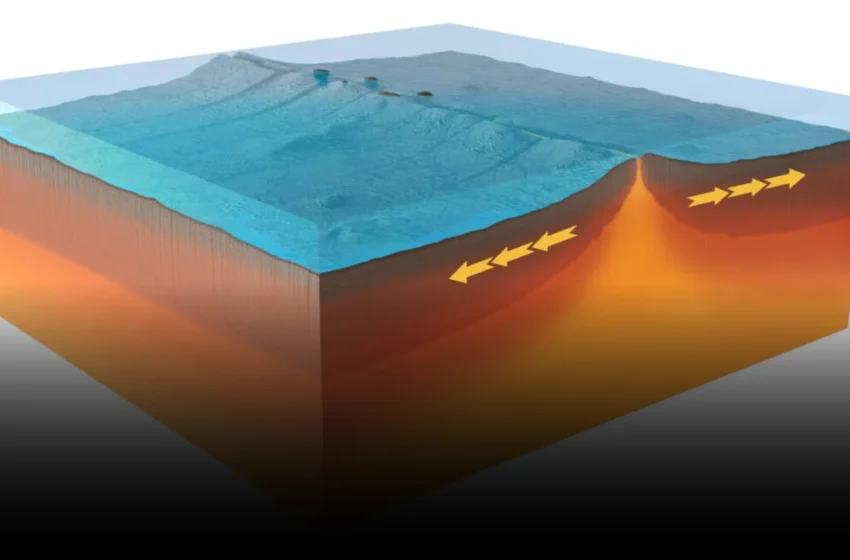
The most profound technological shifts rarely announce themselves with a keynote from Cupertino or a viral tweet from a startup founder. Instead, they unfold in the silent depths, far from venture capital rounds and influencer buzz, fundamentally altering how humanity understands its own planet. This past year, French scientists quietly deployed sophisticated equipment on the ocean floor, witnessing a tectonic event previously impossible to capture: a sudden, non-seismic burst of spreading activity between the Australian and Antarctic plates. It’s a stark reminder that true innovation often lies hidden in the infrastructure, not just the interface.
For decades, our understanding of deep-ocean geophysics relied on intermittent expeditions and retrospective analysis of seismic data, often long after events had concluded. The deployment of advanced deep-sea sensors in 2024, capable of remote telemetry, represents a quiet but significant leap. These autonomous systems transform the ocean floor into a living laboratory, constantly streaming data from environments previously considered too hostile for sustained observation.
This is not merely about better instruments; it’s about a systemic shift in how fundamental science is conducted. Such infrastructure investments signal a broader strategic intent: to gather continuous, high-fidelity geophysical data that can reveal the nuanced mechanics of Earth’s processes, moving beyond theoretical models derived from limited snapshots. The incentive for nations like France to fund such projects is clear: scientific leadership and the development of dual-use technologies applicable to undersea exploration, resource mapping, and defense.
Redefining Discovery Through Continuous Data
The original article highlighted that most of the spreading occurred in a relatively short window, with some key events happening without any obvious seismic activity. This crucial detail underscores the power of persistent, real-time data streams over traditional methods. Without continuous monitoring, these subtle, yet significant, tectonic movements would have remained entirely invisible, absorbed into the background noise of long-term geological averages.
What we are seeing is the maturation of oceanographic tech into a genuine ‘Internet of Underwater Things.’ This network of intelligent sensors, coupled with advances in data analytics and perhaps even early forms of edge computing at the source, allows researchers to detect anomalies and patterns that escaped previous methods. It’s a transition from geological archaeology to live geological observation, offering unprecedented granularity into processes that shape our world.
Yet, the enthusiasm for such sophisticated setups overlooks a critical vulnerability: the immense cost and logistical challenge of deployment and maintenance in these extreme environments. It’s easy to celebrate the data, but the infrastructure required remains fragile, expensive, and susceptible to the very forces it aims to measure. The true ‘breakthrough’ isn’t just seeing the event, but the sustained, often heroic, effort required to keep the eyes open at 6,000 meters below sea level.
Beyond Silicon Valley: Global Tech’s Unseen Frontier
While the tech headlines consistently focus on generative AI, social media algorithms, or the latest smartphone, the quiet revolution in AI infrastructure for scientific exploration often goes unnoticed. This French initiative is but one example of a global push to instrument our planet, from polar ice caps to the deep ocean, utilizing advanced remote sensing and autonomous systems.
Companies and research institutions in Japan, Norway, and the United Kingdom are similarly investing in robust underwater robotics, advanced acoustics, and subsea communication networks. These efforts are not aimed at capturing user attention or selling digital ads, but at unlocking fundamental knowledge, securing strategic resources, and monitoring the long-term health of our planet. This is a far cry from the consumer-driven tech cycle.
The consequence of this silent, distributed effort is a structural implication for global science and technology: a growing divergence in innovation priorities. While one tech axis focuses on the human interface and digital convenience, another, more hardware-intensive axis is charting our physical world with unprecedented fidelity. It’s a shift that reminds us the most impactful technological stories often don’t begin with a pitch deck, but with an unanswered question about the planet itself.
