
Encrypted Chats and Public Records: How Chairman Carr’s Signal Use Exposes a Crisis in Digital Transparency
- Software
Arjun Vedanta
- 0
- 6 minutes read
The Blurring Lines of Government Communication
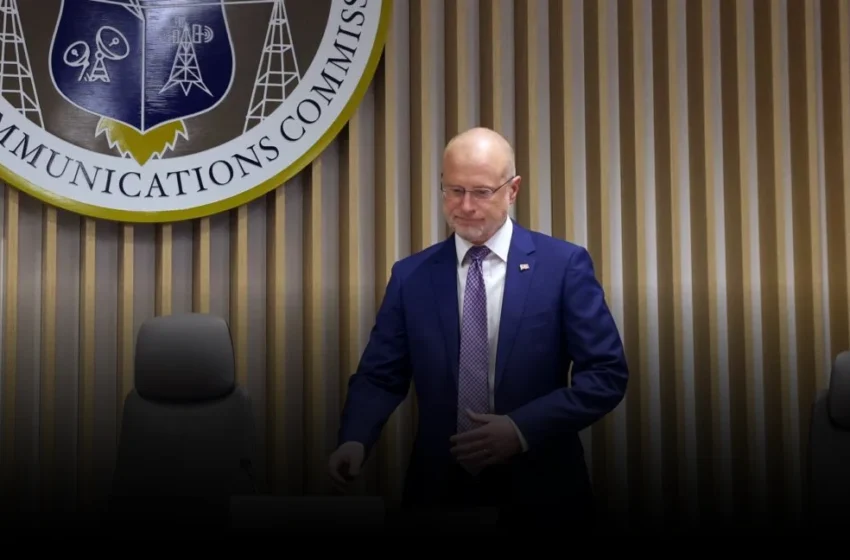
In an era where every major corporation and government agency champions digital transformation, the very tools meant to enhance efficiency are increasingly blurring the lines of public accountability. The latest salvo in a year-long legal battle against the Federal Communications Commission highlights this tension starkly: a federal filing accuses the FCC of actively obstructing a public records request and, more critically, concealing Chairman Brendan Carr’s use of the encrypted Signal messaging service for government business. This isn’t merely about legal non-compliance; it’s about a deepening systemic conflict between modern ephemeral communication tools and the foundational principles of government transparency, especially when novel influence vectors, such as cryptocurrency speculation, are at play.
Journalist Nina Burleigh and the advocacy group Frequency Forward filed a formal accusation in the US District Court for the District of Columbia this week, alleging the FCC has acted in “bad faith.” Their primary grievance traces back to an investigation into the perceived influence of the cryptocurrency DOGE and figures like Elon Musk on regulatory decisions. Last year, a judge ordered the FCC to produce documents, citing the agency’s initial response as “vague and uninformative.” Yet, the plaintiffs contend the FCC has since compounded its opacity, deliberately redefining search criteria and actively hiding the fact that its Chairman utilizes an encrypted platform known for its privacy features.
The critical point here is not whether Chairman Carr is discussing state secrets on Signal, but the sheer fact that such a platform, by its design, resists the very mechanisms of oversight that public agencies are legally bound to uphold. Every conversation on a government-issued or government-used device, regardless of the application, theoretically falls under public records laws like FOIA. When an agency actively conceals the use of a messaging service designed for maximum privacy, it implicitly acknowledges that those communications are not meant for public scrutiny, setting a dangerous precedent for digital accountability across the federal landscape.
Opacity and Influence: The Challenge to Regulatory Oversight
The core of the dispute revolves around communications concerning DOGE, a meme cryptocurrency, and its potential sway on the FCC. This immediately raises questions that extend far beyond traditional lobbying disclosures. Influence today is often diffuse, informal, and increasingly global, operating through social media narratives, digital communities, and even speculative financial markets. Cryptocurrencies, with their decentralized nature and often celebrity-driven hype cycles, represent a particularly challenging frontier for regulatory oversight.
The plaintiffs explicitly stated, “The FCC acted in bad faith when it redefined the search criteria without notice to Plaintiffs or this Court. Further, the FCC acted in bad faith by concealing the fact that the Chairman Carr has a Signal account on a phone he uses to conduct government business.” This isn’t just bureaucratic foot-dragging; it implies an intentional effort to cordon off certain communications from public access. The incentive for such an action is clear: encrypted platforms offer a convenient, secure way for officials to communicate without the immediate burden of public record keeping, creating an informal, unlogged parallel channel of discourse. This opacity ultimately benefits those who wish to operate outside traditional accountability frameworks, whether they are government officials or external actors seeking to influence policy.
The notion that government officials can simply default to ephemeral apps for policy discussions is a convenient fiction. It’s a stark reminder that as technology advances, the legal and ethical frameworks designed to ensure transparency often lag far behind. The idea that a public servant’s digital communications might escape public scrutiny simply because they occur on a particular application is not just naive, it’s a systemic weakness. Frankly, for an agency ostensibly dedicated to regulating communication technologies, the FCC’s alleged resistance to transparency regarding its own digital communications is not just hypocritical, but a concerning indicator of its true commitment to open governance.
A Global Call for Digital Accountability Frameworks
This saga in Washington is not an isolated incident. Across Europe and Asia, similar battles are being fought over the use of WhatsApp, Telegram, and Signal by public officials. Governments from the UK to Singapore have grappled with the implications of encrypted messaging on public records, often facing criticism for their own lax policies or outright obstruction. The problem is universal: the instantaneous, private nature of these applications, while offering legitimate security benefits for sensitive communications, simultaneously creates an immense loophole for discussions that should, by law and democratic principle, be public.
The involvement of a tech journalist like Nina Burleigh in a lawsuit against a major US regulator over digital transparency speaks volumes. It highlights how the front lines of investigative journalism have shifted from paper trails to data trails, often locked behind encryption or company-specific policies. The battle for access to Chairman Carr’s alleged Signal messages is a bellwether for how future investigations into influence, policy-making, and regulatory capture will be conducted—or, more accurately, how they might be thwarted. Without clear, legally binding digital accountability frameworks, adapted for the modern communications landscape, the public’s right to know becomes an increasingly hollow promise.
What’s at stake is more than just a few conversations about DOGE; it’s the very future of digital transparency in government. The FCC, as a custodian of public airwaves and digital infrastructure, should be setting the standard for open governance, not resisting it through alleged obfuscation and the convenient embrace of privacy-by-design applications. The ongoing legal challenge serves as a crucial test case, revealing the urgent need for robust legislation and policy that mandates proactive record-keeping for all government communications, regardless of the platform, and holds agencies accountable when they fall short.
