
Europe’s Solo Venus Flight: A Wake-Up Call for Global Space Collaboration
- Space
Arjun Vedanta
- 0
- 5 minutes read
When Collaboration Becomes Unreliable
The European Space Agency’s “full steam ahead” approach to its Envision mission to Venus, absent a promised NASA radar, isn’t just a pivot; it’s a stark indicator of a quiet but significant realignment in global space collaboration. What was initially conceived as a joint venture, with NASA providing a critical synthetic aperture radar instrument and Deep Space Network support, has now become a testament to Europe’s accelerating capability and resolve in deep space missions. This isn’t merely a procurement hiccup for a singular scientific instrument; it represents a subtle but profound shift in the dynamics of international space industrial policy.
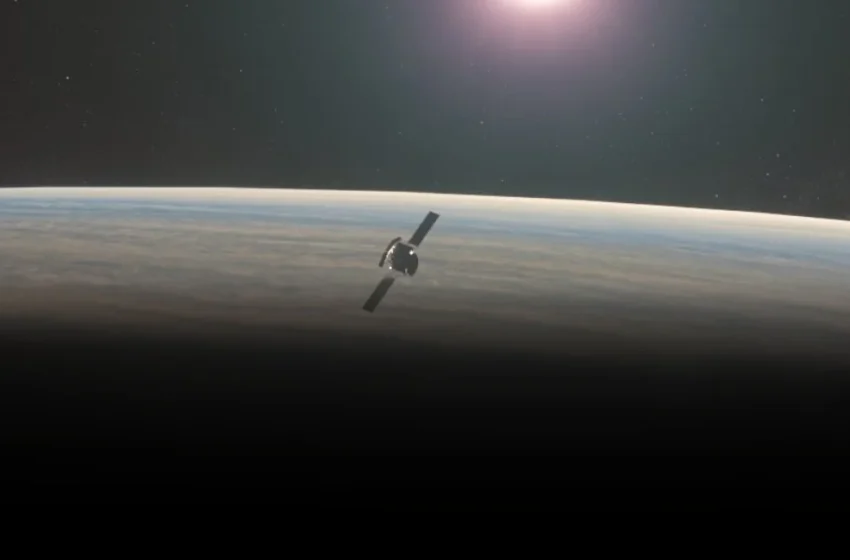
The memorandum of understanding signed in 2024 outlined clear roles: NASA would supply the advanced radar for high-resolution surface mapping and communications, while ESA would build the spacecraft, other instruments, and provide the Ariane 6 launch. Now, with NASA officials signaling their unlikelihood to fulfill the radar commitment, ESA is left to fill a crucial technological gap. The Envision orbiter aims to map Venus’s enigmatic, cloud-shrouded surface at an unprecedented ten times higher resolution than previous missions, hunting for signs of active volcanism below a sulfuric acid blanket, a scientific ambition that demands significant technical ingenuity.
This unforeseen withdrawal leaves ESA not just scrambling, but also forces a reassessment of long-standing assumptions about trans-Atlantic space partnerships. For decades, a certain equilibrium of sharing burdens and expertise defined these collaborations. Now, that equilibrium is being tested, pushing European agencies to develop or source critical technologies internally, strengthening their indigenous space technology base but also demanding greater financial and engineering stretch.
Europe’s Calculated Autonomy
This isn’t an isolated incident; it’s part of a growing pattern that compels Europe to assert greater strategic autonomy in space. The unfulfilled US commitment on Envision inadvertently accelerates Europe’s own capabilities in planetary science instrumentation. While NASA maintains its robust domestic portfolio, including future lunar and Mars missions, the signals sent to international partners suggest a tightening of US-origin technology sharing or a reallocation of resources towards more domestically focused objectives. Perhaps the cynical truth is that Washington finds less value in sharing high-end instrumentation when it can retain critical technological advantages, or simply prioritizes politically palatable domestic programs over distant scientific collaboration, regardless of the scientific cost to its partners.
The push for independent launch capabilities, epitomized by the Ariane 6, is another facet of this broader drive towards self-reliance. This approach minimizes geopolitical dependencies, ensuring that Europe’s scientific ambitions are not held hostage to the shifting priorities or budgetary constraints of external partners. The incentive for NASA to renege on such commitments often boils down to budget reallocations for more politically palatable domestic programs or a strategic tightening around sensitive technological IP, irrespective of the scientific cost to its partners. This is a cold reality for agencies like ESA, who often rely on a patchwork of international contributions to realize complex deep space missions.
As Europe steps up to build its own radar instrument, it’s not just replacing a component; it’s building expertise, fostering its own industrial base, and ultimately, gaining a stronger hand in future global space negotiations. This quiet shift is not about confrontation, but about strategic self-preservation in an increasingly complex and competitive international space arena. It’s about ensuring that European scientific discovery is driven by European will, not by the vicissitudes of another nation’s budget cycle.
The Fractured Future of Deep Space Science
The long-term consequence of these fragmented partnerships could be a more diverse, yet potentially less cohesive, global space exploration effort. Instead of a few dominant space powers leading large multilateral missions, we might see more bilateral or trilateral collaborations, tailored to specific regional interests and technological strengths. The inclusion of US researchers on Envision’s science team remains, but the operational and instrumental burden clearly shifts. This could create a landscape where scientific instruments are increasingly proprietary, leading to redundancies in development and potentially slower overall progress for humanity’s shared scientific goals.
This rebalancing necessitates a critical re-evaluation of how international agreements are framed, moving beyond aspirational MOUs to more robust, legally binding commitments with clear contingency plans for instrument provision. As agencies like ESA demonstrate their capacity to push ahead independently, they will naturally seek out partners that offer more reliable, consistent collaboration, whether that’s with Japan’s JAXA, India’s ISRO, or even emerging space nations. The era of unquestioned US leadership in all facets of space exploration, particularly for instrument provision on non-US missions, is quietly receding.
Envision’s journey to Venus will now be a beacon of European ingenuity, not just in exploring a hostile planet, but in demonstrating a capacity for independent, high-stakes space endeavors. It’s a pragmatic recalibration, recognizing that the most ambitious scientific goals require a foundation of unflinching self-reliance and diversified, dependable partnerships. The cosmos waits for no single nation’s shifting priorities.
