
Europe’s Space Dilemma: Autonomy Over Cost in a SpaceX-Dominated Orbit
- Government & Policy
Arjun Vedanta
- 0
- 5 minutes read
The New Gravity of Orbital Access
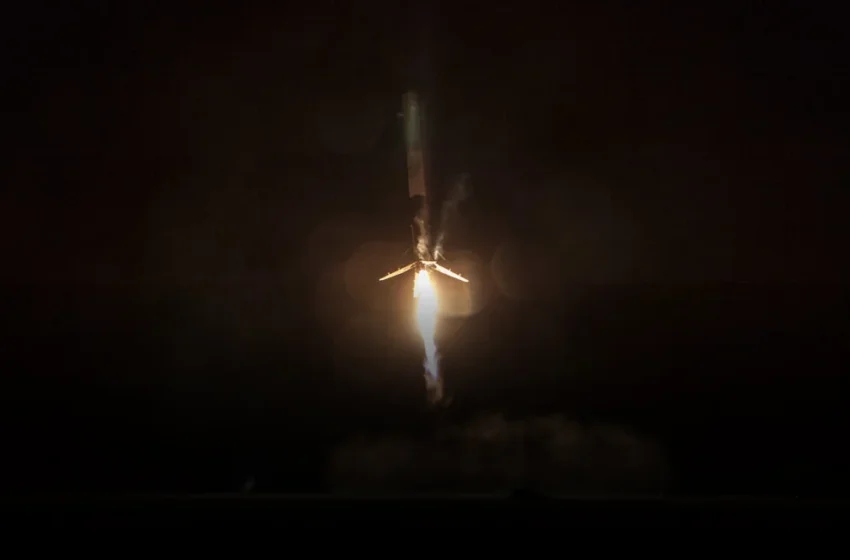
Policy experts across Europe now openly articulate a stark reality: the continent is trapped “between a rock and a hard place” regarding its access to space. This isn’t merely about competitive disadvantage; it’s a fundamental vulnerability. SpaceX, with its Falcon 9 rocket and the relentless cadence enabled by reusability, has not just cornered the market; it has become the market. Accounting for more than three-quarters of all mass launched into orbit, the company’s near-monopoly means that even direct competitors like Amazon and OneWeb, along with entities like Northrop Grumman and AST Space Mobile, now rely on an American private firm for their most critical infrastructure deployment.
A decade ago, the ability to land a first-stage booster was a novelty; within the last five years, it has scaled into a operational juggernaut launching dozens, then hundreds, of missions annually. This unprecedented efficiency has indeed brought down launch costs globally, a boon for many in the commercial sector. However, the market has “solved” the problem of cheap access to space, but in doing so, it has simultaneously created a new, far more complex one of geopolitical dependency. European nations, once proud of their independent launch capabilities through Arianespace, find themselves in an untenable position: choose between astronomical costs for sovereign launches or surrender strategic control to a foreign entity.
This is not an academic debate. When a nation’s ability to deploy its next-generation intelligence satellites, maintain secure communications, or even conduct scientific research becomes contingent on the priorities, pricing, and political whims of a single non-state actor—even an ostensibly friendly one—it ceases to be a commercial transaction and becomes a critical national security issue. The incentives for SpaceX are clear: consolidate dominance, drive down competitor viability, and become indispensable. For the policy experts sounding the alarm, the framing serves to highlight the urgent need for a renewed, aggressive investment in sovereign capabilities.
Brussels’s Geopolitical Choke Point
The sentiment emanating from Brussels isn’t just concern; it’s a palpable anxiety. Historically, European space policy has balanced commercial viability with strategic autonomy, epitomized by programs like Ariane. But the relentless efficiency of the Falcon 9 has exposed the brittle economics of state-backed launch providers. Europe, lacking a comparable, cost-effective heavy-lift solution, finds its ambitions constrained. The delay and cost overruns on its own next-generation launchers only exacerbate this dependency, creating a vicious cycle where immediate operational needs force reliance on SpaceX, further eroding the rationale for indigenous development.
This dynamic plays directly into a broader geopolitical narrative: the growing contest for control over critical technological infrastructure. Much like the debates surrounding semiconductor manufacturing or rare earth mineral supply chains, the control of orbital access is now a strategic lever. For Europe to achieve its digital sovereignty goals, to build out its own satellite constellations for communication and Earth observation, and to ensure independent access for its military and intelligence assets, it cannot afford to be a price-taker on someone else’s launchpad. The long-term cost of this dependency, measured in lost influence and compromised data, far outweighs any short-term savings.
It is naive to believe that commercial efficiency and strategic autonomy are always aligned. Often, they are diametrically opposed, particularly in high-stakes, dual-use sectors like space. The current situation demands a hard look at what the continent truly values. Is the goal simply the cheapest possible launch, regardless of origin, or is it the foundational capability to project power, gather intelligence, and secure communications independently? The answer will dictate Europe’s geopolitical standing for decades.
Beyond Launch: The Echoes of Dependency
The implications of this launch monopoly extend far beyond just getting rockets off the ground. A single point of failure or control in orbital access creates cascading effects across the entire space economy and, by extension, other advanced technology sectors. If a competitor can’t secure launch slots, or faces unfavorable terms, innovation in satellite design, earth observation data, and even the burgeoning in-orbit servicing market can be stifled. This isn’t just about Europe launching its own satellites; it’s about the continent maintaining a vibrant, competitive space industry ecosystem that attracts talent and investment.
Consider the data infrastructure of tomorrow. Cloud computing is increasingly distributed, and the next frontier involves constellations of satellites providing global connectivity and data services. If the primary method of deploying and replenishing these constellations is controlled by a single non-European entity, then fundamental questions arise about data sovereignty, regulatory oversight, and even the ability to impose sanctions or control access during geopolitical tensions. This isn’t a hypothetical threat; it’s a structural reality already at play.
Europe needs to move beyond hand-wringing and re-assert its commitment to sovereign space capabilities with a renewed urgency and funding priority that matches the strategic threat. This means aggressive investment in its own launch vehicles, fostering a competitive European space industrial base, and perhaps even exploring new international partnerships that prioritize shared access over mere cost reduction. The orbital gates are being formed, and Europe’s challenge is not just to build its own key, but to ensure it controls the lock.
