
Exoplanet LHS 1140 b: The Atmosphere Discovery and What Everyone Missed
- Space
Arjun Vedanta
- 0
- 5 minutes read
Validating the Hunt for Air Worlds
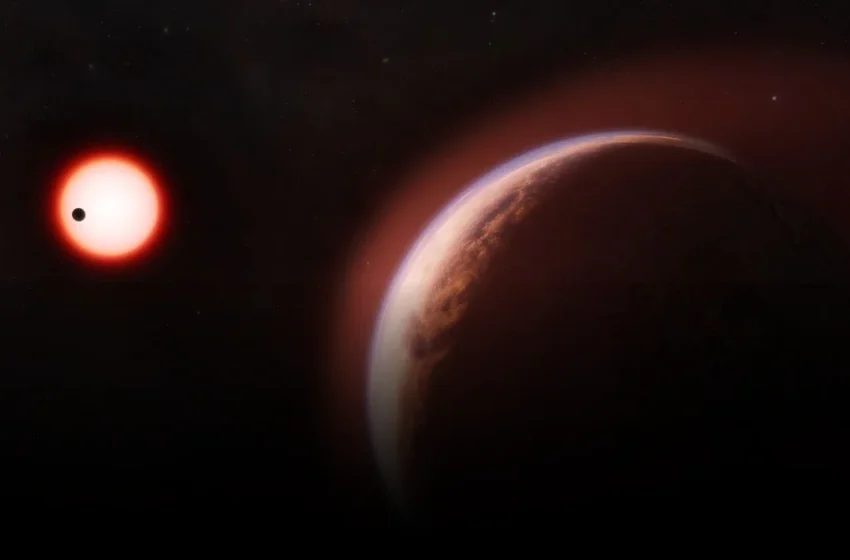
Forget the headlines screaming about ‘Earth 2.0’ or imminent alien contact. The real story behind the detection of an atmosphere on the exoplanet LHS 1140 b is far more understated, and arguably, far more consequential for the science of astrobiology itself. While the announcement from the Harvard-Smithsonian Center for Astrophysics about a rocky exoplanet 48 light-years away, nestled within its red dwarf star’s habitable zone, certainly warrants attention, its true significance isn’t about finding life. It’s about finding a *way* to find life—a validation of the intricate, often overlooked, methodologies that underpin our search.
For years, the theoretical models for detecting atmospheres on distant exoplanets have been just that: theoretical. The confirmation that LHS 1140 b, discovered in 2017, possesses an atmosphere — evidenced by observations in 2024 and 2025 detailing helium leaks — marks a pivotal moment. Scientists were able to identify the spectral signature of helium and, crucially, reconstruct its escape dynamics using sophisticated physical models. This wasn’t merely a lucky detection; it was a deliberate, methodological triumph, confirming the viability of a technique that will prove indispensable as our observational capabilities mature.
This is the often-missed nuance: the public, fueled by decades of science fiction, consistently conflates habitability with habitat, expecting immediate alien disclosure rather than the painstaking validation of detection methodologies. The actual breakthrough here is in the confirmation of a remote sensing technique across dozens of light-years. This success paves the way for future exoplanet characterization efforts, enabling astronomers to move beyond mere detection of a planet to the chemical analysis of its surrounding gases, an essential precursor to identifying potential biosignatures.
Beyond the Goldilocks Zone Hype
The term ‘habitable zone’ itself often misleads. It implies a comfortable, Earth-like environment, when in reality, it merely denotes a range of orbits where liquid water *could* exist on a planetary surface, given certain atmospheric conditions. LHS 1140 b, orbiting a cool red dwarf, meets this criterion, but the specifics of its atmosphere, even what little we now know, suggest a world profoundly different from our own. Researchers indicate that while an atmosphere is present and has persisted for at least 3 billion years, its composition, particularly the upper layers from which helium escapes, is distinctly alien. Lower down, heavy gases like nitrogen, carbon dioxide, or carbon monoxide are hypothesized.
This isn’t just a minor detail; it’s the core of the challenge. An atmosphere fundamentally unlike Earth’s means different chemistry, different energy balance, and potentially, entirely different constraints on any potential biological processes. Robin Wordsworth, a Harvard professor involved in the study, aptly summarized the progression: from wondering if terrestrial planets existed, to finding them in habitable zones, to now confirming atmospheric retention. Yet, even his quote undersells the current hurdle: not merely *that* an atmosphere exists, but *what kind* of atmosphere it is. This strategic emphasis on ‘habitable zones’ and ‘atmospheric retention’ not only propels critical scientific inquiry but also shrewdly justifies the colossal investment in next-generation telescopes and the institutions, such as the Harvard-Smithsonian Center for Astrophysics, poised to utilize them.
The current findings, while groundbreaking for spectroscopy, do not provide proof of life or even an environment readily recognizable as hospitable. They offer a single data point—a rocky body, a habitable zone, an atmosphere—but the devil, as always, is in the molecular details. To truly understand if a world is ‘habitable’ in a meaningful sense, we need to know what that atmosphere is made of, its density, its temperature profiles, and how it interacts with the planetary surface.
A Pragmatic Leap for Exoplanet Science
The genuine impact of the LHS 1140 b findings lies in its pragmatic implications for the future of planetary science. The confirmation of this detection method is a green light for the advanced capabilities of instruments like the James Webb Space Telescope and its successors. This isn’t just about spotting another dot of light; it’s about refining the observational techniques to dissect that dot’s chemical fingerprint from tens of light-years away. The challenge now shifts from ‘can we detect an atmosphere?’ to ‘can we fully characterize its atmosphere, its surface conditions, and identify definitive biosignatures?’
Moving forward, the focus will be on leveraging more powerful instruments to conduct further observations. This means not just detecting helium, but seeking out a broader spectrum of elements and compounds, building a comprehensive picture of atmospheric composition. It means probing for evidence of liquid oceans, volcanic activity, or other geological processes critical to planetary evolution. This systematic, iterative approach is the essence of scientific discovery, often unglamorous but undeniably essential. This latest finding is a testament to the fact that while the public awaits the ‘big reveal’ of alien life, the real work—the foundational astrophysics and diligent atmospheric modeling—continues, incrementally pushing the boundaries of what we can discern about worlds beyond our own solar system.
