
Fairphone’s US Gambit: Challenging a Decade of Disposable Tech
- Hardware
Arjun Vedanta
- 0
- 5 minutes read
The Unyielding Grip of Planned Obsolescence
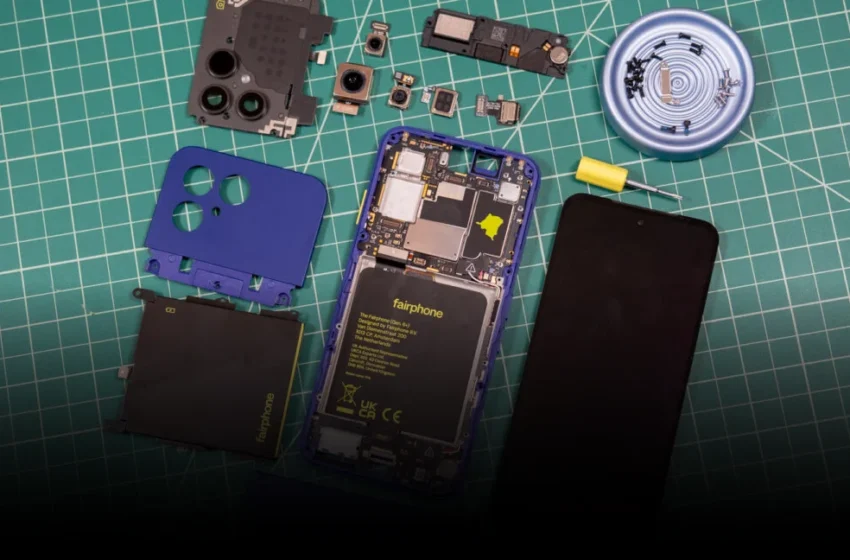
The Fairphone Gen 6+ arrived on US shores priced at $650, a modular device designed for a future where you actually fix your smartphone, rather than replacing it. This isn’t merely an incremental upgrade or a niche product launch; it’s a direct challenge to the established order of global consumer electronics. For over a decade, the tech industry, led by Silicon Valley’s titans, has meticulously engineered devices that prioritize aesthetics and performance above all else, often making them intentionally difficult or costly to repair.
This core tension—between a device built for longevity and a market conditioned for constant upgrades—is the structural contradiction at the heart of Fairphone’s American venture. The company, through its CTO Chandler Hatton, articulates a goal of enabling users to “fully own” their devices. Yet, in a highly competitive market where financing models and marketing campaigns are built around two-year upgrade cycles, the notion of true ownership often feels like a quaint, forgotten ideal.
Fairphone’s entry forces a mirror onto American tech consumption. We tell ourselves we want sustainability, that we despise planned obsolescence. But are we, as consumers, truly prepared to compromise on the razor-thin bezels, the cutting-edge camera arrays, or the raw processing power that define the iPhone and Galaxy experience?
Beyond the Repairability Rhetoric
Major players like Apple, Samsung, and Google have, in recent years, grudgingly embraced the “right to repair” movement, offering longer software update commitments and even self-repair kits. Google and Samsung now pledge software support for the better part of a decade. However, this is largely a performative gesture, a reaction to regulatory pressure and public outcry, rather than a fundamental shift in their product philosophy.
The critical distinction lies in incentive. Apple and its peers benefit immensely from a system where device longevity is artificially capped, driving consumers back to purchase new hardware, new accessories, and new services. Their business models thrive on hardware churn. Fairphone, by contrast, explicitly designs against this cycle, which inevitably means trade-offs in areas where industry leaders dedicate billions: industrial design, bleeding-edge chip integration, and camera software algorithms.
A device that opens easily with standard tools, its components available for purchase, inherently presents design constraints. This means Fairphone often lags in terms of raw specifications or premium finishes compared to similarly priced flagships that exploit every millimeter for sealed-in performance. The skeptical observation here is that while the major players offer a *path* to repair, they do not offer a *reason* to prefer it over a new device; Fairphone offers both, but at a cost to traditional performance metrics.
A Circular Economy in a Linear World
The challenge for Fairphone isn’t just about selling a phone; it’s about selling a philosophy in a deeply entrenched linear economy. The American consumer electronics market thrives on novelty and perceived obsolescence, not on the durability of a product’s materials or the ethics of its supply chain. The $650 price point for the Fairphone Gen 6+ places it squarely against mid-range devices from established giants, which often come with more powerful processors, superior cameras, and tighter integration into ubiquitous ecosystems.
Furthermore, carrier subsidies and payment plans obscure the true cost of smartphones, making frequent upgrades seem more affordable than they are. This financing structure effectively divorces consumers from the hardware’s inherent value and longevity, fostering a mindset of rental rather than ownership. Fairphone’s proposition—that you might keep this device for five, seven, or even ten years—runs counter to every established buying habit.
The company represents a valiant effort towards a truly circular economy within consumer electronics. It emphasizes modular design, fair labor practices, and responsibly sourced materials, areas where the global supply chain, dominated by the Apples and Samsungs of the world, remains notoriously opaque. But the question remains whether the promise of ethical manufacturing and long-term repairability is enough to sway a market accustomed to the instant gratification of performance and sleek design, especially when those attributes are subsidized and presented as the norm.
Fairphone’s success in the US will not simply be a measure of its sales figures. It will be a litmus test for whether the world’s most upgrade-hungry tech market is genuinely ready to value durability and genuine ownership over the fleeting allure of the next shiny object.
