
Florida’s Net-Zero Ban: A Self-Inflicted Tech & Economic Isolation
- Tech
Arjun Vedanta
- 0
- 5 minutes read
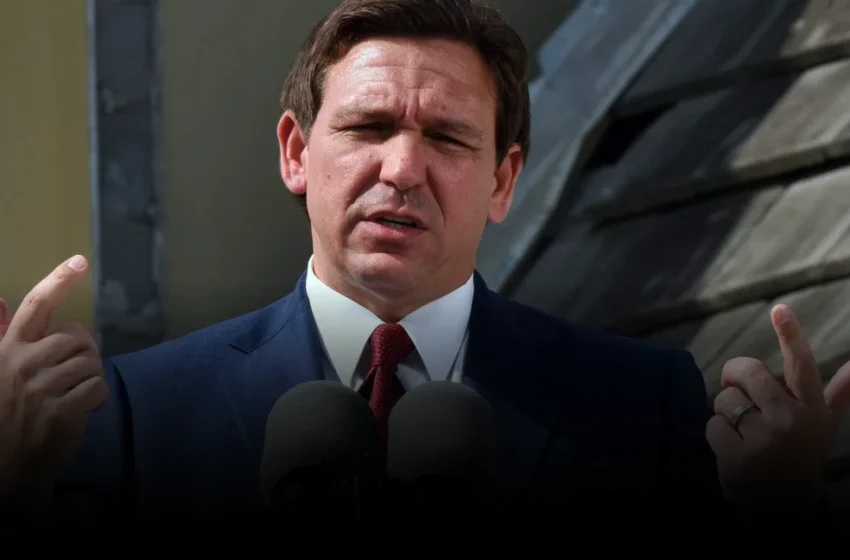
Florida Signals Retreat from Global Green Economy
The latest legislative maneuver from Florida, House Bill 1217, isn’t just another domestic policy skirmish; it’s a direct declaration of the state’s disinterest in participating in the burgeoning global green technology economy. By explicitly prohibiting local governments from setting net-zero emissions targets, Florida isn’t merely slowing climate action; it’s actively erecting barriers against the very innovations and infrastructure investments that are defining urban development and economic competitiveness from Singapore to Copenhagen.
This isn’t about the moral imperative of climate action, though that’s certainly a part of the global discourse. This is about hard economics and technological foresight. While cities worldwide are racing to implement smart grids, renewable energy systems, electric vehicle infrastructure, and advanced waste management—all components of a net-zero future—Florida’s state government has effectively told its municipalities: ‘Stop trying to join the future.’ This directive comes at a time when at least ten Florida cities and counties, including major hubs like Miami and Orlando, had already begun charting their own courses toward sustainability, recognizing the tangible benefits beyond just environmental goodwill.
The immediate impact, as noted by Earthjustice’s Bradley Marshall, is a chilling effect. Marshall stated, “It’s certainly meant to scare municipalities and local governments from trying to do things to further net-zero policies.” This creates a climate of uncertainty, not just for city planners, but for technology providers, investors, and talent looking to build and deploy solutions for resilient, low-carbon urban environments. When a state actively discourages a global economic trend, it signals an unwelcoming environment for the companies and capital flowing into that sector.
The Stifling of Smart City Innovation and Investment
Consider the trajectory of smart city development. From Masdar City in the UAE to the ambitious urban redevelopments across Europe, the core tenets often revolve around efficient resource management, reduced carbon footprints, and advanced digital infrastructure. These projects attract massive venture capital and private equity because they represent not just a better way to live, but a profitable one. Every sensor, every energy management system, every distributed power generation unit, and every sustainable building material is a piece of a multi-trillion-dollar industry.
Florida’s HB 1217 fundamentally undermines its own cities’ ability to participate in this market. Without explicit net-zero goals, local governments lose a powerful incentive to procure, pilot, and deploy cutting-edge green technologies. This isn’t just about utility-scale solar farms; it extends to everything from intelligent traffic management systems that optimize energy use, to advanced water recycling plants, to building automation that significantly reduces operational emissions. These are the technologies that make cities more resilient, more efficient, and ultimately, more attractive places for businesses and skilled workers.
The law’s ambiguity, which Marshall highlighted, stating, “Now, its exact impact and what it exactly prohibits is probably up for some debate,” only exacerbates the problem. Investors and tech companies thrive on regulatory certainty. When the rules are fuzzy, capital tends to flow elsewhere, to regions that clearly signal their commitment to building the infrastructure of tomorrow. This policy effectively tells green tech startups and established players: look elsewhere for your testbeds and your early adopters.
An Economic Backwater in the Making?
Globally, nations and sub-national entities are competing fiercely to attract investment in clean energy, sustainable manufacturing, and climate resilience. The European Union’s Green Deal, South Korea’s Green New Deal, and even aggressive state-level policies in California and New York are not just environmental initiatives; they are explicit economic development strategies. They create demand, stimulate innovation, and foster job growth in future-proof industries. Florida, by contrast, seems intent on preserving a past economic model, one increasingly incompatible with the demands of a changing climate and evolving global markets.
The incentive here is transparent: the announcement serves to placate a specific political base that views environmental regulations as an economic burden and climate change as a distant or exaggerated threat. It’s a short-sighted political win at the cost of long-term economic vitality. What Silicon Valley reporters, focused on the immediate tech product cycle, might miss is the quiet suffocation of an entire innovation ecosystem that depends on government procurement and policy signals to flourish.
This move is particularly cynical given Florida’s direct exposure to intensified hurricanes and rising sea levels—consequences directly linked to the greenhouse gas emissions this law tacitly endorses. To cripple the very tools that could make a state more resilient against existential threats, while simultaneously undermining its economic potential, is a contradiction that will be felt not just in environmental impact, but in missed opportunities for technological leadership and diversification. Florida is not merely opting out of climate action; it is disarming itself in the global race for future-proof economic growth.
