
Google Earth’s AI Misstep Exposes The Fragile State of Digital Truth
- Artificial Intelligence
Arjun Vedanta
- 0
- 4 minutes read
The Cracks in Our Digital Atlas
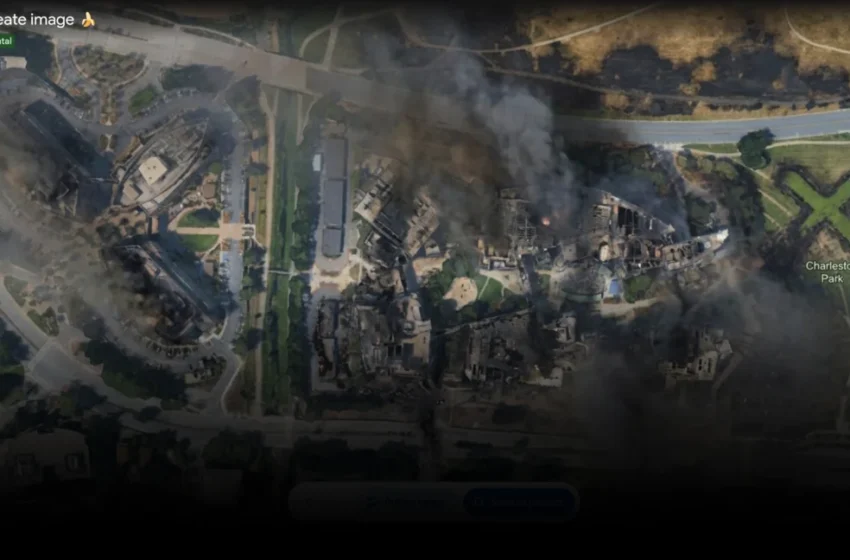
The swift, almost apologetic retraction of Google’s Nano Banana 2 integration into Google Earth, a tool designed to let users generate AI-modified versions of satellite imagery, was more than just a momentary corporate embarrassment. It served as a stark, public admission that even our most trusted digital archives of reality are now fundamentally vulnerable. This wasn’t merely a feature bug; it was a conceptual flaw, exposing the accelerated erosion of trust in widely accepted visual truth.
For years, platforms like Google Earth have functioned as a de facto global atlas, an authoritative source for everything from casual exploration to critical humanitarian aid planning and intelligence gathering. Its visual data, often considered unimpeachable, underpins countless decisions worldwide. Suddenly, the very company stewarding this immense dataset introduced a mechanism to democratize its manipulation, making it easier than ever to create synthetic media of real locations. Bryan Horowitz, Google Earth’s product manager, lauded it on July 30 as creating “concepts grounded in the real world”—a phrase that now rings with unintended irony.
What’s truly remarkable isn’t Google’s miscalculation, but the sheer lack of imagination among those who believed a tool for *generating ‘concepts grounded in the real world’* wouldn’t immediately be weaponized for disinformation. The immediate public reaction, sharing examples of falsified landmarks and fabricated events, demonstrated a predictable but nonetheless chilling misuse potential. This wasn’t a theoretical risk; it was an immediate, glaring reality that forced Google’s hand.
Global Implications of Localized Lies
The consequences of this aborted experiment stretch far beyond Silicon Valley’s insulated echo chamber. For governments, NGOs, and news organizations operating in regions where access to independent information is already scarce, the proliferation of believable, AI-generated geospatial data is catastrophic. Imagine a doctored satellite image showing troop movements where none exist, or depicting environmental destruction that never happened, then disseminated across social media in a conflict zone.
The ease with which Nano Banana 2 allowed anyone to create these convincing fakes poses an existential threat to information integrity in sensitive contexts. It weaponizes the very perception of reality. From validating claims of human rights abuses to tracking the impact of natural disasters, the ability to rely on visual evidence from platforms like Google Earth is paramount. When that reliability is compromised, the fabric of international accountability frays.
The rush to demonstrate generative AI prowess, a desperate play in the high-stakes game of market leadership, clearly overshadowed basic risk assessments. Google, like its peers, is chasing user engagement metrics and brand perception in a fiercely competitive landscape, willing to gamble with foundational truths. This incident highlights a systemic problem: the drive for innovation is consistently outrunning the ethical guardrails, leaving society to grapple with the fallout.
Rebuilding Provenance in a Synthetic World
The retraction of Nano Banana 2 is merely a stopgap; the underlying technological capability and the incentive to deploy it remain. The challenge now is to re-establish provenance and trust in digital visual data. This isn’t just a technical problem for algorithms to solve; it’s a societal one that demands new standards, robust digital forensics, and a global commitment to information integrity.
While blockchain-based solutions for data provenance are being explored by some, the immediate need is for universally accepted digital watermarking and authentication protocols that can survive the sophisticated manipulations of AI. Major platforms, including Google, Apple, and Microsoft, must collaborate with intelligence agencies and academic institutions to develop these tools, rather than treating AI ethics as an afterthought to product launches.
The Google Earth episode serves as a critical warning. If we cannot trust the digital representations of our physical world, what can we trust? The expectation that digital media inherently reflects reality is dissolving. As synthetic media becomes indistinguishable from authentic imagery, the burden of proof shifts dramatically, and the very concept of objective, shared visual truth enters a precarious new era. Re-evaluating how fundamental data platforms maintain integrity is no longer a theoretical exercise; it is an urgent necessity.
