
Google’s AI Glasses: The Unseen Stakes of Constant Connection
- Artificial Intelligence
Arjun Vedanta
- 0
- 6 minutes read
The Illusion of ‘Almost There’
An initial interaction with Google’s latest AI-powered glasses prototype reveals a familiar narrative: promising glimpses of functionality marred by a litany of practical shortcomings. The fuzziness in the single right-eye display, the noticeable eye strain, the audio that struggles against ambient noise, and the protracted 45-second delay for AI image processing over a heavily loaded Wi-Fi network are not mere development quirks. Instead, they underscore fundamental challenges in delivering a truly seamless augmented reality experience, echoing issues that have plagued ambient computing for over a decade. The true ‘almost there’ isn’t the technology, which consistently struggles to meet its own hyped potential, but Google’s persistent ability to convince the tech press it’s on the cusp of a breakthrough after a decade of similar efforts.
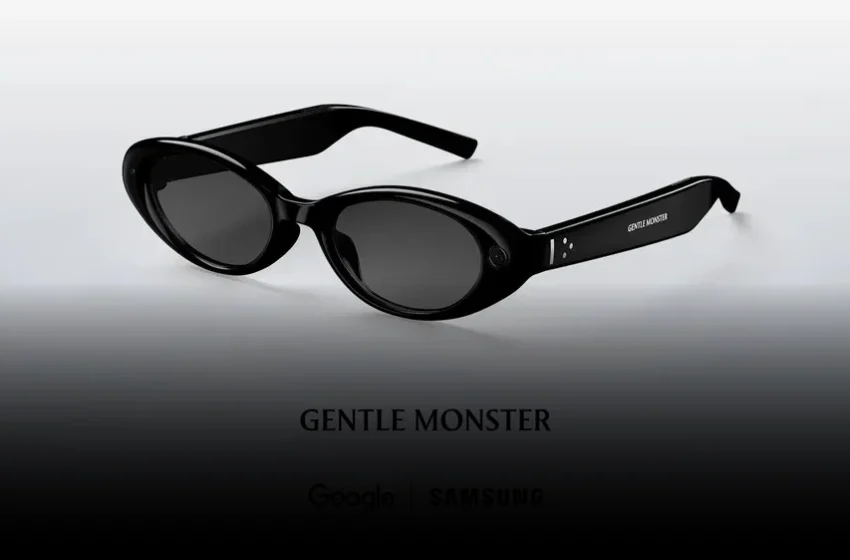
The current iteration, demonstrated at Google I/O 2026, presents a bifurcated strategy: an immediate release of audio-only glasses followed by the more ambitious display version. While framed as a user-centric choice, offering a solution for those whose needs ‘audio will suffice,’ this looks more like a tactical concession. The company, partnered with design brands like Warby Parker and Gentle Monster, is clearly still grappling with the core hardware and user interface dilemmas that make truly pervasive, unobtrusive AR a distant dream, not an impending reality. The decision to ship an audio-only version first, effectively a more advanced headset, postpones the inevitable confrontation with the complexities of visual overlay, battery life, and social acceptance.
Functionality like real-time language translation, where Gemini audibly translates foreign speech while text appears in the lens, and turn-by-turn navigation overlaying directions onto the real world, demonstrate intriguing potential. Yet, the review acknowledges that Google Lens already offers many of these capabilities on a phone. The central question remains unanswered: what compelling, everyday problem do these glasses solve that pulling out a phone does not, especially when the current user experience introduces friction like visual discomfort or significant processing lag? The promise of identifying a Monet painting or receiving cooking feedback, while novel, seems to prioritize technological demonstration over genuine, consistent utility.
The Data Imperative and Platform Ambition
Google’s continued investment in an always-on, visually and audibly connected device is not driven primarily by a sudden breakthrough in wearable technology. Rather, it’s a strategic imperative to own the next major computing platform. If the smartphone was the last battleground for data and attention, ambient AI represents the next, even more pervasive frontier. These glasses, with their direct integration of Gemini, an always-on camera (configurable post-purchase, but on by default in prototype), and active microphones, constitute an unprecedented conduit for real-world data collection.
This aggressive push, with its overt emphasis on Gemini integration and visual computing, is less about an organic user need and more a clear strategic play to cement Google’s AI model as the default ambient interface, thereby securing an invaluable pipeline of real-world data before competitors like Apple or Meta can claim the space. Every identified object, every translated conversation, every navigated route—all become data points feeding into Google’s massive machine learning models. The incentive is clear: establish dominance in human-computer interaction at the sensory level, bypassing the screen altogether. This preemptive maneuver in augmented reality (AR) is about maintaining market power and data monetization in a future where devices are less about ‘using’ and more about ‘being present.’
The company’s previous attempts in wearables, from the original Google Glass to various Android Wear devices, have often floundered due to a combination of privacy concerns, social awkwardness, and a lack of compelling applications. Yet, the persistent pursuit of this form factor now, armed with a powerful multimodal AI in Gemini, signals a heightened sense of urgency. The goal isn’t merely to sell a new gadget, but to embed Google’s intelligence directly into the fabric of daily life, making it the indispensable, invisible layer through which we perceive and interact with the world. This is a gamble on platform lock-in, where the value proposition isn’t just the device, but the comprehensive ecosystem of AI services it enables.
Global Users, Local Realities, and Privacy by Design
While the Silicon Valley tech press often focuses on the aspirational features of these devices, the implications for global users and diverse regulatory landscapes are often overlooked. The idea of a camera that starts automatically with Gemini, even if configurable later, raises immediate red flags about privacy by design. In a world increasingly wary of corporate surveillance and algorithmic bias, an always-on visual and auditory record, processed by distant servers, will face intense scrutiny, particularly outside of permissive tech hubs.
Consider the differing cultural norms around public photography and recording, or the stringent data protection laws in regions like Europe. The practical integration of these glasses into daily life—beyond controlled demos of identifying plants or translating tourist phrases—will be fraught with friction. Will users in crowded public spaces feel comfortable wearing a device that implicitly signals constant recording? How will Google navigate the complex ethical and legal landscape of ambient data capture, especially when the processing occurs on ‘Nano Banana servers’ somewhere in the cloud?
The question of who benefits from this framing of ‘almost there’ is crucial. It allows Google to generate hype and test concepts without being held fully accountable for the privacy and social challenges inherent in such a device. It shifts the burden of adaptation onto the user and society, rather than engineering truly respectful and private interactions from the outset. Until Google can convincingly demonstrate that these glasses are not just technically plausible but also socially acceptable and privacy-preserving by default in a global context, they remain an ambitious, if somewhat tone-deaf, assertion of platform control.
