
Google’s HiLight: A Cosmetic Glint in a Stagnant Pixel Generation
- Tech
Arjun Vedanta
- 0
- 5 minutes read
The Dimming Glow of Smartphone Innovation
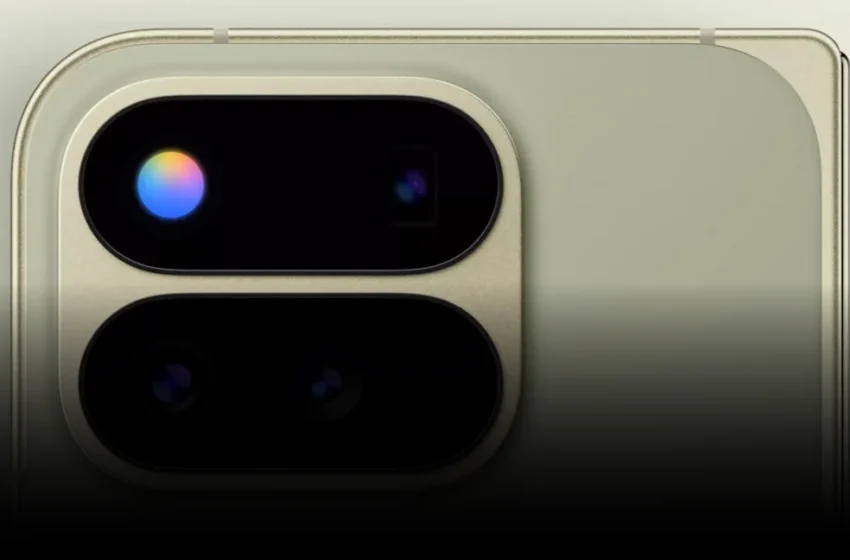
Google will soon unveil its Pixel 11 series, yet the early whispers and leaked imagery paint a picture of devices largely indistinguishable from their predecessors. The most significant point of differentiation, it seems, is a new multi-color LED flash dubbed HiLight, as confirmed by WinFuture’s Roland Quandt on Bluesky. This isn’t just about a flashy new feature; it’s a symptom of a much larger, more troubling trend in the smartphone industry: manufacturers are struggling to innovate meaningfully beyond incremental camera enhancements, resorting instead to cosmetic flourishes in an otherwise stagnant hardware market.
For years, the Pixel line has been Google’s hardware beacon, lauded for its computational photography prowess. But when the defining characteristic of a new generation—specifically the Pixel 11 Pro Fold—is a marginally smaller camera bump housing an LED that changes color, one has to question the underlying strategic calculus. The source article noted this LED, initially rumored as “Pixel Glow,” works as a flashlight and camera flash, now with the added trick of producing a range of colors. This is less a technological leap and more akin to adding RGB lighting to a peripheral that few users actively stare at.
What does it mean when a major player like Google, with its vast R&D resources, leans on a colored flash as a headline feature for a flagship device? It suggests a deeper challenge in discovering tangible, user-centric innovations. The incentives here are clear: in a mature market where processing power and display quality have largely plateaued, differentiating on software or — failing that — superficial hardware tweaks becomes the path of least resistance. This type of announcement keeps the product cycle moving and generates pre-launch buzz, even if the actual utility for the average user remains negligible. It’s a distraction, designed to imply progress where fundamental advancement is absent.
Beyond the Bling: The True Cost of Incrementalism
The industry has spent a decade chasing diminishing returns. We’ve seen foldable phones that remain niche, under-display cameras that compromise image quality, and battery life gains that barely keep pace with increasingly demanding software. The focus has consistently pivoted to camera systems, with computational photography leading the charge. Google’s strength in this area, particularly with features like Magic Eraser or Photo Unblur, has been genuinely impressive. Yet, even those are primarily software-driven, running on hardware that has largely converged across flagships.
Consider the broader context: Apple’s iPhone iterations often face similar critiques of incrementalism, yet they leverage their ecosystem and brand loyalty to sustain demand. Samsung continues to push the boundaries of display technology and foldable form factors, though adoption outside a dedicated enthusiast base remains limited. Google, however, is not just a hardware company; it’s an AI and software giant. Its Pixel phones are meant to be the purest expression of Android and a showcase for its AI capabilities. When the hardware story boils down to a multi-colored flash, it inadvertently highlights the absence of more profound hardware-AI integrations that could genuinely transform the user experience.
This isn’t about the HiLight feature itself being bad; it’s about what its prominence signifies. In an era where consumer fatigue with minor upgrades is palpable, pitching a cosmetic LED as a standout innovation feels almost desperate. The Pixel Fold, the premium device likely showcasing this feature, needs to justify its premium price tag with more than just a vibrant rear light. The market is not forgiving of devices that promise little more than a slightly different shade of yesterday.
The Global Perspective: What Silicon Valley Misses
From a global vantage point, the Silicon Valley echo chamber often misses the broader implications of these seemingly minor announcements. US-based tech reporters, steeped in product launch cycles, can sometimes overlook how little these incremental changes resonate with users in markets where device affordability and foundational reliability still drive purchasing decisions. A colored LED flash means absolutely nothing to someone in Southeast Asia concerned about battery life through a day of ride-hailing, or to a European user prioritising long-term software support over flash gimmickry.
The real innovation Google should be chasing with its Pixel line isn’t a better light show for the camera module. It’s about leveraging its AI prowess to deliver truly ambient computing experiences—devices that anticipate needs, manage complex tasks autonomously, and integrate seamlessly into diverse ecosystems without requiring constant human input. Think context-aware processing that goes beyond simple voice commands, or truly adaptive interfaces that learn and evolve with user behavior in subtle, impactful ways.
The introduction of HiLight, while visually distinct, ultimately serves as a stark reminder: the smartphone industry, particularly among the established players, is treading water. The big leaps, the paradigm shifts that once defined this sector, are increasingly rare. What we’re seeing are companies meticulously refining existing designs and functionalities, occasionally adding a splash of color to distract from the uncomfortable truth that the next truly groundbreaking mobile technology has yet to emerge, or perhaps, is not being pursued with the necessary urgency.
