
Hantavirus on the High Seas: A Wake-Up Call for Global Health Tech’s Unfinished Business
- Tech
Arjun Vedanta
- 0
- 7 minutes read
The Canary Islands, a Cruise Ship, and an Old Enemy
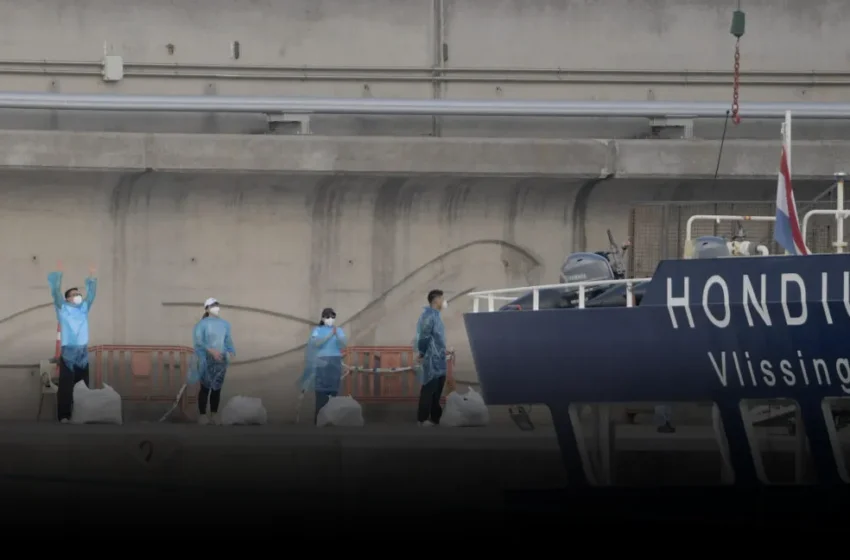
There’s a cruise ship, the MV Hondius, and it’s been quietly bobbing around the Canary Islands. But this isn’t a story about vacationers and duty-free shopping. This is a story about hantavirus, an Andes strain no less, ripping through a contained environment, forcing a highly unusual international evacuation, and landing three individuals in biocontainment units in the U.S. What I find fascinating here isn’t just the disease itself, but the almost archaic nature of our response in an era brimming with advanced technology.
Let’s be honest about this: The notion of a hantavirus outbreak on a cruise liner feels less like a headline from 2024 and more like a rejected script for a 90s disaster movie. Yet, here we are. Passengers evacuated, a new case identified during disembarkment, and a small contingent of crew left to pilot the vessel back to Rotterdam. It’s a stark, unsettling reminder that despite all our talk of AI and digital transformation, some challenges remain stubbornly analog, or worse, expose gaping holes in our high-tech defenses.
For me, this isn’t just about a microbe or a ship. This is about critical systems—or the lack thereof. It’s about how rapidly an obscure pathogen can leverage global mobility, and how our existing public health infrastructure, even with all its modern trappings, still struggles with real-time detection, containment, and cross-border coordination. This incident, while isolated, acts as a sharp, pointed lesson in the persistent vulnerabilities that tech should, by now, be helping us overcome.
Beyond Containment: The Unfulfilled Promise of Proactive Tech
The Diagnostic Bottleneck
Think about the typical diagnostic pipeline for a novel or rare pathogen. Someone gets sick, symptoms appear, samples are taken, often airlifted to a specialized lab, tests are run. Days. Weeks, sometimes. That’s precious time in an outbreak scenario, especially on a moving vessel where close quarters amplify transmission risk. The fact that an outbreak could escalate to this point on a cruise ship in 2024 highlights a fundamental bottleneck.
What we really need, what we’ve talked about for years, is rapid, point-of-outbreak genomic sequencing. Imagine compact, portable sequencers—like those offered by Oxford Nanopore—that can identify a pathogen’s genetic fingerprint within hours, right there on the ship’s infirmary. Couple that with AI-driven diagnostics capable of sifting through genomic data to flag anomalies or known threats. We saw glimpses of this potential during COVID-19, but it’s far from standard operational procedure, especially in less-than-ideal environments like a cruise ship. The tech exists; its widespread deployment and integration into emergency protocols, however, does not.
The Data Chasm and the Privacy Paradox
Then there’s the data problem. Or rather, the lack of timely, actionable, and secure data sharing. Imagine a world where aggregated, anonymized health data from global travelers could feed into predictive models, flagging unusual clusters of symptoms before they become headlines. We’re talking about technologies like federated learning or secure multi-party computation, allowing health authorities to analyze trends without ever centralizing sensitive individual health records. It’s elegant. It’s powerful. And it runs headlong into a wall of regulatory patchwork, jurisdictional squabbles, and legitimate privacy concerns.
Nobody’s talking about the real problem — which is we have the capacity for unprecedented global health surveillance, but we haven’t built the social, political, or legal frameworks to actually use it effectively and ethically. We chase the flashy ‘cure’ for cancer with billions, but the mundane, distributed infrastructure to prevent the next pandemic often gets relegated to budget line-items that never quite get approved. We talk a good game about ‘resilience,’ but often, that just means we’re really good at reacting to disasters, not preventing them.
The Logistics of Crisis: When Repatriation Meets the 21st Century
The Invisible Infrastructure
The evacuation and repatriation of 147 individuals from a remote location, involving specially arranged flights and international coordination, is no trivial matter. It requires sophisticated logistics, real-time communication, and meticulous planning. Spanish authorities, the WHO, and national health officials are all involved. This is where modern logistical tech should shine. High-bandwidth satellite communication systems are crucial, especially for areas with limited terrestrial infrastructure, ensuring seamless coordination between ground teams, air traffic control, and medical personnel.
Beyond communication, think about AI-driven resource allocation. Optimizing flight paths for medically equipped planes, managing highly specialized medical supplies, and tracking personnel across multiple continents—this could all be dramatically improved with intelligent systems. Yet, much of this still relies on human ingenuity, phone calls, and spreadsheets. We’ve optimized Amazon’s package delivery to within an inch of its life, but global public health response often feels like it’s operating on a slightly upgraded version of a pager network.
The Maritime Blind Spot
Ships are unique environments. Confined spaces, shared ventilation, transient populations, and often international waters create a perfect storm for pathogen transmission and complicated jurisdiction. Why aren’t we seeing more advanced tech being mandated or even voluntarily adopted across the maritime industry?
I’m thinking real-time environmental sensor networks that monitor air quality, ventilation systems, and even waste-water for pathogen indicators. Continuous monitoring, perhaps integrated with passenger manifest data (anonymized, of course) could provide early warning signals. The smart shipping market is projected to reach over $30 billion by 2030, but much of that focuses on operational efficiency and navigation, not necessarily advanced public health monitoring. This hantavirus incident should make us question whether existing protocols and technological deployments are truly adequate for preventing future, potentially far deadlier, outbreaks on the world’s floating cities.
What We’re Still Learning (Or Refusing To)
This isn’t just about a hantavirus; it’s a proxy for all future, unforeseen biological threats. The reality is, global health security funding, despite clear lessons from COVID-19, remains stubbornly underfunded. Estimates suggest a persistent multi-billion dollar annual gap in preparedness investments. We pour billions into moonshots and metaverse dreams, but the foundational, unglamorous work of building robust, technologically advanced public health infrastructure often takes a backseat. It’s a question of priorities, of political will, and frankly, of collective memory. We forget quickly. We always do.
The lessons from every major epidemic—SARS, MERS, Ebola, COVID-19—all pointed to the critical need for better data, faster diagnostics, and seamless global coordination. And yet, here we are, grappling with an Andes hantavirus outbreak on a cruise ship, managing it with methods that, while effective, feel like they’re leaning more on human grit than cutting-edge innovation. It’s a stark reminder that while the tech industry continues its relentless march, some of the most fundamental problems facing humanity are still waiting for us to truly commit to applying our brightest minds and biggest budgets.
