
HPE’s ‘Free’ Bet: The True Cost of Broadcom’s VMware Shake-Up
- Artificial Intelligence
Arjun Vedanta
- 0
- 4 minutes read
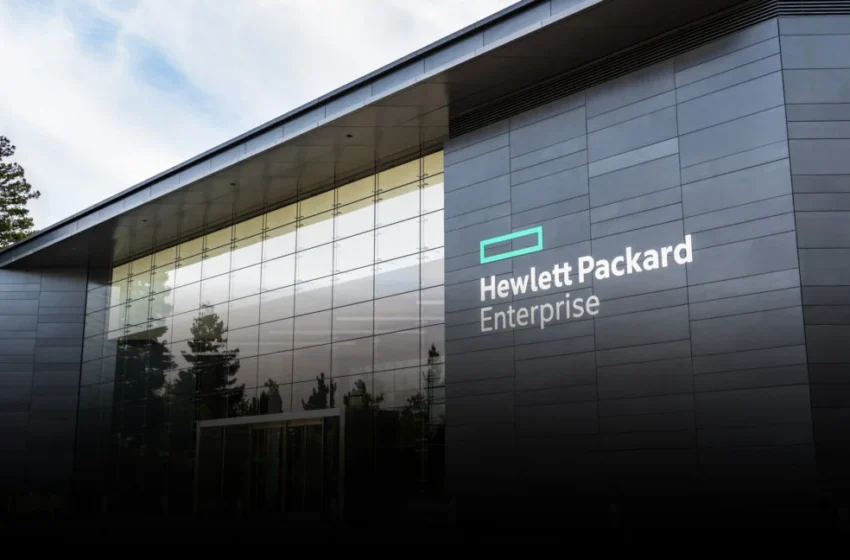
The Price of Disruption: Why HPE is Giving Software Away
Hewlett Packard Enterprise (HPE) isn’t just offering free virtualization software; it’s openly subsidizing an exodus. This week’s announcement at HPE Discover—a free one-year license for its “HPE Morpheus Software—VM Essentials” and other sweeteners like a year of HPE Zerto for $1 and 0 percent interest financing—is more than a competitive jab at Broadcom. It is a stark admission that Broadcom’s aggressive acquisition of VMware has fundamentally destabilized the enterprise virtualization market, forcing vendors to pay customers to jump ship.
For years, VMware was the bedrock of enterprise IT, a default choice for data centers globally. Then Broadcom entered, acquiring VMware and immediately signaling a pivot towards monetizing its installed base with revised licensing and increased pricing. This move sent shockwaves through the channel and directly impacted end-users, many of whom now face significantly higher operational costs and a feeling of acute vendor lock-in.
HPE’s move is a direct appeal to these distressed customers. Its website explicitly positions Morpheus as a “VMware alternative,” offering a hardware virtual machine (HVM) hypervisor and unified management that can “manage VMware ESXi and HVM clusters from one console and migrate when you’re ready.” This isn’t just about offering an alternative; it’s about providing an escape route, and critically, defraying the immediate financial burden of switching.
The Long Shadow of Broadcom’s M&A Playbook
Broadcom’s post-acquisition strategy with VMware isn’t unprecedented; it echoes previous moves with CA Technologies and Symantec. The pattern is clear: acquire a mature enterprise software vendor with a sticky customer base, then optimize for profit by rationalizing product lines, raising prices, and consolidating sales channels. The short-term benefit accrues to Broadcom’s shareholders, but the long-term consequence is a deeply agitated customer base actively seeking alternatives. The question is, does HPE truly offer a superior long-term destination, or merely a less expensive journey away from a burning platform?
HPE’s incentive is obvious: capture the significant market share suddenly made available by Broadcom’s heavy-handed tactics. By making the initial migration cost near-zero, HPE hopes to pull these customers into its broader hyper-converged infrastructure (HCI) and hybrid cloud ecosystem, where it can then monetize through hardware sales, support contracts, and other software offerings. It’s a land-grab facilitated by another company’s self-inflicted wound.
Yet, the shift isn’t frictionless. Migrating entire virtualized environments is complex, time-consuming, and carries inherent risks. While HPE offers tools for “non-disruptive migration,” the operational overhead—re-platforming applications, retraining staff, validating compatibility—is substantial. Broadcom, despite the outcry, likely calculates that a significant portion of its VMware customers will simply absorb the new costs rather than undertake a disruptive migration.
Fragmenting Futures: What This Means for Enterprise IT
This market upheaval extends beyond a simple vendor swap. It forces enterprises to reconsider their fundamental data center economics and long-term infrastructure strategy. For years, the choice in enterprise virtualization was largely a duopoly, offering stability, if not always innovation. Broadcom has shattered that. Now, customers are exploring not just direct competitors like HPE, but also open-source alternatives like KVM or Proxmox, and increasingly, shifting workloads directly to public cloud hyperscalers.
The impact of this disruption could manifest in several ways. We might see accelerated adoption of cloud-native architectures that abstract away the underlying virtualization layer. There could be a resurgence of interest in niche, specialized hypervisors for particular workloads. Critically, as enterprises build out their AI Infrastructure, the underlying virtualization platform becomes a foundational decision. The flexibility and cost-effectiveness of that foundation will determine future agility.
HPE’s generous offer is not a sign of strength in the virtualization market, but rather a response to the vacuum created by Broadcom’s strategic brutality. It signals a new era where enterprise IT leaders must move beyond brand loyalty and even simple cost comparisons, to fundamentally re-evaluate their risk exposure to vendor M&A and actively cultivate diversified infrastructure strategies. The days of set-and-forget virtualization are over; the new normal is one of constant re-evaluation and, for many, forced migration.
