
Infinite Machine Olto: A Scooter in Bicycle’s Clothing Exposes Regulatory Flaws
- Electric Mobility
Arjun Vedanta
- 0
- 5 minutes read
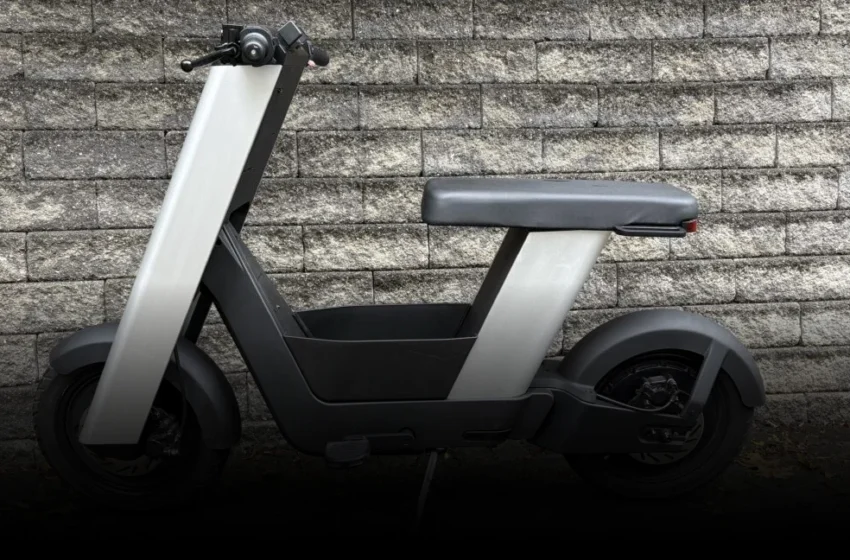
The Regulatory Charade: A Bicycle That Isn’t
The Infinite Machine Olto is not a bicycle. Not in any meaningful sense that respects the spirit of urban cycling or the infrastructure built to support it. It is, by all accounts, an electric scooter — a competent one, in fact — cleverly designed to exploit specific regulatory ambiguities that classify it as a Class 2 or Class 3 e-bike. This isn’t just a design choice; it’s a profound market strategy that prioritizes legal classification over genuine utility for cyclists, fundamentally challenging how cities plan for sustainable transport.
Infinite Machine presents the Olto as a comfortable, robust electric vehicle with good acceleration and handling, boasting a capacious battery and a price point significantly less than half the cost of its P1 scooter stablemate. The key to this cost efficiency and market positioning lies in its “bicycle” designation. The source material reveals the Olto works best when its pedals are locked forward, serving as mere footrests. This singular detail lays bare the intent: the Olto is optimized for a scooter-like experience, not for pedaling, which makes its e-bike classification a purely legal maneuver.
Regulators in the United States, in particular, have established e-bike classes to differentiate electric pedal-assist bicycles from mopeds or motorcycles. A Class 2 e-bike offers throttle assistance up to 20 mph, while a Class 3 offers pedal-assist up to 28 mph. The Olto technically fits these definitions by including pedals, but its design clearly nudges riders away from using them. The incentive for Infinite Machine here is transparent: by slotting into the e-bike category, the Olto can access bike lane networks and potentially bypass the more stringent licensing, insurance, and speed regulations often applied to scooters and mopeds. This sidesteps higher manufacturing costs associated with those classifications, opening up a broader, less encumbered market segment. It is, to put it bluntly, a masterclass in regulatory arbitrage.
Urban Friction: Infrastructure Under Strain
The proliferation of devices like the Olto — scooters masquerading as bicycles — poses a direct threat to the integrity and safety of urban micromobility infrastructure. Dedicated bike lanes, a hard-won victory for urban planners and cycling advocates in cities from Copenhagen to Singapore, were conceived for human-powered or genuinely pedal-assisted vehicles. These lanes are designed with specific speed differentials, turning radii, and user behaviors in mind. The introduction of heavier, faster, throttle-driven vehicles into this ecosystem fundamentally alters the risk profile.
Think of the burgeoning bike lane networks across urban centers. These are not merely strips of asphalt; they are critical arteries for emissions reduction, congestion relief, and public health, built on the premise of predictable, relatively slower-moving traffic. An Olto, ridden like a scooter, introduces a different dynamic: greater mass, higher average speeds without pedaling effort, and a rider posture that often differs from a traditional cyclist. This can lead to increased conflicts with actual cyclists, pedestrians, and even other micromobility users, eroding the very safety and confidence these lanes were designed to foster.
Moreover, the concept of a “bicycle” that doesn’t encourage pedaling raises questions about the public health goals often associated with promoting cycling. While electric assistance is valuable, a device that effectively eliminates the physical effort undermines one of the secondary, yet significant, benefits of cycling. This isn’t an evolution of the bicycle; it’s a redefinition of what a bicycle can be, driven by legal expediency rather than ergonomic or athletic advancement. The long-term consequence is a dilution of purpose for valuable public infrastructure, potentially leading to calls for stricter regulation or even a rollback of dedicated lanes as user conflicts escalate.
The Global Game of Definition Dodge
What the Infinite Machine Olto represents is not just a clever product, but a harbinger of a broader challenge facing regulators worldwide. My years covering tech from Geneva, Singapore, and London have repeatedly shown that while Silicon Valley often focuses on innovation in a vacuum, the rest of the world grapples with its messy integration into existing societal structures and legal frameworks. The US market, with its fragmented state-by-state and city-by-city regulations, is particularly ripe for this kind of definitional exploitation.
Other jurisdictions, often with more centralized or stringent transport laws, watch these developments closely. Will cities like London, with its robust cycle infrastructure and strict vehicle classifications, allow such devices unfettered access to its bike superhighways? Singapore, known for its proactive but rigid regulatory approach to personal mobility devices, has already seen debates over the power and speed limits of e-scooters and e-bikes. The Olto’s approach could force a global re-evaluation of what constitutes an “e-bike” versus an “e-scooter” or even a “light moped.”
This ongoing game of definition dodge risks a regulatory backlash that could stifle genuine innovation in micromobility. When companies push the boundaries of existing laws, the inevitable response is often a blanket tightening that can inadvertently penalize well-intentioned, truly sustainable transport solutions. The broader implication is clear: without a unified, forward-looking regulatory framework that considers actual use cases rather than just technical specifications, urban mobility will continue to be a chaotic battleground of legal loopholes and public safety concerns. It’s a challenge that demands thoughtful policy, not just clever engineering, to truly pave the way for smarter cities.
