
ISS Air Leak Exposes Deeper Geopolitical Fault Lines in Space Cooperation
- Tech
Arjun Vedanta
- 0
- 5 minutes read
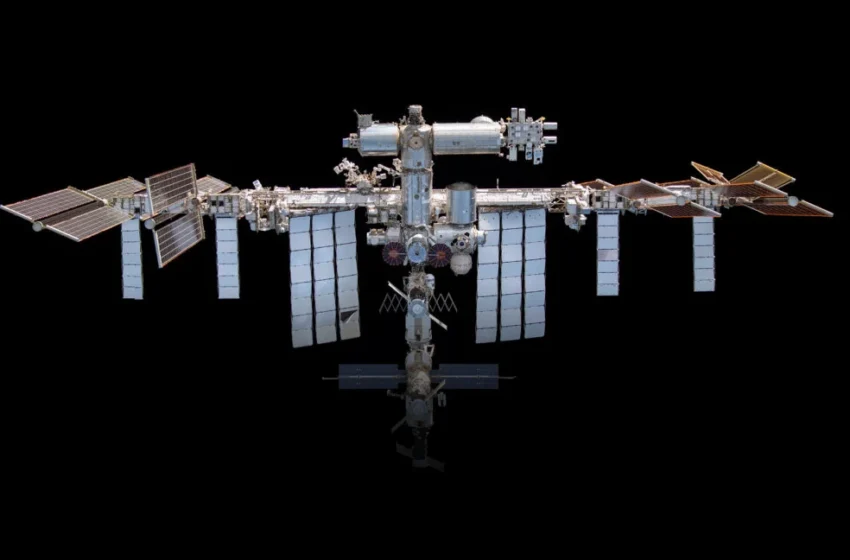
The New Orbital Lifeline Emerges
Five human beings, from three nations, found safety inside a privately-built American capsule, the SpaceX Crew Dragon Freedom, while two Russian cosmonauts worked to stem an air leak on a different module of the International Space Station. This immediate, pragmatic response to a life-threatening incident aboard humanity’s most ambitious orbital outpost isn’t just a technical footnote; it’s a stark, real-time illustration of a geopolitical pivot that too many US-based tech reporters, blinded by the shine of Silicon Valley, continue to miss.
The details are simple enough: NASA astronauts Jessica Meir and Jack Hathaway, alongside France’s Sophie Adenot and Russia’s Andrey Fedyaev, boarded the Crew Dragon. They were joined by NASA astronaut Chris Williams, who had arrived on a Russian Soyuz. This was not a drill or a staged photo-op. It was an urgent evacuation, a trust exercised in a spacecraft built by a company barely two decades old, a direct successor to the shuttle program that once dominated American human spaceflight. For all the rhetoric about international cooperation, when push came to shove, it was a capsule from space commercialization’s vanguard that became the immediate safe haven. This single event speaks volumes about evolving national space strategies, moving beyond mere technological capability to underscore fundamental shifts in who is trusted with human lives in the ultimate high-stakes environment. It’s a significant moment often downplayed by focusing solely on the technical resolution of the leak rather than the underlying infrastructure of safety and geopolitical influence.
A Fraying Tapestry of Collaboration
The International Space Station, since its inception, has been touted as a beacon of post-Cold War cooperation, a symbol of nations literally welding their interests together in orbital mechanics. Russia’s Soyuz vehicles were, for years, the sole reliable taxi service to orbit for all nations, including the US, a dependency that always felt a bit too close for comfort after the Shuttle program retired. This incident, however, quietly underscores a deeper unraveling. While Russian cosmonauts continue to operate critical segments and maintain vital systems — as they did with the leak — the safety net for the crew, the immediate point of escape, is increasingly American and privately managed. This structural reality shifts the balance of power in an environment where international treaties are often tested by Earth-bound geopolitical rivalries. The continued involvement of Russian personnel on the ISS, even as their nation’s space agency, Roscosmos, increasingly signals a unilateral exit and the development of their own orbital station, presents a visible contradiction. The station is a partnership in name, but its practical dependencies are diverging faster than diplomatic press releases admit. This divergence isn’t merely theoretical; it’s embedded in the operational readiness and emergency protocols of the station itself, fundamentally altering the perceived reliability and long-term commitment of its founding partners.
Beyond the Leak: Strategic Implications for Space Infrastructure
This specific leak, whatever its ultimate cause, serves as a potent reminder that the hardware of space exploration isn’t merely functional; it’s profoundly strategic. The incentive behind NASA’s embrace of commercial crew programs, exemplified by SpaceX, was not just cost efficiency; it was about re-establishing independent American launch capabilities and crew access. This incident vividly demonstrates the return on that investment, providing a tangible, real-world proof point for a policy forged years ago. It’s a clear signal to partner nations, and indeed to rivals, that the US is not only reclaiming its leadership in human spaceflight but doing so with a powerful, agile private sector backing. The implication for Europe, Japan, and other nations looking to build out their own independent space access, or continue reliance on a complex, multi-national platform, is profound: the landscape is shifting from a shared, arguably fragile, dependency towards a more diversified, and potentially more competitive, future.
Consider the subtle power dynamic: when safety is paramount, a US commercial entity offers the most robust short-term solution for a multinational crew, even as Russian expertise tackles the problem itself. This isn’t merely about technical competence; it’s about the deep architectural design of future human presence in space. The next generation of space infrastructure won’t just be about who builds what, but whose vehicles become the default for critical operations, from resupply to emergency egress. The most skeptical observation here is that the seamless integration of Russian and American crews into distinct safety protocols on the ISS itself might be less about enduring partnership and more about managing an elegant, controlled de-coupling of space endeavors, designed to prevent a chaotic withdrawal when the political will for a shared station finally evaporates, leaving behind a complex legacy of interdependence and strategic competition.
The incident on Friday, where the familiar hum of the ISS was punctuated by the urgent reality of an air leak and a swift relocation into a Dragon capsule, paints a clearer picture of the future than any white paper. The old paradigm of two great space powers inextricably linked is giving way to a more fragmented, commercially-driven, and ultimately more nationalistic approach to orbital operations, where the safety net is increasingly provided by a new breed of players. This isn’t just a story about a leak; it’s a story about the accelerating evolution of humanity’s off-world ambition, profoundly shaped by terrestrial power dynamics.
