
Ithaca Bee Supercolony Exposes Silicon Valley’s Blind Spot in Environmental Tech
- Tech
Arjun Vedanta
- 0
- 6 minutes read
The Accidental Sanctuary vs. Engineered Ecosystems
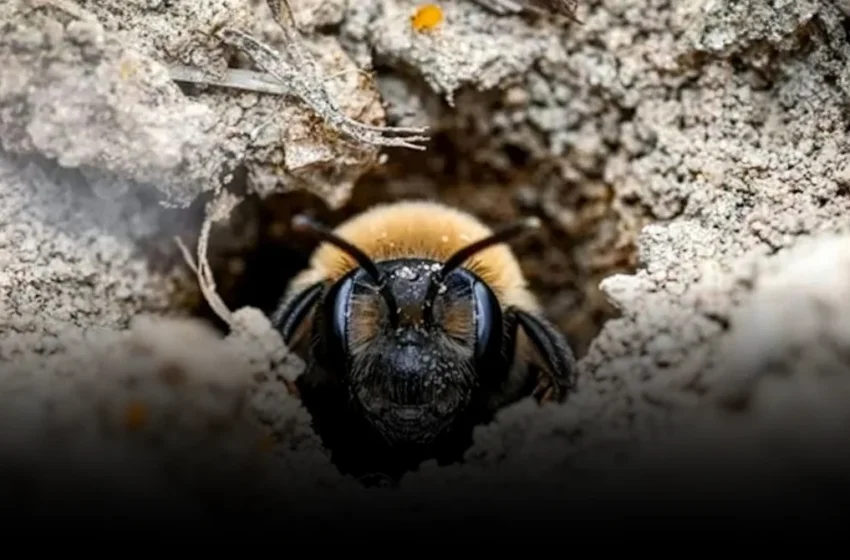
The discovery of 5.5 million Andrena regularis bees in an Ithaca cemetery is an astonishing biodiversity win. But for anyone tracking the intersection of technology, agriculture, and conservation, it also presents a sharp, uncomfortable truth: sometimes, the most effective solutions aren’t engineered, optimized, or even managed by the latest tech.
This massive underground supercolony, occupying 1.25 acres of East Lawn Cemetery since at least the early 1900s, wasn’t established through a Silicon Valley seed round or a precision agriculture initiative. It thrived because a specific patch of land was largely ignored, protected from the very forces—intensive agriculture, urban development, and chemical intervention—that tech often promises to “solve.” Cornell University’s Rachel Fordyce first noted the unusual activity, leading entomologist Bryan Danforth and his team to document a population estimated between 3 and 8 million bees. It is a testament to natural resilience, not human ingenuity.
The Andrena regularis bees in Ithaca are a stark counterpoint to the prevailing wisdom in AgriTech, which obsesses over “smart” solutions for ecological challenges. While venture capital pours into drones for hyperspectral imaging, AI-driven crop management, and even bio-engineered pollinators, this subterranean colony demonstrates the powerful efficacy of benign neglect. It’s an inconvenient truth for an industry built on the premise that every problem can, and should, be optimized with an app or a sensor array.
The species itself, often called the mining bee, is uniquely adapted. Males emerge days before females in April, maximizing mating opportunities. Females then dig intricate nests, laying eggs in cells provisioned with pollen and nectar. Crucially, they winter as adults underground, activating early in spring, perfectly synchronizing with apple blossoms in nearby Cornell University orchards. This isn’t a “feature” programmed into a system; it’s ecological resilience refined over millennia. The undisturbed sandy soil of a century-old cemetery, free from pesticides and development pressures, simply provides the substrate for this natural marvel to persist.
The relentless pursuit of optimized, data-driven ecosystems by AgriTech and IoT sensor arrays, often funded by venture capital, frequently overlooks the simple, resilient efficacy of benign neglect. We’re funneling billions into “solutions” that often aim to mitigate damage already caused by human activity, while genuine, unmanaged ecological success stories are quietly dismissed as anecdotal or simply not scalable—because they don’t generate a recurring revenue model.
The Implicit Critique of Silicon Valley’s Solutionism
This discovery is more than just a fascinating biological find; it’s a profound implicit critique of Silicon Valley’s pervasive solutionism. The tech sector habitually frames complex issues, from climate change to biodiversity loss, as engineering problems awaiting a proprietary fix. Need to save pollinators? Build robotic bees, develop advanced gene-edited crops, or deploy AI to optimize existing pesticide application. These approaches, while sometimes necessary, too often sidestep the fundamental question of why the problem exists in the first place, or whether our interventions are actually making things worse.
Consider the incentives: There’s substantial profit in building and selling advanced hardware and software for “precision agriculture.” There’s a narrative thrill in launching a startup that promises to “disrupt” an entrenched problem. But there’s no SaaS subscription for an undisturbed patch of dirt, and no VC pitch for letting nature take its course in an old cemetery. The market rewards active intervention and scalable products, not passive preservation. This asymmetry skews our perception of what constitutes a “solution” and where innovation truly lies.
The citizen science initiative launched by the Cornell researchers to map other underground bee aggregations, while commendable, underscores this point. It’s a reactive measure, designed to protect what little remains of undisturbed habitat after decades of industrial agriculture and relentless urban sprawl. It’s a scramble to document and shield biodiversity that thrives best when we simply leave it alone—a task increasingly complicated by the very human activities that promise “progress” through technological advancement.
Beyond the Buzz: A Call for Modesty in Innovation
The Ithaca supercolony reveals that sometimes, the most impactful environmental management is no management at all. This isn’t to say technology has no role in conservation or agriculture, far from it. Drones can monitor vast areas for illegal logging; AI can track wildlife populations. But the narrative must shift. We need to acknowledge that technological prowess, while impressive, often comes with an inherent blind spot: the inability to value or even perceive the immense, intricate value of systems that operate outside our design parameters.
This discovery should give pause to anyone pitching the next “game-changing” ecological solution from their comfortable office in Menlo Park or Singapore. What if the most effective “smart city” strategy for biodiversity isn’t a sensor grid for every tree, but simply identifying and protecting more spaces like East Lawn Cemetery? What if true innovation sometimes means recognizing the limits of our own control and the superior intelligence of natural systems?
The 5.5 million bees beneath Ithaca aren’t just an ecological anomaly; they are a living, breathing testament to the power of un-engineered resilience. They are a quiet, persistent challenge to a tech industry that too often believes every challenge is a design problem, and every problem demands a product. Sometimes, the best thing we can do for the planet, and for ourselves, is to simply step back and observe the miracles happening when we don’t interfere. The truly radical act might be to invest in obscurity, rather than endless optimization.
