
JAWBONE Act: Bipartisan Free Speech Bill Risks Public Safety Cooperation
- Tech
Arjun Vedanta
- 0
- 5 minutes read
The Peril of Perfect Legal Purity
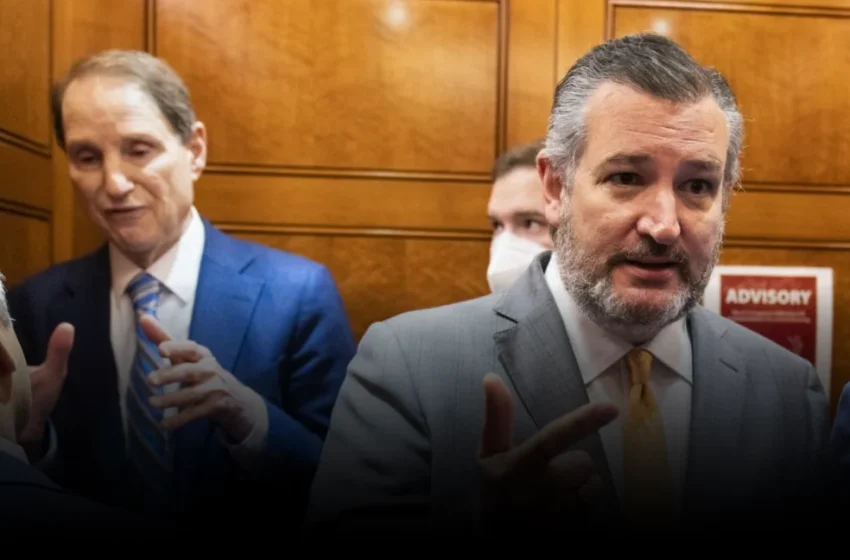
The bipartisan JAWBONE Act, introduced by Senators Ted Cruz and Ron Wyden, presents itself as a bulwark against federal overreach in content moderation. Yet, beneath its well-intentioned ambition to prevent government “jawboning” lies a significant, unaddressed risk: the potential for a new chilling effect, not on free expression itself, but on the crucial, often delicate, communication necessary between government agencies and technology platforms regarding public health and safety. This proposed law, framed as a shield against censorship, could paradoxically cripple essential coordination, transforming every advisory interaction into a potential legal battleground.
The Justice Against Weaponized Bureaucratic Overreach to Networked Expression Act aims to prohibit federal agencies and employees from coercing online services, AI service providers, and broadcasters into altering content. Senator Cruz and Senator Wyden seek to create a private right of action, allowing individuals to sue government officials for compensatory damages if their speech is stifled. On the surface, this addresses a genuine concern: the slippery slope where government “suggestions” become de facto demands. Federal Communications Commission Chairman Brendan Carr’s past attempts to pressure broadcasters are specifically cited as examples.
However, the bill’s broad definition of “coercion” introduces a critical ambiguity that its proponents conveniently overlook. In a world grappling with disinformation campaigns about elections, public health crises, or national security threats, governments often need to communicate urgency and verified information to platforms. Is asking a platform to review demonstrably false content about, say, a pandemic cure, now considered “jawboning” if a lawsuit can follow? The Act does not sufficiently distinguish between illegitimate pressure and legitimate, evidence-based requests for platforms to uphold their own stated content policies.
A Blurring Line in Digital Governance
The concept of “jawboning” has always existed in a gray area of political influence, largely focused on traditional media. But the digital realm, particularly with the advent of large-scale social media and now sophisticated AI chatbots, presents a qualitatively different challenge. Here, content spreads at unprecedented velocity, and its potential for real-world harm, from inciting violence to promoting medical misinformation, is amplified.
Government agencies, including those focused on public health or national security, routinely engage with platforms to flag potential threats or share contextual information. This dialogue is not always a coercive attempt to censor, but often a necessary part of digital governance in an interconnected world. The JAWBONE Act risks transforming these crucial exchanges into adversarial encounters, where officials hesitate to even point out viral misinformation for fear of litigation. Platforms, already under immense public and political scrutiny over their moderation decisions, might then face a new dilemma: comply with a government request and risk a lawsuit from affected users, or ignore the request and risk failing their own public responsibility.
The incentive here, for both politicians like Cruz and Wyden, is to draw a bright, unchallengeable line around government interaction with platforms, cementing a legal framework that appeals to a diverse coalition wary of centralized power, even if it creates unforeseen regulatory paralysis.
The Unforeseen Chilling Effect on Critical Collaboration
Consider the implications for emerging technologies like AI. Developers of new AI services and models are increasingly grappling with how their creations can be exploited to generate harmful content, from deepfakes to propaganda. Regulators and agencies are only just beginning to understand the mechanisms of AI content generation and its potential for misuse. Collaborative efforts between government and AI developers to establish best practices, identify systemic vulnerabilities, and share threat intelligence are paramount.
The JAWBONE Act threatens to poison these nascent partnerships, discouraging open communication by creating a high-stakes legal minefield. My most skeptical observation is this: The very mechanism designed to prevent one form of chilling effect—government censorship—seems perfectly engineered to induce another: a chilling effect on the vital, ongoing dialogue required to protect public safety in an increasingly complex digital ecosystem. This is not merely an academic concern; it directly impacts the ability to respond effectively to future crises, whether they are pandemics requiring coordinated public health messaging or foreign interference campaigns leveraging generative AI.
The bill, in its pursuit of absolute freedom from perceived government pressure, overlooks the nuanced reality that some “pressure” is simply responsible public service, and that the greatest threat to free expression might not always come from direct government coercion, but from the inability to counter dangerous falsehoods effectively. The debate around Section 230 and platform liability has already shown how complex balancing speech protection with harm reduction truly is; the JAWBONE Act adds another, potentially self-defeating, layer of legal friction to the ongoing challenge of content policy.
