
John Deere’s ‘Self-Repair’ Isn’t What Farmers Actually Demanded
- Automation
Arjun Vedanta
- 0
- 6 minutes read
The Illusion of Empowerment in Ag-Tech
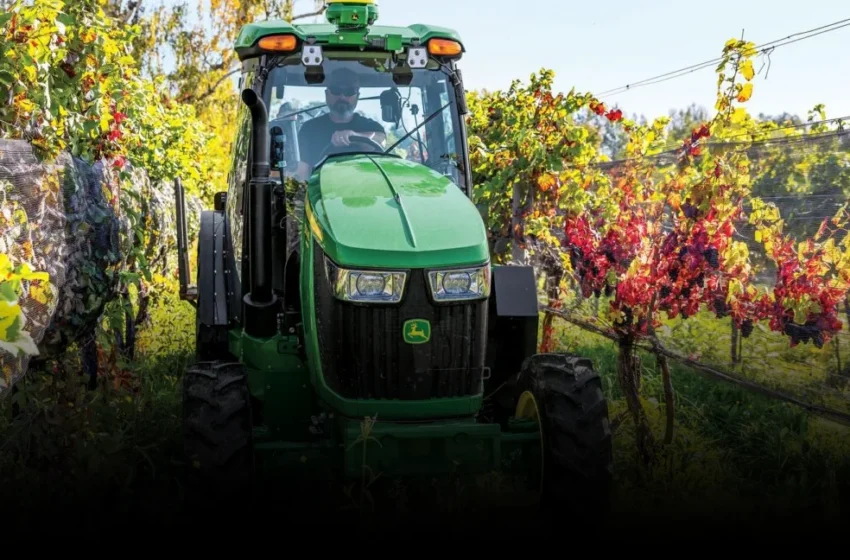
A journalist, equipped with John Deere’s proprietary software and a laptop, recently fixed a disconnected water-in-fuel sensor on a 5130ML tractor. On the surface, this seemingly minor repair, executed by a non-mechanic at John Deere’s Santa Clara office, signals a victory for the “right to repair” movement in agriculture. Yet, the true implication of this carefully staged demonstration is less about empowerment and more about a calculated recalibration of control, shifting the battleground from basic access to the very terms of that access.
The core observation here is how little genuine independence this “self-repair” truly offers. While an individual can now theoretically access diagnostic instructions and repair manuals, the entire process remains tethered to John Deere’s digital ecosystem. The software, which provided the bright red notification and subsequent repair guidance, is proprietary, requiring specific credentials and connection protocols. This is not the open-source spirit farmers campaigned for; it is a meticulously managed gateway to information. It reminds one of the carefully managed access afforded to independent mechanics for luxury automobiles — permission is granted, but rarely true freedom.
This approach offers an interesting parallel to the long-standing debate over consumer electronics. Apple might allow independent repair shops to buy genuine parts and access diagnostic tools, but it still dictates the terms, the pricing, and the certifications. True mechanical autonomy, for a farmer, means the freedom to choose any technician, use any compatible part, and understand their machinery without corporate oversight. This John Deere initiative, while a step, feels more like a strategic concession than a surrender of control. The cost burden on farmers, facing astronomical bills for minor diagnostics and repairs previously manageable independently, demands more than a guided tour through a manufacturer-controlled interface.
The Shifting Battleground of Farmer Autonomy
The lukewarm reception from farmers, despite the technical feasibility demonstrated, underscores a deeper, structural dissatisfaction. For decades, agricultural machinery, particularly highly complex embedded systems from manufacturers like John Deere and Case IH, has been increasingly locked down. Farmers, historically masters of improvisation and self-sufficiency, found themselves dependent on authorized dealerships for even minor repairs, leading to significant downtime and exorbitant costs. This dependence sparked the “right to repair” movement, aiming to restore ownership over their own capital equipment. Globally, from the expansive fields of the American Midwest to the developing agricultural hubs in Southeast Asia, the frustration with manufacturer monopolies on repair has been a consistent refrain.
John Deere’s recent pivot isn’t a sudden change of heart; it is a direct response to sustained legislative pressure and vocal farmer advocacy across the United States and internationally. Colorado’s 2023 Right to Repair Act, specifically targeting agricultural equipment, sent a clear message. Similar discussions are actively unfolding in the European Union, which has historically shown greater willingness to legislate consumer and business rights against corporate control. By offering this controlled self-repair service, John Deere frames itself as compliant and responsive, aiming to preempt broader, more restrictive legislation that could truly open up their diagnostic tools and parts supply chains. The incentive is clear: appear proactive, mitigate legal risk, and crucially, maintain control over the intellectual property embedded within their increasingly sophisticated tractors and combines. This strategic move benefits John Deere by positioning them as a partner to the farmer, rather than a gatekeeper, while ensuring their proprietary technologies remain central.
The crux of the matter extends beyond fixing a sensor. It’s about who controls the valuable telematics data generated by modern farm equipment—data on yields, fuel consumption, and operational efficiency. Farmers argue this data, produced by their land and their labor, should belong to them, to be shared or sold as they see fit, not automatically channeled back to the manufacturer. This new repair paradigm, while granting access to some information, does little to clarify or shift the complex landscape of data ownership and usage. The very act of connecting a laptop to the tractor could, for instance, be collecting metadata about the repair, further enriching John Deere’s data trove.
Beyond the Wrench: Who Owns the Future of Farming?
This tightly managed “self-repair” system is a microcosm of the larger struggle for digital sovereignty in agriculture. John Deere has spent years investing heavily in precision agriculture, turning its machinery into interconnected, data-generating platforms. The value proposition for them isn’t just selling tractors; it’s selling an entire ecosystem of software, services, and data analytics that optimize farm operations. Allowing unconstrained, independent repair risks fragmenting this carefully constructed ecosystem, potentially jeopardizing their long-term strategy of recurring revenue streams beyond the initial equipment sale.
What remains unaddressed by this demonstration are the fundamental demands that truly empower farmers. Where are the affordable, generic parts, openly available without manufacturer restrictions? Where is the right to modify equipment, to adapt it to specific local soil conditions or farming practices without voiding warranties or facing digital roadblocks? The ability for a journalist to plug in a laptop and follow instructions doesn’t suddenly make a farmer sovereign over their multi-million dollar investment. It merely confirms that the manufacturer can permit certain repairs on its terms, while retaining the deeper intelligence and revenue opportunities.
The future of farming is increasingly intertwined with digital infrastructure. As artificial intelligence and advanced robotics become more prevalent in the fields, the battle for repair freedom will evolve into a battle for software freedom and data access, touching upon questions of algorithmic bias and technological lock-in. John Deere’s current “self-repair” offering, while appearing to mollify critics, is ultimately a shrewd move to retain a commanding position in this evolving landscape. It ensures that while the farmer may hold the wrench, the manufacturer still controls the blueprints, the diagnostics, and, more importantly, the entire digital operating manual for modern agriculture, essentially turning equipment ownership into a long-term licensing agreement.
