
Kia’s Seltos Strategy: A Cost-Conscious Bet Against the Global EV Tide
- Electric Mobility
Arjun Vedanta
- 0
- 6 minutes read
The Illusion of Pragmatism in a Changing Market
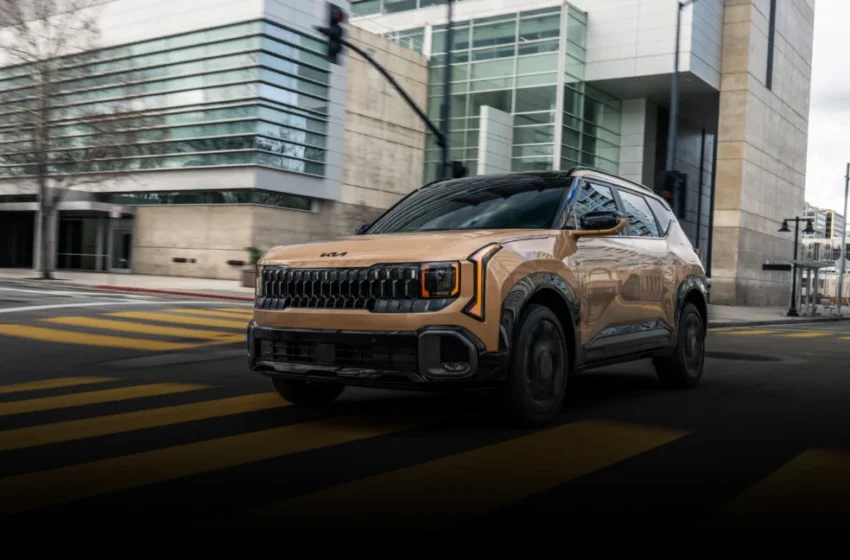
The unveiling of the 2027 Kia Seltos, priced starting at a seemingly pragmatic $24,990, isn’t just another product launch; it’s a telling diagnostic of the global automotive industry’s deepening schizophrenia. While some Western manufacturers openly lobby for protectionist walls against a perceived ‘cheap Chinese’ threat, Kia, a company with deep roots across Asia and Europe, appears to be strategically retreating into the familiar territory of the value-driven, internal combustion engine (ICE) subcompact. This move, framed as meeting market demand, subtly exposes a much larger, more uncomfortable truth: a profound reluctance to fully embrace the disruptive, long-term shift towards electric vehicles, potentially ceding future market leadership to more agile, often non-Western, contenders.
In a world fixated on splashy electric vehicle launches and autonomous driving breakthroughs, the modest debut of the Kia Seltos feels almost anachronistic. Priced to move, starting at just under $25,000, and subtly grown to 174.4 inches in length, this subcompact SUV is positioned as a sensible choice for budget-conscious consumers. Its design nods to the more premium Telluride, suggesting a shrewd aspiration play. But framing this as a direct counter to the amorphous threat of ‘cheap Chinese competition’—a specter often invoked by legacy automakers—misses the forest for a handful of trees. The real competition isn’t just about price parity; it’s about fundamentally rethinking mobility, something this Seltos, with its delayed 1.6L hybrid option, fundamentally avoids for now.
The industry’s current bifurcation is stark: a premium EV segment pushing innovation, and a combustion-engine segment battling for increasingly thin margins. Kia’s decision to launch the Seltos with an immediate focus on its ICE variants, pushing the hybrid details — power, torque, and efficiency — to a Q4 release and EPA certification, signals a hedge. It’s an attempt to secure market share today by offering a known quantity, a comfortable option for consumers not yet ready or able to leap into the EV future. Yet, this cautious approach also reveals an underlying assumption: that the EV transition can be managed on traditional timelines, rather than embraced as an urgent, systemic overhaul. The incentive for Kia to launch the Seltos now, with an emphasis on its existing powertrain tech, is to shore up immediate sales figures and defend against current market erosion.
The Unspoken EV Disconnect and Global Ambitions
The global EV landscape is not a unified front; it’s a patchwork of regulatory mandates, consumer preferences, and technological capabilities. European and Asian markets, where I have spent years observing these shifts firsthand, are often far ahead of the North American curve in their embrace of—or struggle with—electrification. In this context, a new subcompact SUV whose hybrid variant is an afterthought for launch, still awaiting EPA certification and detailed specifications, feels less like a step forward and more like a foot dragging. It’s a stark contrast to the aggressive electrification strategies seen from companies across Shenzhen or Munich, where EV-first platforms are standard, not a later addition.
Consider the structural implication here. By prioritizing an ICE-first vehicle with incremental improvements—the second-generation Seltos is ‘more substantial’ due to a stretched wheelbase—Kia is tacitly betting on a prolonged ICE lifespan. This strategy, while understandable in a capital-intensive industry, risks locking the company into outdated architectures and supply chains just as rivals are scaling entirely new ones. The delay in offering concrete hybrid data, pushing Ars’s first drive of the hybrid Seltos into ‘early next year,’ isn’t just a minor marketing hiccup; it’s symptomatic of a broader hesitance to lead with advanced, cleaner powertrains, thereby losing crucial ground in market perception and technological momentum.
This puts Kia in a precarious position. Toyota and Mazda, named as competitors for the RAV4 and CX-5 respectively, are also grappling with their EV transitions, but often with more defined, if sometimes conservative, electrification roadmaps. The sharpest observation here is that Kia’s approach assumes a grace period for the traditional internal combustion engine that emerging markets, particularly in Southeast Asia and even parts of Europe, are proving increasingly unwilling to grant. The consumer appetite for value is real, but so is the growing expectation for sustainability and future-proof technology, which the Seltos, in its initial configuration, struggles to embody.
Navigating the New Geopolitics of Automotive Tech
The ‘cheap Chinese competition’ refrain is a convenient, if simplistic, blanket term used by many legacy automakers to explain away their own strategic missteps. It’s often code for a fear of any competition that doesn’t play by their established rules, irrespective of country of origin. What Kia, and others, must grapple with is not just price, but a fundamental reordering of industrial power. New entrants, whether from China, Vietnam (like VinFast, despite its own challenges), or even specific European startups, are often unburdened by legacy infrastructure and union contracts, allowing them to iterate faster and bring innovations to market at speeds traditional giants struggle to match.
The Seltos’s modest $24,990 entry point aims directly at this price sensitivity, but it’s a defensive play, not an offensive one. It’s a tacit admission that securing market share today, even with lower-margin products, is paramount. However, this strategy risks commoditizing the brand in a segment where differentiation increasingly comes from software, battery range, and charging infrastructure—areas where Kia’s current offering, at least in its launch form, offers little beyond incremental improvement. The danger lies not just in being undercut on price, but in being outmaneuvered on innovation and future relevance.
Ultimately, the Seltos tells a story about survival in a consolidating, electrified world. It’s a pragmatic choice for a company navigating immense pressures, yet it simultaneously reveals the cautious, often reactive, stance of an industry struggling to reconcile its profitable past with an uncertain, electrified future. The global tech landscape has seen this before: incumbents clinging to established models while new entrants redefine the playing field. Kia’s Seltos may win some battles in the subcompact segment, but without a more aggressive, holistic embrace of the EV transition, it risks losing the war for future relevance.
