
Meta’s AI Catch-Up: A Deeper Look at the ‘Outsider’ Fixation
- Artificial Intelligence
Arjun Vedanta
- 0
- 5 minutes read
The Perpetual Search for a Parachute
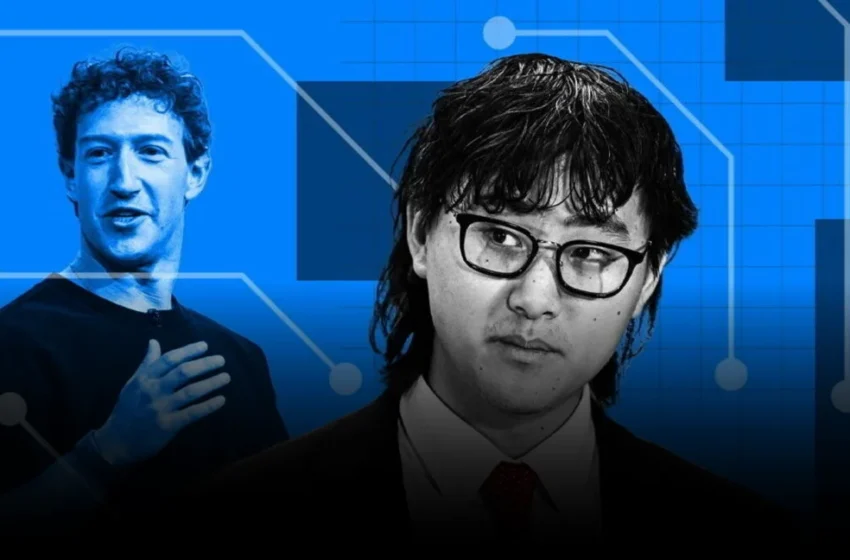
Mark Zuckerberg’s decision to parachute Alexandr Wang, a then-28-year-old outsider, into the leadership of Meta’s artificial intelligence efforts was not merely a bold hiring choice. It was a tacit admission of a chronic structural limitation within the company: a deep-seated inability to cultivate genuine, groundbreaking innovation organically from its vast internal resources. Muse Spark, Meta’s ‘most credible AI model yet,’ emerging a year into Wang’s tenure, feels less like a triumph of internal R&D and more like the predictable outcome of an external defibrillator applied to an otherwise struggling limb. This pattern of reliance on outside saviors—whether through acquisition or direct appointments—speaks volumes about Meta’s fundamental challenge in the current AI race.
For years, Meta has played catch-up by buying innovation. Instagram, WhatsApp, Oculus — these were all external successes brought into the fold. When it comes to foundational technologies like AI, that strategy falters; you can’t simply acquire a cutting-edge large language model or a transformer architecture off the shelf when your competitors are building them from first principles. Zuckerberg’s bet on Wang, a ‘billionaire wunderkind’ from outside Meta’s established AI organization, highlights this systemic issue. The hope was that an ‘outsider’s urgency and ambition’ could succeed where internal structures had ‘struggled.’ The phrasing itself is telling, framing the problem not as a failure of Meta’s own R&D environment, but as a lack of individual drive within it.
One must question why a company valued at $1.5 trillion, with legions of the world’s best engineers, consistently finds itself needing to outsource its core technological breakthroughs. The answer lies less in the talent pool and more in the internal politics and incentive structures that can stifle truly disruptive, long-term research in favor of short-term product iterations. This isn’t just about AI; it’s a Meta characteristic.
The ‘Wartime Mode’ Rhetoric and Its True Costs
The description of Zuckerberg installing Wang to ‘jolt Meta’s artificial intelligence efforts into wartime mode’ is potent rhetoric, designed to signal decisive action and a new era of aggressive pursuit. Yet, the framing of an AI push as ‘wartime mode’ often masks a deeper, less glamorous reality: a scramble to close a significant technological gap that has been allowed to widen. It suggests a reactive posture rather than a proactive, visionary one, contrasting sharply with the sustained, deliberate foundational research seen at rivals like DeepMind or OpenAI that didn’t suddenly declare ‘war’ to begin their work.
This ‘wartime’ narrative serves a dual purpose for Meta. Internally, it rallies the troops, justifying aggressive timelines and potentially sidelining established internal hierarchies or criticisms under the guise of existential threat. Externally, it reassures investors and the market that Meta is serious about AI, attempting to reposition a company often seen as trailing in this critical domain. For Zuckerberg, pushing this narrative with an external hire is also a way to demonstrate leadership and a willingness to shake things up without necessarily having to dismantle or fundamentally restructure entrenched internal power centers. It creates the illusion of radical change with minimal systemic upheaval.
The consequence, however, is clear: Wang has been ‘navigating criticism over his experience, early research challenges, and the esoteric internal politics of working at a Big Tech behemoth.’ This isn’t a frictionless, pure innovation play; it’s a battle against the very organizational inertia that necessitated his arrival. The very ‘Big Tech behemoth’ structure that needs jolting is simultaneously making the jolting process fraught with internal resistance and skepticism.
Beyond Muse Spark: The Systemic Imperative
Muse Spark’s launch offers a moment of tactical success for Meta, a proof point that the strategy of bringing in an outsider can yield tangible results. But for Meta to genuinely compete at the forefront of AI — to go beyond catching up and start defining the next wave of innovation — it needs more than just a talented parachutist. The core issue isn’t a lack of brilliant minds; it’s the environment in which those minds operate. Unless Meta addresses the ‘esoteric internal politics’ and the systemic impediments that make external hires a necessity rather than an exception, each subsequent AI wave will find them repeating this same reactive cycle.
The company needs to foster an internal culture where long-term, high-risk research is not just tolerated, but celebrated and shielded from immediate product demands. It requires a re-evaluation of how it incentivizes true exploratory work versus incremental improvements. Otherwise, every new AI breakthrough will simply be another opportunity for Meta to seek out its next Alexandr Wang, rather than developing the internal capacity to produce its own.
The AI landscape is not static, and the cost of systemic stagnation far outweighs the temporary boosts from external talent injections. Meta’s long-term viability in the AI era hinges not just on the models it ships, but on whether it can finally learn to cultivate its own innovators, rather than perpetually importing them.
