
Narrative Engineering: Why We Keep Rewriting Tech’s Origin Stories
- Artificial Intelligence
Arjun Vedanta
- 0
- 5 minutes read
The Allure of the Clean Origin Story
In the breathless rush to laud the next disruptive technology or lionize a visionary founder, we consistently fall victim to a pervasive human craving: the clean, unambiguous origin story. Silicon Valley, in particular, thrives on these neat narratives, presenting breakthroughs as singular, linear events.
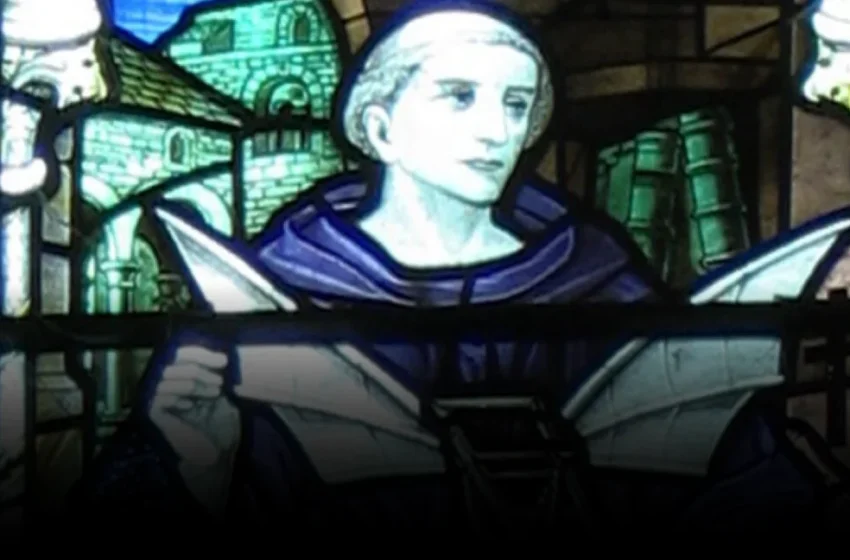
Yet, a closer look at even the most foundational moments reveals something far messier. Consider the Benedictine monk Eilmer, who, in the early 11th century, launched himself from the 150-foot tower of Malmesbury Abbey, crude wings of willow wood and cloth strapped to his arms. He glided an improbable 600 feet, over the city walls, before a crash landing broke both his legs.
This is not a tale from a modern tech campus, but the structural implications for how we understand technology’s genesis are profound. It’s a testament to raw human ambition, yes, but more importantly, it’s a stark illustration of the inherent unreliability in how such pivotal, early events are recorded and subsequently interpreted. The details of Eilmer’s flight, his very lifespan, are subject to spirited, academic debate a millennium later, based on fragmented accounts by a single 12th-century historian, William of Malmesbury.
The Data Fidelity Problem, Then and Now
William of Malmesbury, writing circa 1125, provides the sole primary source for Eilmer’s audacious flight. He also notes Eilmer saw Halley’s Comet in 1066, quoting him as saying, “It is long since I saw you.” This seemingly innocuous detail, a snippet of historical “data,” became the fulcrum for two competing narratives of Eilmer’s life.
Some historians posited he must have seen Halley’s Comet on its prior pass in 989, making him an octogenarian in 1066 and placing his flight between 1000 and 1010. But James Aitcheson from the University of Leicester later argued Eilmer might have seen a different comet altogether in his youth, the comet of 1018, pushing his birth and flight decades later. Two plausible histories, from the same scarce source.
This isn’t just medieval trivia; it’s a mirror reflecting the challenges of information architecture and data fidelity we grapple with today. We constantly build complex systems and predictive models on what we assume are solid foundational truths. Yet, what if the foundational “data” — whether an ancient scroll or an undocumented GitHub commit — is inherently ambiguous, misinterpreted, or simply missing context?
The incentive for modern tech companies and their chroniclers is often to smooth out these ambiguities, presenting a streamlined evolution from garage to IPO. This creates a compelling narrative for investors, recruits, and consumers, but it often glosses over the messy, non-linear realities of invention and scale. This tendency to simplify serves to reinforce an almost mythical status around certain innovations, making them appear inevitable rather than the result of countless contingent failures and half-remembered attempts.
Beyond the PR Haze: Reclaiming Context
The lesson from Eilmer isn’t about the limits of medieval aeronautics; it’s about the limits of our historical and even contemporary understanding when data is incomplete. We are conditioned to seek definitive answers, to trace a clear lineage from idea to product, from crude prototype to polished platform. But the truth is often fragmented, open to multiple, equally valid interpretations.
The sharpest observation for today’s tech readers is that much of what we accept as the immutable “history” of Silicon Valley’s triumphs is built on similarly selective narratives, often curated by those who benefited most from their telling. These narratives, much like William of Malmesbury’s account, provide a framework, but the underlying “facts” are rarely as neat as presented.
For analysts, understanding this inherent ambiguity is critical. When examining a new technology, a startup’s origin story, or even the ethical implications of an AI system’s training data, a healthy skepticism towards the polished narrative is essential. We must constantly ask: What data is missing? Whose interpretation is foregrounded? What alternative histories could be constructed from the same available information?
The current debates around algorithmic bias, for instance, often circle back to the “ground truth” embedded in training datasets. If the historical record of human behavior, encoded into data, is as susceptible to multiple interpretations as Eilmer’s flight, then how confident can we be in the “objective” outputs of systems trained on such proxies for reality? It’s a structural implication that demands a more nuanced approach than a simple debugging session.
We have moved beyond willow wood and cloth, but the fundamental challenge of building knowledge — and indeed, technology — from imperfect information remains. Recognising that our origin stories are often more narrative engineering than pure historical record allows for a more critical engagement with the future we are building.
