
NASA’s Artemis Moon Shot: The Risky Bet on Blue Origin’s Unproven Rockets
- Space
Arjun Vedanta
- 0
- 4 minutes read
NASA’s Uncomfortable Commercial Gamble
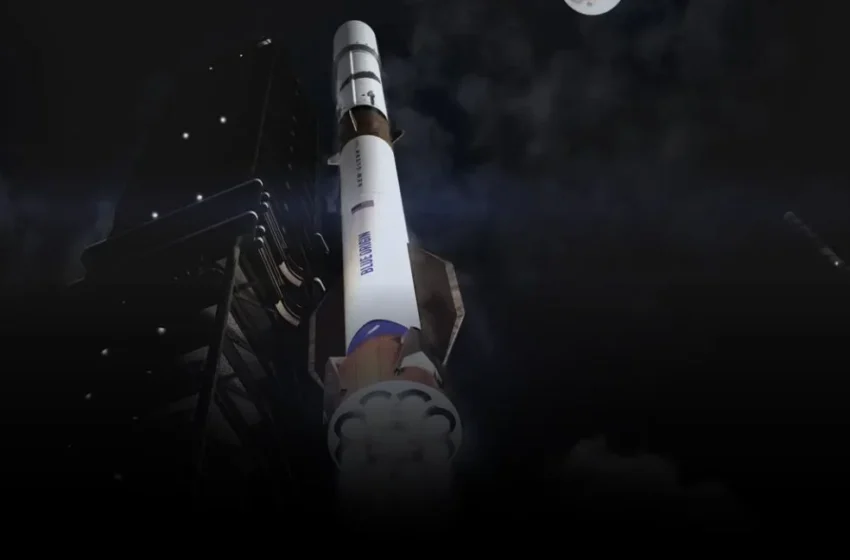
The conversation around NASA’s Artemis IV mission often fixates on launch vehicle readiness dates, but the core issue runs far deeper than mere schedules. It reveals a profound shift in how the agency manages risk, especially when national prestige and scientific ambition are on the line. The recent discussion hosted by Ars Technica, following the catastrophic late May explosion of a Blue Origin New Glenn 7×2 rocket, underscored the precariousness of this new approach. While experts like Eric Berger from Ars Technica, Caleb Henry of Quilty Space, and Anthony Colangelo of Main Engine Cut Off podcast dissected the timeline for Blue Origin’s more powerful 9×4 variant—reportedly targeting late 2027 or early 2028 for its debut—the fundamental question remains: how did NASA become so reliant on unproven commercial heavy-lift capabilities for its most strategic human spaceflight goals?
NASA, under increasing budgetary and political pressure, has largely outsourced the development of crucial deep space transport and lunar landers to private entities. This creates a situation where the success of a multi-billion-dollar government program hinges on the developmental cadence and, frankly, the luck, of a few commercial partners. The Artemis IV mission, aiming to land humans on the Moon, reportedly requires four launches of Blue Origin’s yet-to-fly New Glenn 9×4 variant. This is not simply a delay in a supply chain; it is a structural vulnerability built into the very architecture of American space exploration.
The Illusion of Commercial Nimbleness
The prevailing narrative suggests that these public-private partnerships inject nimbleness and cost-efficiency into space development. Yet, the reality is often messier. When the original article and subsequent discussions focus heavily on ‘when’ a rocket will be ready, it implicitly sidesteps ‘if’ it should be relied upon so heavily in its nascent stages. The 7×2 variant’s explosion is a stark reminder of the inherent risks in rocket development—risks that mature programs mitigate through extensive testing, redundancy, and a robust flight heritage. Blue Origin’s 9×4, with its nine first stage engines and four upper stage engines, is a significantly more complex machine than its exploded predecessor, demanding even more rigorous and time-consuming validation.
This reliance on untested vehicles is an expensive gamble, one that places critical national infrastructure and human lives in the hands of companies still perfecting their craft. NASA benefits from framing this as a commercial “partnership” to justify reduced internal development costs and project a nimble, forward-thinking image, even as the ultimate schedule burden and inherent risks shift squarely onto an often-opaque private sector. The agency gets to laud innovation while the commercial partner bears the brunt of the inevitable developmental hiccups, potentially delaying national milestones by years. This isn’t nimbleness; it’s a systematic transfer of programmatic risk.
When National Goals Collide with Private Roadmaps
The global space race, quietly heating up with renewed lunar ambitions from China and India, demands predictable and robust access to deep space. Yet, NASA’s current strategy ties its most ambitious human return to the Moon to commercial launch providers who operate on their own distinct timelines and business imperatives. This divergence creates an almost inevitable friction: national strategic goals, which prioritize certainty and mission success, against commercial roadmaps, which often optimize for market entry, cost curves, and competitive advantage. The delay of a critical launch system isn’t just a technical setback; it can ripple through geopolitical strategy, affecting international collaborations and even the public’s confidence in ambitious space initiatives.
The most skeptical observation is this: the rush to adopt commercial solutions, while often touted as a triumph of innovation and efficiency, frequently masks a critical transfer of development risk from public coffers to private balance sheets, without fully acknowledging the geopolitical and scientific stakes involved. The problem is not merely whether Blue Origin’s New Glenn 9×4 will fly by late 2027, but whether a nation’s premier space agency should be building its lunar future on such an unproven foundation. For all the talk of Artemis opening a new era, its foundations appear surprisingly fragile, built on a series of hopes rather than a solid, flight-proven orbital mechanics and launch cadence heritage.
