
NASA’s Swift Rescue: A Triumph of Speed or a Symptom of Space’s Reactive Future?
- Artificial Intelligence
Arjun Vedanta
- 0
- 5 minutes read
The $30 Million Lifeline and a New Space Race
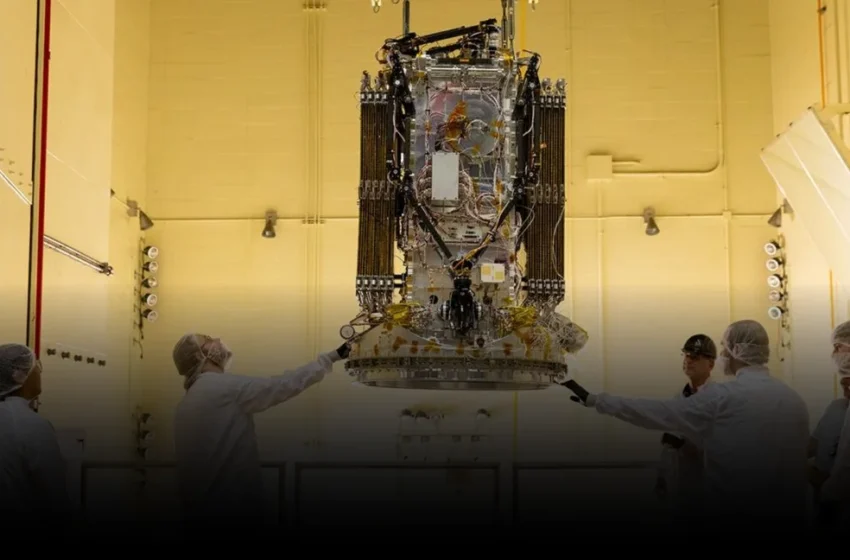
The $30 million contract awarded to Katalyst Space Technologies to save a $500 million NASA observatory isn’t just a testament to rapid engineering; it’s a stark indicator of how far the space industry has drifted from sustainable, long-term asset management, creating a lucrative, reactive market for in-orbit repair. Just ten months ago, NASA presented a challenge: develop and launch a solution to prevent the Swift astronomy mission from an uncontrolled re-entry. Katalyst, a startup founded in 2020, responded with a plan to deploy its Link servicing spacecraft to rendezvous, capture, and reboost Swift, all within an unprecedented timeframe. This isn’t merely a rescue operation; it’s a real-world stress test for a burgeoning commercial sector offering solutions to an issue that space agencies are only now fully confronting.
For decades, space missions operated under a relatively straightforward premise: design, launch, operate until failure, then decommission. Longevity was built into the initial design specifications, with limited scope for intervention once in orbit. This model worked when satellite constellations were sparse and high-value assets were few. But as
low-Earth orbit (LEO)
becomes increasingly congested, and multi-billion-dollar government programs face unexpected orbital decay or technical glitches, the economic calculus has fundamentally shifted. The Swift mission, a gamma-ray burst observatory crucial for astrophysics, found itself vulnerable, likely due to increased solar activity influencing atmospheric drag at its orbital altitude, accelerating its descent. The speed of NASA’s response – from concept to contract in just weeks – reflects an urgent, almost panicked, need to avoid losing a critical scientific asset prematurely.
Reactive Maintenance vs. Proactive Design
Shawn Domagal-Goldman, director of NASA’s astrophysics division, described Katalyst’s proposal as “technically and programmatically plausible,” a high compliment for a mission designed under intense pressure. Indeed, the ability to conceive, develop, and launch a complex
orbital rendezvous
and servicing mission in under a year is a significant engineering feat, a testament to the agility and innovation of the new space economy. However, this impressive agility masks a deeper problem: why are these high-value assets reaching a point of crisis in the first place? The true test of this mission isn’t merely boosting Swift’s orbit, but whether it truly extends the observatory’s scientific life significantly, or merely delays an inevitable decommissioning, effectively making NASA a client for a stopgap measure rather than a partner in innovative longevity.
The traditional model of satellite design offered little provision for in-orbit maintenance or repair. Satellites were purpose-built, often with proprietary interfaces, making universal servicing nearly impossible. This rapid rescue mission, while celebrated, underscores this systemic vulnerability. It’s a reactive scramble to save an existing investment rather than a proactive strategy integrated into the initial design philosophy of future missions. This distinction is critical: are we moving towards a future where commercial entities become the de facto emergency services for aging government and private satellites, or will this inspire a more modular, serviceable approach to space engineering from the outset?
The Commercial Incentive and Unintended Consequences
For Katalyst, this high-profile NASA contract offers an unparalleled validation of its in-orbit servicing model, potentially attracting a wave of new clients eager to postpone the costly replacement of aging infrastructure. This commercial imperative creates a powerful incentive for companies to develop sophisticated robotic servicing capabilities, including
orbital maneuvering
and refueling. As more commercial players enter this arena, spurred by contracts like the one for Swift, we can expect a rapid advancement in satellite autonomy and
robotics in space
. The market is clear: companies that can extend the operational life of multi-million-dollar assets for a fraction of their replacement cost will find themselves in high demand.
Yet, this emerging paradigm carries subtle, unexamined implications for the broader space ecosystem. If reactive servicing becomes the norm, does it disincentivize robust, fault-tolerant design in initial satellite builds? Could the promise of a cheap fix lead to corners being cut in terms of mission longevity or resilience? Furthermore, the regulatory landscape for in-orbit servicing is still nascent. Who assumes liability if a servicing mission causes further damage, or worse, creates new debris? These are not trivial questions. The Swift mission’s immediate crisis may be averted, but the long-term structural implications for space asset management and the evolving commercial space industry are only just beginning to unfold. The rush to fix today’s problems risks deferring a more fundamental discussion about the design and governance of tomorrow’s orbits.
