
Nintendo Tariff Refund Stance Exposes Global Tech’s Consumer Calculus
- Tech
Arjun Vedanta
- 0
- 5 minutes read
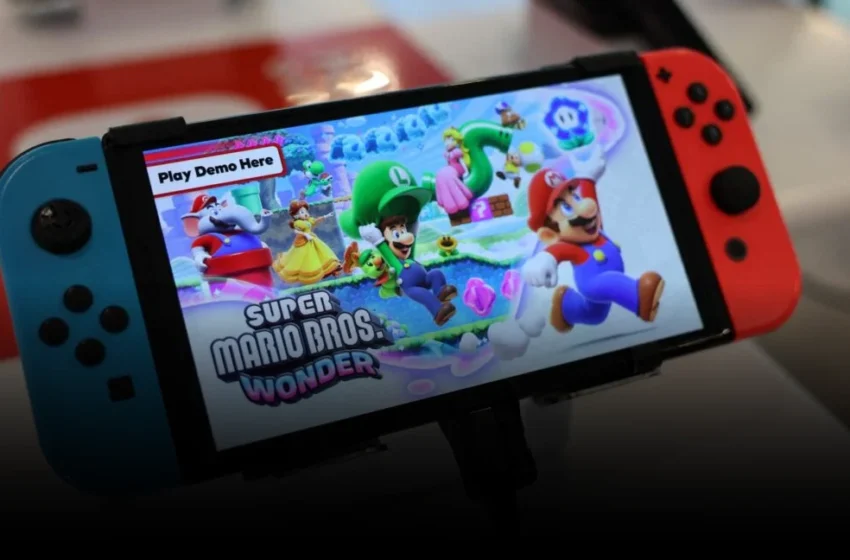
Tariffs: A Corporate Windfall, Not a Consumer Shield
The core of Nintendo’s legal defense against a class-action lawsuit seeking tariff refunds is stark: customers voluntarily paid the price asked, and therefore possess no legal right to any government refunds Nintendo might receive. This isn’t just a legalistic sidestep; it’s a candid admission of how multinational corporations manage global trade policy, consistently externalizing costs to consumers during imposition but internalizing any subsequent benefits, highlighting a fundamental imbalance in consumer protection for multinational retail.
In short, when tariffs rise, prices rise. When tariffs fall, prices rarely follow suit with the same alacrity, and certainly not retroactively. The argument from Nintendo, asserting that buyers “have no legal entitlement to the tariff refunds Nintendo stands to receive,” lays bare a system designed to protect corporate margins first, consumers second, if at all. This isn’t unique to Nintendo; it’s a ubiquitous strategy across industries navigating complex global supply chains and shifting import duties.
For years, consumers bore the brunt of escalating trade wars. Companies across the electronics sector, from smartphone manufacturers to console makers, quietly factored increased import costs into their retail pricing. This wasn’t framed as a surcharge, but simply as the new market rate for a Switch console or other products. Customers like Gregory Hoffert and Prashant Sharan, now suing in the US District Court for the Western District of Washington, are not asking for damages from a faulty product; they’re questioning the very ethics of profit retention derived from shifting government policies.
The Illusion of Voluntary Purchase in a Concentrated Market
Nintendo’s motion to dismiss hinges on the idea that purchases were “completed sales” and consumers “voluntarily paid higher prices.” This legal framing assumes a genuinely free market where buyers have numerous equally appealing alternatives and full price transparency regarding underlying cost structures. But the reality of consumer electronics, particularly gaming consoles, is far from that idealized model.
When someone wants a Nintendo Switch, they want a Nintendo Switch—not an Xbox, not a PlayStation, and certainly not a PC for the unique titles and ecosystem Nintendo offers. This isn’t true market elasticity; it’s a function of brand loyalty and proprietary content. To claim consumers “voluntarily” absorbed tariff costs implies they had a real choice to opt out without significant personal cost, like foregoing access to exclusive first-party games. That is a deeply cynical view of consumer agency, particularly when companies hold near-monopolies on their own distinct ecosystems.
The incentive for Nintendo is clear: retaining every cent of these refunds directly impacts the bottom line. Why would any corporation willingly cede unexpected revenue, especially when their legal team can argue it’s not legally mandated? The timing of this announcement, coinciding with the prospect of actual refunds, underscores a proactive corporate accountability strategy — one aimed at closing the door to consumer claims before they gain momentum.
This situation illuminates a broader problem: the disconnect between consumer protection laws and the realities of modern global commerce. While the Washington Consumer Protection Act aims to prevent “unfair or deceptive acts,” the mechanisms to enforce such principles against pricing influenced by opaque international trade policies remain weak. It forces consumers into expensive class action litigation, often yielding minimal individual returns, just to challenge what feels intuitively unfair.
Navigating Global Trade Policy: Who Bears the Risk?
The plaintiffs allege unjust enrichment, a common claim when one party benefits at another’s expense without a clear legal justification. Nintendo’s defense, essentially, is that the justification is the completed sale itself. This legalistic parsing reveals a significant loophole in the unspoken social contract between tech giants and their customers.
When tariffs were first imposed, the risk of higher manufacturing costs was swiftly offloaded to consumers. Now, as those tariffs potentially recede and government refunds materialize, the benefit remains locked within corporate coffers. This asymmetry means consumers bear the risk of increased costs but rarely share in the subsequent gains. It’s a system where volatility in global trade policy becomes a one-way street for profit protection.
What this lawsuit, even if dismissed, achieves is a spotlight on corporate responsibility within complex trade policy. It challenges the idea that a retail price, once paid, absolves a company of any further ethical obligation regarding its cost inputs—especially when those inputs are influenced by government actions that subsequently reverse. It highlights the need for stronger regulatory frameworks globally that consider the impact of macroeconomic shifts on consumer pricing, rather than leaving it to the slow, expensive, and often ineffective process of individual or class-action lawsuits.
The lesson for regulators, particularly outside Silicon Valley’s immediate gaze, is critical: in an age of intricate international commerce, the consumer is frequently the last to benefit and the first to pay. Unless policymakers explicitly mandate otherwise, multinational corporations will continue to optimize for shareholder value over abstract notions of fairness, tariff refund or otherwise.
