
Ocean Observatories: A Symptom of Systemic Underinvestment in Climate Data
- Artificial Intelligence
Arjun Vedanta
- 0
- 4 minutes read
The False Economy of Environmental Cuts
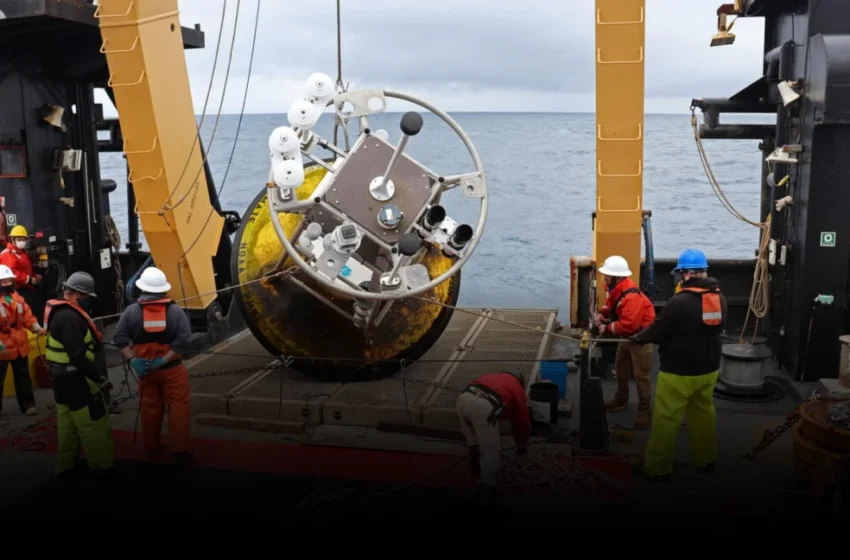
The National Science Foundation’s decision to decommission the Ocean Observatories Initiative isn’t merely an Alaskan problem; it’s a global symptom. It reveals a profound, systemic disconnect between the escalating demands for real-time climate intelligence and a persistent, often politically expedient, reluctance to fund the foundational infrastructure required to gather it. For nearly a decade, the OOI network has been a quiet sentinel in the deep ocean, feeding a torrent of critical data on everything from wave action to ocean chemistry, informing everything from fisheries management to military planning. Now, it’s being shut down, purportedly due to cost.
The price tag for the OOI over its operational lifespan stands at nearly $368 million. In the grand scheme of national budgets, especially for a network providing data vital to a state experiencing warming at twice the global average, this figure borders on trivial. It is a fraction of what major tech firms spend on a single quarterly marketing campaign, or what many nations allocate to a single advanced defense project. Yet, this relatively modest investment in fundamental
oceanography and climate monitoring is deemed unsustainable.
This isn’t a unique phenomenon. Across the world, long-term environmental monitoring projects, from Arctic ice sensors to rainforest biomass trackers, routinely face precarious funding cycles. The immediate fiscal relief from such cuts is tangible on a balance sheet, but the hidden costs — the blindness to marine heatwaves, the mismanaged fish stocks, the unprepared coastal communities — are diffuse, delayed, and ultimately far more expensive. This decision, then, isn’t an isolated incident; it’s a stark illustration of how short-term budget cycles continue to undermine long-term climate resilience.
Undermining Global Climate Intelligence
The utility of the OOI extended far beyond simple temperature readings. It provided real-time data crucial for
predictive analytics, allowing scientists and policymakers to understand complex, rapidly evolving oceanographic phenomena. This kind of granular, continuous dataset is the bedrock for accurate climate modeling and effective resource management. Without it, decision-makers in critical sectors, from commercial fishing to disaster preparedness, are left guessing, reacting to events rather than anticipating them.
It beggars belief that a nation with sophisticated defense budgets and sprawling tech R&D finds itself repeatedly unable to sustain fundamental environmental observatories, especially when the data directly informs national security and economic stability. The incentive to defund projects like the OOI, like many similar cuts to public science, primarily serves the immediate political goal of demonstrating fiscal restraint to budget hawks, offering a tangible line item reduction without a clear understanding of the cascading long-term costs.
This is a particularly acute problem for Alaska, the nation’s top fish-producing state. Fisheries managers, who rely on OOI data to calculate sustainable harvest levels and track changes in marine ecosystems, will now be operating with significantly reduced visibility. It’s not just about losing a data feed; it’s about losing a critical component of
environmental intelligence that informs an entire economic and social infrastructure. This makes communities vulnerable, turning proactive management into reactive damage control.
A Precedent for Ignorance
The decommissioning of the OOI sets a dangerous precedent. It signals that even the most critical
sensor networks, those providing indispensable information for adapting to a changing climate, can be deemed expendable. This sends a chilling message to the broader scientific community and to international partners also grappling with the challenge of sustained environmental monitoring.
In an era where the imperative for robust climate action is clearer than ever, pulling the plug on a vital data source feels less like a responsible fiscal decision and more like a deliberate act of self-imposed ignorance. As global warming accelerates, the demand for precise, continuous environmental data will only intensify. If established, proven infrastructure cannot be sustained, the outlook for future global
climate resilience initiatives looks bleak. This isn’t merely a localized technical setback; it’s a fundamental failure in valuing the foundational knowledge upon which humanity’s future adaptability depends.
