
Octopus Brains, Edge AI, and Silicon Valley’s Centralization Bias
- Artificial Intelligence
Arjun Vedanta
- 0
- 4 minutes read
Silicon Valley’s Centralized Blind Spot
In a world increasingly reliant on artificial intelligence, the design philosophy driving its development often feels strikingly primitive. The prevailing dogma, particularly within the venture-fueled echo chambers of Silicon Valley, still fixates on ever-larger, centralized processing units and cloud-centric architectures. We pour billions into training monolithic models on massive data centers, assuming that more compute in one place automatically translates to superior intelligence and capability.
This obsession with centralization, however, fundamentally misunderstands the efficiencies and robustness inherent in biologically-inspired, distributed intelligence. It’s a critical flaw, elegantly exposed not by a rival startup or a new academic paper, but by an invertebrate with eight arms: the octopus.
Distributed Minds, Decentralized Action
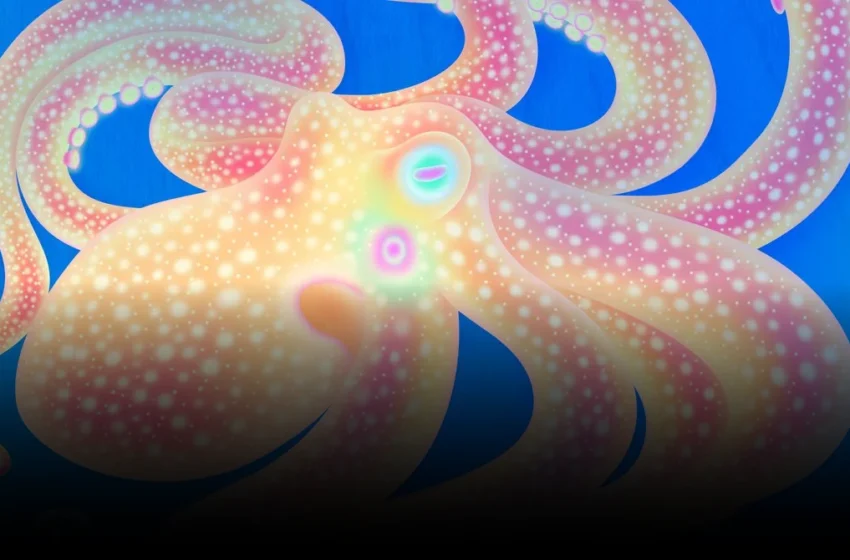
Consider the humble octopus, a creature far more sophisticated than its lack of a backbone might suggest. Two-thirds of its roughly 500 million neurons aren’t clustered in its doughnut-shaped central brain; they’re distributed throughout its eight sucker-studded arms. Each arm operates with remarkable autonomy, able to taste, feel, and initiate movements independently of the central brain. This isn’t merely an anatomical quirk; it’s a radical departure from the human-centric model of a single, all-controlling cerebral cortex.
This distributed neural architecture allows for incredibly localized decision-making. An arm exploring a crevice on the seafloor doesn’t need to constantly ping the central brain for every micro-adjustment or sensation. It processes information and reacts locally, with a nerve ring allowing for coordination when needed, but without constant oversight. This translates to unparalleled adaptability and resilience in complex, unstructured environments. Our most advanced robots, by contrast, are often tethered by high-latency communication to a central processor, or burdened by the energy demands of on-board supercomputers.
The current AI paradigm, for all its power, often creates single points of failure. When the central processor or the cloud connection fails, the entire system grinds to a halt. An octopus, however, can lose an arm and still function, albeit with reduced capacity, because its intelligence isn’t a singular, fragile node. This biological lesson challenges the very core of how we design AI, forcing us to ask: why do we insist on building digital brains when evolution has already perfected distributed minds?
Rethinking AI for a Messy World
The implications of the octopus’s design for robotics and edge AI are profound. Imagine a swarm of small, agile robots tasked with disaster relief, each operating with significant local autonomy, making immediate decisions based on proximate data, and only communicating critical insights to a higher-level coordinator. This moves beyond merely ‘edge computing’—which often still implies a powerful mini-server at the periphery—towards true
What’s truly frustrating is how much of the current narrative around AI and robotics remains fixated on a few narrow benchmarks, like performance on abstract game boards or the ability to generate hyper-realistic images. The real-world challenges of navigating unpredictable environments, managing resource constraints, and adapting to novel situations often get relegated to footnotes. Perhaps the collective inability of the tech industry to truly embrace biologically-inspired distributed intelligence stems from a deeper psychological comfort with hierarchical control structures, rather than a genuine technical limitation.
This resistance to decentralization isn’t purely technical; there’s an economic incentive at play. Centralized cloud infrastructure means recurring revenue for hyperscalers like AWS, Google Cloud, and Azure. Their business models thrive on pushing computation and data towards massive, proprietary server farms. Promoting a paradigm where more intelligence resides on individual devices, independent of constant cloud connection, directly challenges that lucrative revenue stream. This is why the conversation often frames edge AI as merely an extension of the cloud, rather than a fundamentally different architectural philosophy.
The path forward requires a shift in mindset, away from the singular, all-knowing AI, and towards systems composed of many smaller, specialized, and highly autonomous agents. This isn’t about replacing the cloud, but intelligently distributing cognitive loads. It means designing hardware and software in unison, allowing the ‘neurons’ to be where the ‘arms’ are, fostering resilience and adaptability at every level.
We have spent years marveling at the sheer computational power we can cram into data centers. It’s time to start appreciating the elegance and effectiveness of intelligence that is elegantly spread thin, a lesson the octopus has been demonstrating for millions of years.
