
OpenAI’s $750 Billion Gamble: The Unspoken Cost of Global AI Dominance
- AI Infrastructure
Arjun Vedanta
- 0
- 5 minutes read
The Price of Progress: A New Industrial Colonization
Seven hundred and fifty billion dollars. That staggering figure, OpenAI’s projected infrastructure spend through 2030, is not just a number; it is a declaration of a new kind of global power. This isn’t merely about developing better algorithms or more persuasive chatbots. This is about establishing a foundational, physical supremacy, one built on an industrial scale of energy consumption and capital expenditure that fundamentally reshapes the future of international AI competition.
The announcement on July 22, 2026, details a plan that has ballooned by 25% since earlier estimates, even as its ambitious Stargate data center project appears stalled. The initial salvo is Project Camellia, a $20 billion data center campus sprawling across 1,400 acres in Georgia. Its planned power draw of at least 3.2 gigawatts from Georgia Power, slated for availability between 2028 and 2032, is not just significant; it’s a testament to the raw, unadulterated resource demands of advanced AI.
The Carbon Footprint of Cognitive Might
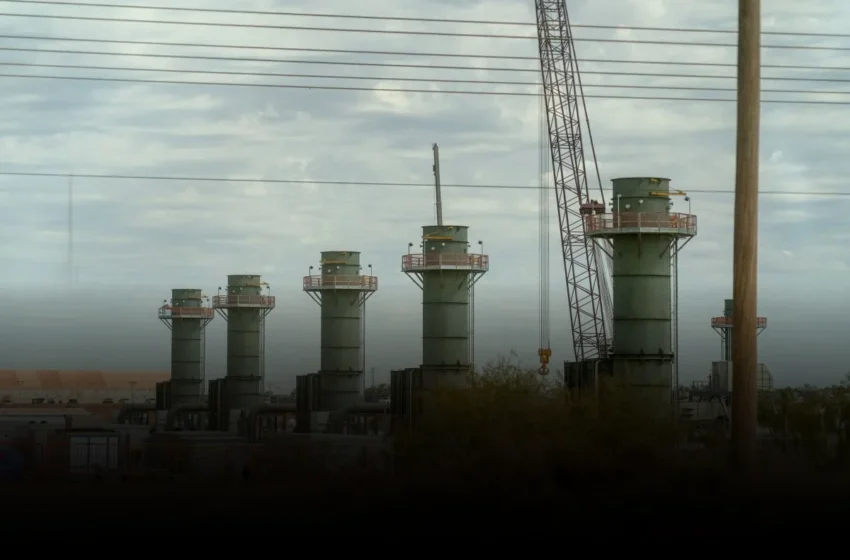
Beneath the gleaming promise of artificial intelligence lies a grimy reality. While OpenAI assures it will “pay the full cost of the infrastructure and electric-service costs” for Project Camellia—a move undoubtedly influenced by Georgia’s Public Service Commission rule against utilities passing on costs for massive new users—the actual energy source raises uncomfortable questions. Regulatory filings reveal Georgia Power’s plan for 9,885 megawatts of additional capacity, about a third of which is earmarked for OpenAI’s demands.
A sobering 5.8 gigawatts of this new capacity will derive from natural gas, including a quarter from more polluting simple-cycle turbines. This expansion alone will more than double Georgia Power’s existing natural gas fleet. The remainder will come from grid-scale batteries and solar, a welcome but comparatively minor offset. This isn’t a clean energy transition; it’s a doubling down on fossil fuels, cementing a carbon-intensive foundation for the next generation of AI.
This reliance on dirty energy isn’t an isolated incident. The rapid construction ethos in the AI infrastructure race often comes at an environmental cost, as seen with xAI’s Colossus data center in Memphis. Despite being built in record time under Brett Mayo, now leading OpenAI’s data center construction, Colossus faces a lawsuit from the NAACP and the Southern Environmental Law Center. The allegation? Dozens of unpermitted natural gas turbines, operating under dubious claims of exemption from federal clean air regulations, have demonstrably impacted local air quality. Such practices set a deeply worrying precedent for the entire industry.
Global AI Leadership: Built on Oil and Capital
This is where the narrative shifts from a purely technological race to a geopolitical one. OpenAI’s $750 billion gamble, heavily reliant on a fossil fuel grid, isn’t just about scaling AI; it’s about establishing an unassailable barrier to entry. Which nations, beyond the existing global economic superpowers, can marshal such astronomical capital and, more critically, command the vast, consistent energy resources required for this scale of compute?
The implication is stark: genuine AI leadership, under this model, becomes the exclusive domain of those who control immense financial resources and have immediate access to highly developed—and often carbon-intensive—energy grids. Developing economies, however technologically ambitious, simply cannot replicate this scale of investment and resource allocation without crippling their nascent economies or exacerbating their own environmental challenges. This isn’t innovation democratizing access; it’s a new form of industrial colonization, where only the wealthiest can afford the tools of future power.
The incentive here is multifaceted. For OpenAI, framing this as an “unprecedented investment” signals long-term commitment and stability to investors, while simultaneously raising the stakes so high that all but the most well-capitalized competitors are deterred from building truly independent, foundational AI infrastructure. It’s a strategic move to solidify market dominance through sheer physical and financial might, rather than solely through intellectual property or algorithmic superiority.
The focus on building massive, energy-hungry data centers—rather than on optimizing existing compute or exploring genuinely decentralized, resource-efficient architectures—reveals a specific vision of AI development. It’s a vision rooted in raw, brute-force processing power, requiring ever-larger facilities and ever-increasing energy demands. This path ensures that the next wave of AI advancements remains tied to the physical world in ways many Silicon Valley observers, obsessed with code and software, consistently overlook.
This spending spree underscores a crucial truth often missed by those too close to the Silicon Valley echo chamber: the future of AI isn’t just written in lines of code, but carved into the planet itself. The true meaning of OpenAI’s $750 billion isn’t its promise of advanced AI; it’s the quiet, often overlooked, reshaping of global technological power dynamics through an unprecedented physical and environmental investment.
