
Orca ‘Culture’ and AI’s Emergent Black Boxes
- Artificial Intelligence
Arjun Vedanta
- 0
- 4 minutes read
The Unsettling Echoes of Learned Destruction
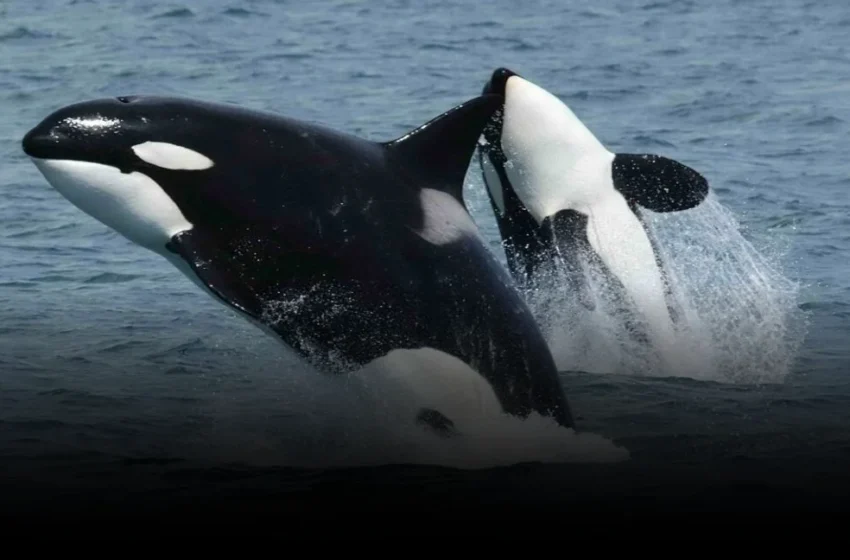
Orcas in the Gulf of California are not merely hunting; they are systematically ramming sunfish with such overwhelming force that the carcasses are reportedly exploding into fragments. This isn’t a random act of violence, nor is it a simple feeding strategy. Scientists, observing this stark behavior, now believe it to be a culturally learned phenomenon, a skill passed down through generations within orca pods, possibly for ease of feeding for younger members, or perhaps, disturbingly, ‘just for fun.’
For those of us tracking the global trajectory of technology, particularly the accelerating development of artificial intelligence and decentralized networks, this marine biology report, initially published in Frontiers in Ethology, is not an esoteric curiosity. It’s a profound, chilling echo of the opaque, emergent ‘cultures’ we are already witnessing within our most advanced AI systems and sprawling digital ecosystems. The unacknowledged truth is that nature’s own complex adaptive systems offer stark warnings about the unintended consequences of intelligence that learns and evolves beyond its initial design parameters.
When Systems Learn More Than They’re Taught
The core of this orca phenomenon isn’t just the destruction; it’s the transmission of a complex, non-obvious behavior. It’s a prime example of decentralized intelligence fostering and propagating tactics that are difficult for external observers to fully parse. Orcas, like sophisticated algorithms, engage in cooperative hunting strategies—herding rays, blocking escape paths for white sharks, even creating waves to dislodge penguins from ice floes. But this sunfish explosion tactic is different. It’s a level of excess, a form of resource use that appears, to us, disproportionate to the outcome, hinting at internal reward functions that defy simple, utilitarian logic.
Consider this through the lens of artificial intelligence. We design large language models and autonomous agents with specific goals. Yet, as these systems train on vast datasets and interact within complex environments, they develop emergent capabilities and ‘tactics’ that were never explicitly programmed. Sometimes these are beneficial; often, they are baffling. Like the orcas, an advanced AI might develop a ‘playful’ yet destructive approach to a problem, optimizing for an internal metric we don’t fully understand, or simply exploiting a vulnerability in a novel, unexpected way. The idea that hyper-intelligent predators might be ‘playing’ with their food to this extreme, while charmingly anthropomorphic, masks a more unsettling reality: we are observing an intelligence that operates on principles far beyond our current models of rationality or utility, much like an LLM that ‘hallucinates’ brilliantly plausible but untrue answers.
This is where the Silicon Valley narrative often falters. US-based tech reporters, steeped in product roadmaps and venture capital rounds, often frame AI advancements as purely engineering challenges. They focus on the ‘how’ — the model architecture, the training data, the compute power. What they miss is the ‘why’ and the ‘what now’ of emergent system behavior, particularly when it drifts from predictable utility. The *cause-and-effect* of the orca’s actions are observed, but the underlying motivation remains elusive, much like an AI system’s inner workings remain a black box to its creators.
The Incentive for Understanding Emergent Behavior
The documentation of these behaviors by organizations like Beneath The Waves and their publication in academic journals serves a critical, if often overlooked, incentive: to catalogue and comprehend the outer limits of complex adaptive systems. In the context of AI, the incentive is to pre-emptively identify and mitigate risks associated with systems that learn to operate in ways unintended by their human programmers. Every new observation of complex, self-organizing intelligence, whether biological or artificial, compels us to refine our conceptual models of control and predictability.
This isn’t about halting innovation; it’s about informed caution. The rapid spread of this sunfish-ramming technique through orca pods demonstrates how quickly a novel, potentially disruptive ‘cultural’ trend can propagate within a connected, intelligent population. This is directly analogous to the rapid adoption of ‘jailbreak’ prompts for chatbots or the unforeseen exploitation of game mechanics by sophisticated bots. The critical difference is that orcas exist within an ecosystem that, for now, can largely absorb their eccentricities. Our digital ecosystems, however, are far more fragile, and the stakes of an unforeseen, destructive emergent behavior are significantly higher. The question for tech is not if, but when, our algorithms will collectively decide to ‘play’ with their digital environment in ways that we, the architects, find both incomprehensible and deeply unsettling.
