
Pentagon’s Rapid Policy Reversal Raises Alarms on Military Medical Standards
- Government & Policy
Arjun Vedanta
- 0
- 4 minutes read
The Quiet Disappearance of a “Questionable” Policy
Less than 24 hours. That is how long a new, mandatory testosterone screening policy, officially unveiled by the Pentagon on September 2, lasted before it was quietly pulled. The swift retraction, initially reported by Reuters, did not come with an explanation commensurate with the Defense Department’s initial, forceful decree. Instead, a terse statement to Ars Technica cited a need for “updates,” a phrase that in Washington often means, ‘we made a significant error and hope no one notices too closely.’
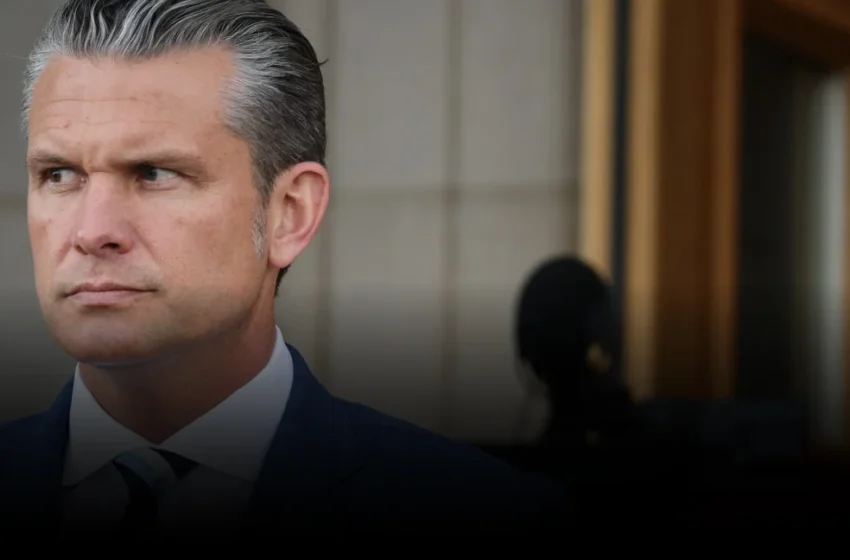
Defense Secretary Pete Hegseth first announced this sweeping mandate in July, framing it as crucial for military health and human performance. Yet, the accompanying guidance document, provocatively titled “Clinical Guidance for Health and Human Performance Optimization,” was almost immediately labeled “medically questionable” by external observers. The contradiction here is stark: a policy championed by the top brass and codified in official guidance vanishes before the ink is dry. This isn’t merely bureaucratic housekeeping; it signals a deeper, more systemic issue within the Pentagon’s processes for medical policy formulation and communication.
Who truly benefits from a policy being quietly withdrawn rather than publicly debated or justified? The answer is usually those who wish to avoid accountability or potential legal challenges. The incentive here appears to be damage control, rather than genuine transparency or a robust engagement with medical experts.
The Cracks in Military Medical Ethics and Scientific Integrity
For a policy concerning the fundamental biology of service members to be deemed “medically questionable” upon release, then immediately retracted, speaks volumes about the internal scientific due diligence at the Pentagon. One might reasonably ask: what level of scientific vetting preceded Secretary Hegseth’s initial announcement in July? This isn’t about a minor administrative tweak; it’s about a proposed intervention into individual health, potentially affecting careers, readiness, and personal well-being.
The US military, with its vast resources and critical mission, should operate with the highest standards of scientific integrity and medical ethics. A policy like mandatory testosterone screening, regardless of its ultimate intent, demands rigorous, transparent backing from evidence-based medicine, not a rushed decree followed by an embarrassed withdrawal. This incident chips away at the trust personnel place in the military’s medical leadership and raises uncomfortable questions about how broadly such shaky science might permeate other aspects of military health policy and human performance optimization programs.
The broader implications stretch into military readiness. If the medical standards guiding personnel are subject to such abrupt, unexplained reversals, how can service members, or allied nations observing, have full confidence in the foundational health tenets of the world’s most powerful military?
Beyond Testosterone: A Crisis of Confidence in Defense Policy
This episode, while ostensibly about a single health metric, functions as a potent microcosm of larger issues within the Department of Defense’s approach to sensitive personnel matters and public transparency. It’s not the first time a major defense policy has hit a snag, but the sheer speed of this particular reversal is alarming. It highlights a critical deficiency in the vetting pipeline for significant health and defense policy changes.
What does this say about the internal checks and balances, the engagement with independent medical experts, or even the basic communication protocols? It suggests an environment where politically charged or ideologically driven initiatives can bypass rigorous scientific scrutiny, only to collapse under the slightest public pressure or internal re-evaluation. This isn’t just about testosterone; it’s about the scientific integrity underpinning all military health, from advanced robotics and AI infrastructure integration in healthcare to standard physicals. The Pentagon cannot afford such visible missteps when its credibility, both domestically and internationally, is paramount.
The lack of a comprehensive, transparent explanation for the retraction only exacerbates the problem, leaving a vacuum filled by speculation rather than fact. For intelligent, skeptical readers who follow defense policy closely, this isn’t an anomaly; it’s a flashing indicator of structural weaknesses that demand immediate, systemic attention.
