
Perseverance’s Silent Record: The AI Revolution Beyond Our Reach
- Artificial Intelligence
Arjun Vedanta
- 0
- 4 minutes read
Autonomy’s Unseen Miles: The Real Martian Milestone
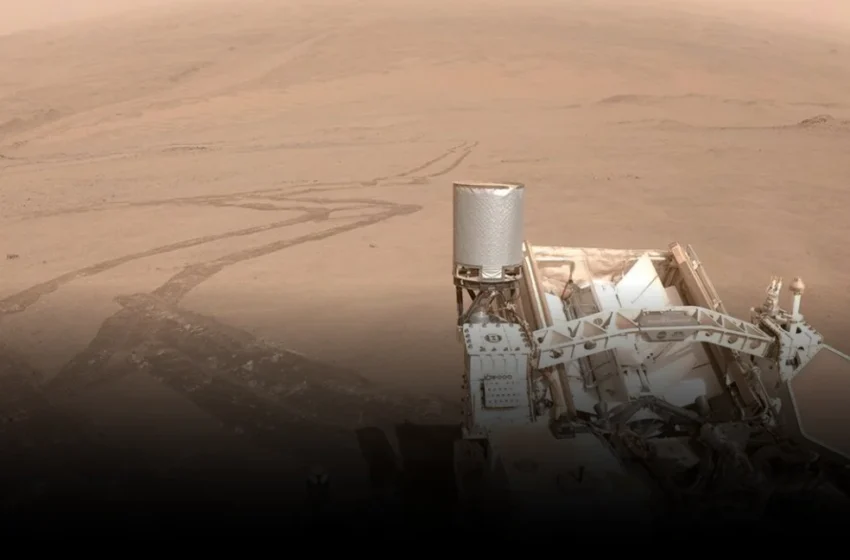
NASA’s Perseverance rover isn’t merely setting a new distance record on Mars, traversing beyond 45.16 km across the alien terrain. That impressive figure, eclipsing the venerable Opportunity rover’s 28.06 miles in a third of the time, is merely the most visible symptom of a far deeper technological shift. What few Silicon Valley observers truly grasp is that the rover’s unprecedented mileage is a direct consequence of its advanced autonomous navigation system, a quiet revolution in deep space robotics that fundamentally reconfigures humanity’s reach.
Older missions, including the well-loved Spirit and Opportunity, operated largely as remote-controlled vehicles. Every few meters, ground teams at JPL would painstakingly analyze stereoscopic images, plot a safe path, and then upload those precise commands to the rover. This cumbersome, latency-ridden process meant slow progress, with daily drives often limited to mere tens of meters, constrained by the communication windows and the sheer volume of human labor required.
Perseverance, however, navigates with a degree of self-reliance previously unseen on another planet. Its sophisticated onboard AI, dubbed AutoNav, processes real-time imagery, identifies hazards, and charts its own course towards pre-selected waypoints. This capability allows it to cover hundreds of meters in a single Martian sol, freeing mission scientists from the minute-by-minute drudgery of driving and allowing them to focus on high-level scientific objectives and analysis. It’s an operational efficiency multiplier.
While remarkable, it’s crucial to inject a dose of skepticism: the term ‘self-driving’ on Mars, while technically accurate, differs significantly from the complexities faced by autonomous vehicles on Earth. There are no unexpected cyclists, erratic pedestrians, or traffic lights on Jezero Crater. The environment is challenging, yes, but predictable in its desolation. This nuance is often lost in public discourse, yet the underlying principles of robust, real-time decision-making in a hostile, remote environment remain profoundly relevant.
Redefining Deep Space Operations
This leap in autonomous navigation represents more than just a speed boost; it’s a profound rethinking of deep space mission architecture. By offloading tactical decision-making to the rover itself, NASA’s human engineers and scientists on Earth can dedicate their finite hours to strategic planning, data interpretation, and identifying breakthrough scientific targets, rather than acting as glorified joystick operators. This shift directly enhances the scientific return on investment for missions costing billions.
The incentive for NASA to champion these milestones is clear: sustained public interest and congressional funding depend on demonstrating continuous technological advancement and tangible scientific output. Framing Perseverance’s achievement as a record-breaking feat of ‘self-driving’ effectively communicates both the scientific progress and the cutting-edge robotics involved, justifying future ambitious endeavors like the Mars Sample Return mission.
Imagine the implications for future endeavors: human missions to Mars will require autonomous supply vehicles and construction robots. Asteroid mining operations will demand self-sufficient excavators. Even the establishment of lunar bases will depend on machines capable of extended, independent operation with minimal human intervention. Perseverance is not just exploring Mars; it’s field-testing the fundamental building blocks of an interplanetary economy.
The Terrestrial Echoes of Martian AI
The lessons gleaned from Perseverance’s operational autonomy extend far beyond the red planet. Developing AI robust enough to operate fault-tolerantly for years in extreme radiation, temperature fluctuations, and communication delays offers invaluable insights for terrestrial applications. Think of autonomous systems deployed in disaster zones, remote industrial facilities, or even advanced agricultural robotics where human access is limited or dangerous.
The emphasis on failsafe mechanisms, error recovery, and energy optimization inherent in planetary rover design provides a blueprint for reliable AI in critical infrastructure. It underscores that true intelligence in robotics isn’t just about speed or complex pattern recognition; it’s about resilient, adaptive decision-making under genuine constraint and risk. This is the difference between a prototype and a system deployed to succeed where failure means losing billions of dollars and decades of effort.
Perseverance’s record isn’t just about the distance driven on Mars. It’s a testament to the quiet, persistent progress in autonomous intelligence that fundamentally reshapes our ability to explore, to build, and eventually, to live beyond Earth. The next generation of self-driving cars might grab headlines, but the ultimate proving ground for truly reliable AI is millions of miles away, autonomously navigating a desolate, beautiful alien world.
