
Pompeii’s Digital Resuscitation: How Tech Rewrites Ancient Lives
- Tech
Arjun Vedanta
- 0
- 5 minutes read
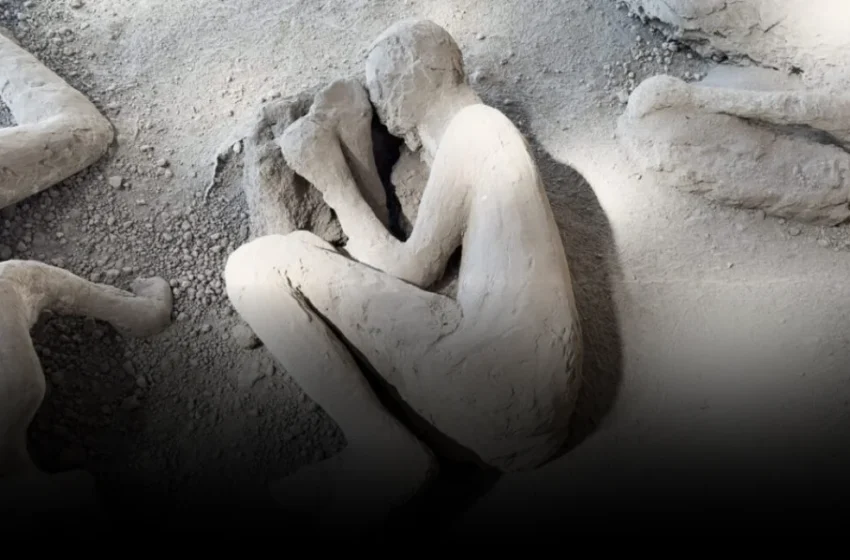
Beyond the Plaster Cast: Digital Reconstruction Rewrites History
The past, once a fixed tableau of broad strokes and grand narratives, is being meticulously re-stitched, not by trowels and brushes, but by gigabytes and medical-grade imaging. When archaeologists at the Pompeii Archaeological Park recently announced the identification of a 79 CE victim as a probable Roman doctor, using advanced CT scans and 3D digital reconstruction, it wasn’t just a fascinating historical footnote. It marked another significant inflection point in how forensic technologies are blurring the lines between ancient history and modern medical diagnostics, fundamentally altering what we can glean from the most catastrophic moments of antiquity.
This shift moves us beyond simple identification toward an unprecedented level of individual detail, transforming collective tragedy into personal biography. The conventional image of Pompeii’s victims remains rooted in the 19th-century innovation of Giuseppe Fiorelli, whose plaster casts captured the final moments of asphyxiation and thermal shock. These casts, some 104 preserved from approximately 1,000 discovered bodies, offered a harrowing, if anonymous, glimpse into the human cost of Vesuvius’s eruption.
For decades, they served as static monuments to a sudden, violent end. Now, however, the digital age offers a different lens. The current restoration of 86 of these casts, initiated a decade ago, employs high-resolution CT scans and X-rays to peer inside, revealing not just bone structures but also subtle artifacts of daily life and profession. This application of non-invasive imaging allows researchers to reconstruct personal histories, transforming cadavers into digital models that speak volumes about their lives.
While such technological advancements are undeniably powerful, one must question the growing fetish for individual stories in archaeology; sometimes the broader societal patterns illuminated by collective analysis are far more telling than the minutiae of one person’s teeth. The identification of the Pompeii doctor—evidenced by the likely presence of surgical tools and specific anatomical features visible through the digital scans—illustrates this granular capability. This isn’t just about finding a name, but about reconstructing a life, understanding a trade, and mapping a professional network within the Roman social fabric, all from remains that have been encased in ash for nearly two millennia. It’s an archaeological practice that owes more to CSI than to traditional excavation.
The Data Deluge and Archaeological Ethics
The power of these new techniques comes with an implicit shift in the archaeological method itself. Traditional archaeology often involves destructive excavation, meticulously documenting layers as they are removed. Here, the process is iterative and non-destructive, relying on computational archaeology and advanced data analytics. The wealth of data generated by CT scans, often producing gigabytes of information per cast, enables unprecedented scrutiny.
Researchers can zoom, rotate, and virtually dissect, extracting details from the victim’s diet to their dental health, pathologies, and even indications of their last meal. This digital approach to human remains, while offering unparalleled insight, also raises crucial questions about archaeological ethics and the nature of public display. When the dead are rendered with such vivid, almost lifelike detail, what constitutes respectful presentation?
The Pompeii Archaeological Park benefits from these high-profile identifications, generating significant public interest and securing funding for further research and site preservation. This suggests an incentive: the allure of specific human stories, enhanced by high-tech narrative, plays a crucial role in maintaining public and financial support for archaeological endeavors.
A Global Trend: Rethinking the Human Past with Modern Tech
Pompeii is not an isolated incident; it’s a prominent example of a broader global trend. From deciphering ancient Egyptian papyri with multispectral imaging to using ground-penetrating radar (GPR) to map subterranean settlements, modern technological tools are democratizing and accelerating archaeological discovery. Think of the applications of Lidar scanning in mapping Amazonian cities hidden for centuries or the use of DNA sequencing to trace ancient migrations.
These are not merely tools for faster data collection; they are fundamentally reshaping how we conceptualize and interact with the past. The increasing reliance on digital datasets also means that the future of archaeology might look less like dusty dig sites and more like sophisticated computational labs. Collaboration between archaeologists, medical imaging specialists, and data scientists becomes paramount.
This convergence of disciplines offers the potential for profound new understandings, yet it also risks alienating some traditional practitioners who prioritize the tactile, hands-on engagement with physical artifacts. The true revolution lies not just in what these tools reveal, but in how they are forcing a re-evaluation of archaeology’s core identity, pushing it firmly into the realm of digital humanities. The Roman doctor from Pompeii, once just a tragic silhouette, now stands as a digital avatar of this new era, a symbol of how technology is making the distant past intimately, scientifically present.
