
Pope Leo XIV’s AI ‘Disarmament’ Call: Moral Vision Meets Geopolitical Reality
- Artificial Intelligence
Arjun Vedanta
- 0
- 5 minutes read
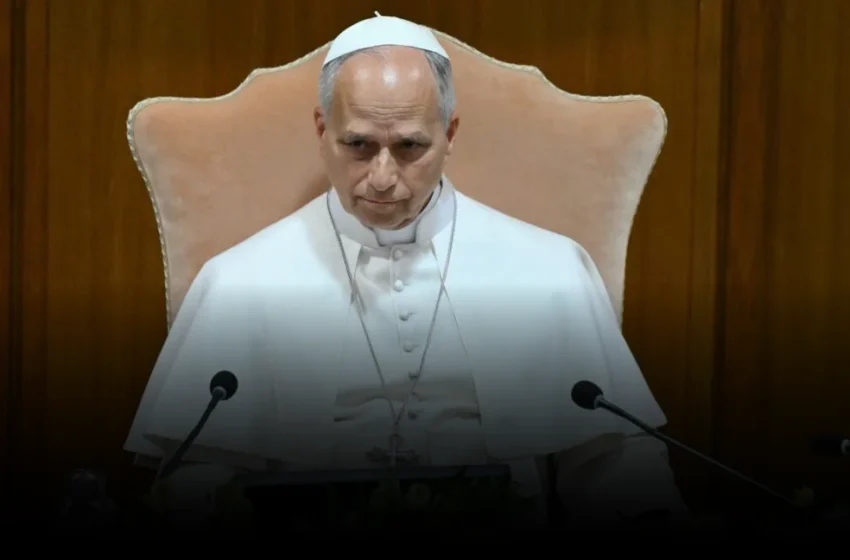
The pontiff’s inaugural encyclical, "Magnifica Humanitas," unveiled in Rome with a co-founder of Anthropic by his side, calls for the "disarmament" of artificial intelligence. It’s a striking metaphor, meant to stir consciences, but one that instantly exposes the vast, unaddressed chasm between ethical aspiration and the entrenched realities of global power, commercial imperative, and the inherently distributed nature of technology itself. This isn’t merely a moral declaration; it’s a high-stakes performance, meticulously staged to shape a narrative that may already be beyond the Vatican’s influence.
The Vatican’s Moral Authority Versus AI’s Inherent Momentum
Pope Leo XIV’s choice of "disarmament" is deliberately potent. He explained that "this moment needs words capable of attracting attention, awakening consciences, and indicating paths forward for humanity." The 40,000-word document critiques AI-powered autonomous weapons, warns against "neo-colonial attitudes towards data collection," and decries the hoarding of digital intellectual property.
Such pronouncements carry immense symbolic weight, yet they land in a world where AI is not a weapon held in a state arsenal, but a diffuse, constantly evolving capability. How does one "disarm" an algorithm, a dataset, or an open-source model? The term, while emotionally resonant, suggests a centralized control mechanism that does not exist for much of the technology’s frontier.
The Vatican’s moral authority is undeniable for its adherents, but it struggles to find purchase against the unabated pace of development driven by venture capital, national security interests, and the relentless pursuit of technological advantage. This clash highlights a fundamental misunderstanding, or perhaps a deliberate rhetorical simplification, of AI’s true operational vectors.
Silicon Valley’s Strategic Piety: A Convenient Alliance?
The presence of an Anthropic co-founder during the encyclical’s release is particularly telling. Anthropic, a leading developer of frontier AI, positions itself as an "AI safety" company, advocating for responsible development even as it competes fiercely in the hyper-scaled model race. Their involvement here suggests an alignment of values, or at least a powerful convergence of public relations objectives.
What is the incentive for a major AI player to stand alongside the Pope in calling for "disarmament?" For companies like Anthropic, aligning with high-minded ethical frameworks helps inoculate them against future criticism, legitimizes their internal safety efforts, and subtly shifts the narrative towards self-governance rather than external, potentially restrictive regulatory frameworks. It’s a shrewd play, signaling virtuous intent while continuing to innovate at breakneck speeds.
This symbiotic relationship reveals a deeper truth: powerful institutions, whether religious or corporate, understand the value of co-opting or at least influencing the nascent global conversation around AI governance. It lends an air of moral legitimacy to the technology’s architects, suggesting they are already addressing these profound concerns, rather than being complicit in creating them.
Governing The Ungovernable: Geopolitical Stakes And IP Hoarding
The encyclical’s critiques extend beyond mere ethical oversight, touching upon the tangible harms of "domination, exclusion, and death." It calls out "new forms of property, such as patents, algorithms, digital platforms, technological infrastructure, and data." This isn’t a theoretical argument; it targets the core mechanisms of control in the new digital economy and the profound imbalances of power it engenders, particularly for nations in the Global South grappling with data neo-colonialism.
Yet, the ambition to "disarm" these entrenched systems runs headlong into escalating geopolitical competition. Major powers view AI leadership as an existential requirement for national security and economic supremacy, making any genuine "disarmament" pact or intellectual property sharing — particularly for critical algorithms — a political non-starter. The rhetoric of shared humanity clashes violently with the pragmatism of statecraft and corporate balance sheets.
The starkest sentence in this entire narrative is that the very act of calling for AI "disarmament" implies a consensus and a centralized mechanism for control that simply does not exist across global state actors, powerful corporations, and even the burgeoning open-source AI community. It’s a moral plea that overlooks the fundamental realities of how power is aggregated and exercised in the 21st century.
Pope Leo XIV’s "Magnifica Humanitas" is a significant entry into the global dialogue on AI ethics, demonstrating the Vatican’s commitment to shaping the moral landscape of the digital age. But its impactful language of "disarmament" risks framing the challenge in terms too simplistic for its profound complexity. The actual work of governing AI will not be achieved through moral appeals alone; it demands a gritty engagement with competing national interests, the relentless pursuit of profit, and the technical intricacies of an accelerating frontier. The conversation has begun, forcefully, but the true battle for AI’s soul is fought far from the solemn halls of Rome.
